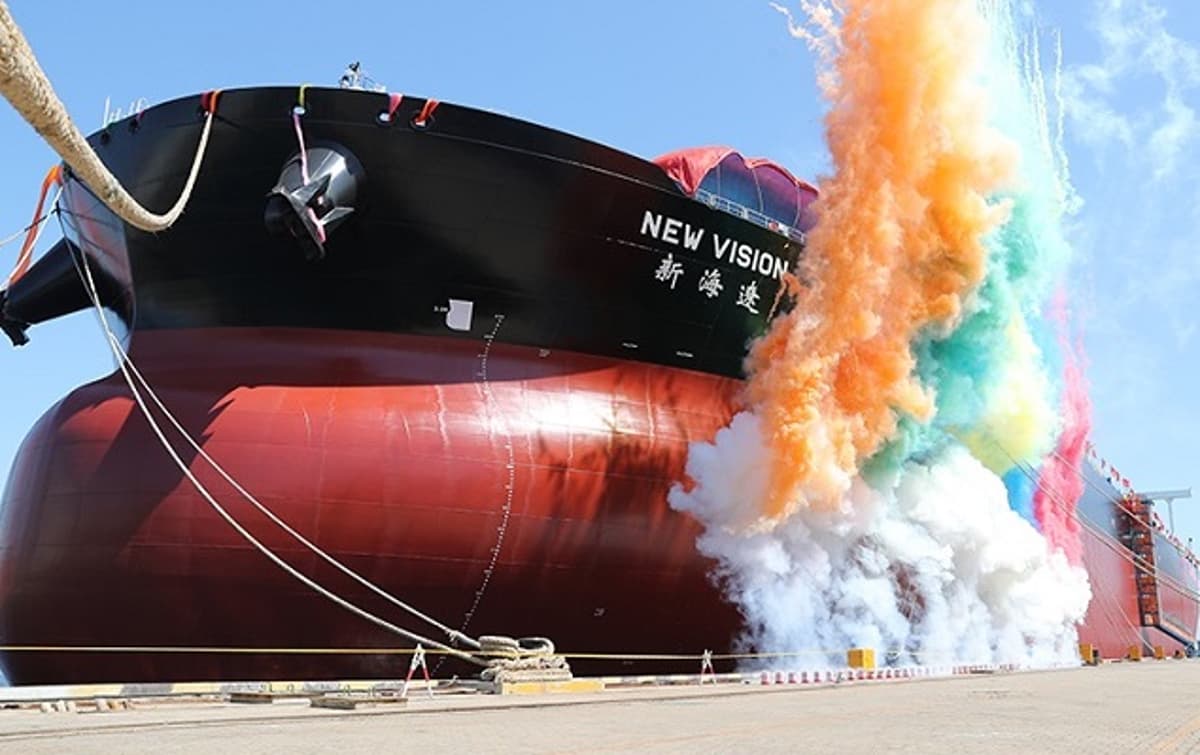
VLCC Newbuild Bonanza Smashes Two-Decade-Old Annual Record in Just Six Months
Why It Matters
The unprecedented ordering wave reshapes the VLCC supply curve, sustaining higher freight rates and altering global oil logistics. Shipyards, financiers, and charterers must recalibrate capacity and risk strategies amid heightened market volatility.
Key Takeaways
- •125 VLCCs ordered Q4‑2025/Q1‑2026, record‑breaking volume.
- •Orderbook‑to‑fleet ratio rose to 26% from 10% in 15 months.
- •VLCC daily earnings hit $175k in Q1‑2026, a historic high.
- •Newbuilding volume reached 33.3 m dwt, 23% increase QoQ.
- •Tanker orders five times Q1‑2025, now 90% of contracts.
Pulse Analysis
The surge in Very Large Crude Carrier (VLCC) orders marks a watershed moment for the dry bulk and tanker sectors. Analysts attribute the wave to a confluence of geopolitical tension—most notably the closure of the Strait of Hormuz—combined with strategic fleet expansions by major players such as Sinokor. These forces have driven daily earnings to an unprecedented $175,000 per day, incentivizing shipowners to lock in newbuild contracts before prices climb further. The rapid escalation in orderbook‑to‑fleet ratio, now at 26%, underscores a market that is shifting from a supply‑constrained environment to one of aggressive capacity building.
For shipyards, the record‑breaking order flow translates into near‑full utilization of dry‑dock facilities and a premium on newbuilding pricing, which rose roughly 7% for larger crude tankers in Q1 2026. This heightened demand also pressures the labor market and material supply chains, potentially extending delivery timelines despite the current surge. Financial institutions are revisiting loan structures and risk assessments, as the capital‑intensive nature of VLCC construction amplifies exposure to freight‑rate volatility and macro‑economic shifts in oil demand.
Broader industry metrics reinforce the magnitude of this shift. BIMCO reports a 40% year‑on‑year rise in newbuilding contracting, with tankers representing 32% of total contracts—the highest share since 2017. The unprecedented volume of 33.3 million deadweight tonnes contracted in Q1 2026 signals a robust confidence in long‑term oil demand, even as the sector grapples with decarbonization pressures. Stakeholders should monitor how this influx of new VLCC capacity influences freight markets, charter rates, and the strategic positioning of legacy fleets over the coming years.
VLCC newbuild bonanza smashes two-decade-old annual record in just six months
Comments
Want to join the conversation?
Loading comments...