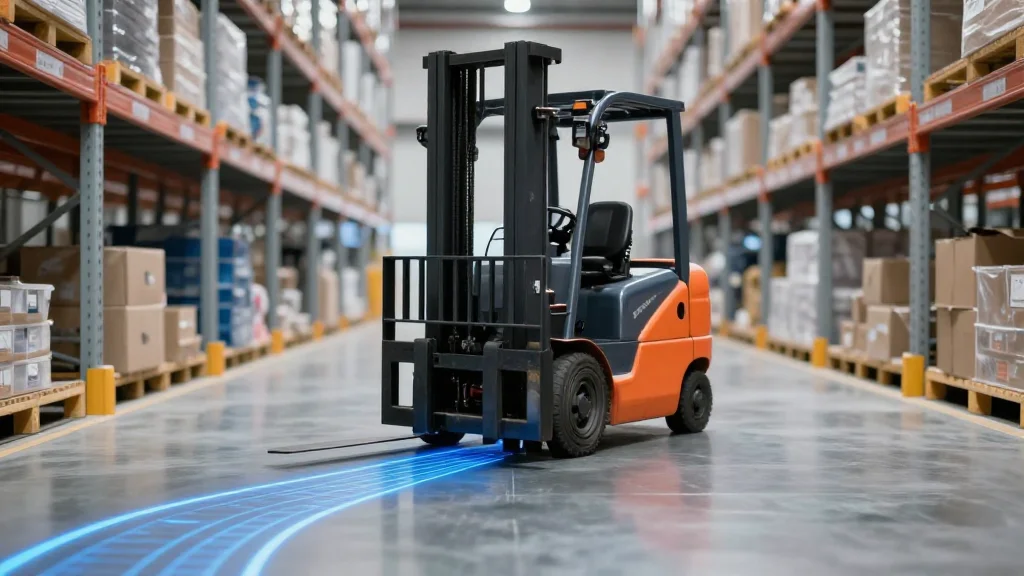
Warehouse Intelligence Starts Long Before AI Enters the Picture
Why It Matters
Accurate, real‑time optimization directly boosts throughput, reduces labor costs, and safeguards operations, making it a competitive differentiator for modern distributors. Mis‑aligned AI without proper data can jeopardize service levels during peak demand, underscoring the need for controlled intelligence.
Key Takeaways
- •Virtual twin maps enable precise travel distance calculations.
- •Real-time batch optimization cuts picker travel time 5‑30%.
- •Agentic AI risks increase without accurate data and safety rules.
- •Human oversight remains essential for safe, balanced decisions.
- •Intelligent warehousing blends algorithms, data, and operational constraints.
Pulse Analysis
The cornerstone of today’s intelligent warehouses is data fidelity. A virtual twin—essentially a high‑resolution digital replica of the facility—captures rack locations, aisle widths, one‑way travel rules and equipment limits. When this model is fed clean, real‑time inventory and labor data, the system can compute true travel distances rather than relying on abstract SKU proximity. This spatial awareness eliminates the guesswork that plagued earlier warehouse management systems and lays a reliable foundation for any advanced analytics or AI layer.
Building on that foundation, modern platforms shift from static work‑order release to dynamic, on‑the‑fly batch generation. As a picker requests a new task, the engine evaluates current order priorities, picker location, equipment type, congestion patterns and the virtual twin’s layout to assemble the most efficient batch. Early adopters report travel‑time reductions and throughput gains ranging from five to nearly thirty percent, translating into lower labor spend and higher order‑fulfillment speed. The real‑time approach also adapts to sudden spikes in volume or temporary labor shortages, keeping operations fluid without manual re‑planning.
Agentic and generative AI promise deeper autonomy, yet their value is contingent on the same data integrity and rule‑based safeguards. Unsupervised models trained on flawed inputs can over‑optimize a single metric—such as distance—while neglecting urgent shipments or safety constraints, especially during peak seasons. The most resilient solutions therefore embed human oversight: clear safety boundaries, performance dashboards and the ability to override decisions. By marrying accurate digital twins, smart algorithms and controlled AI, warehouses can achieve sustained efficiency gains while mitigating risk, positioning them for the next wave of supply‑chain digitization.
Warehouse Intelligence Starts Long Before AI Enters the Picture
Comments
Want to join the conversation?
Loading comments...