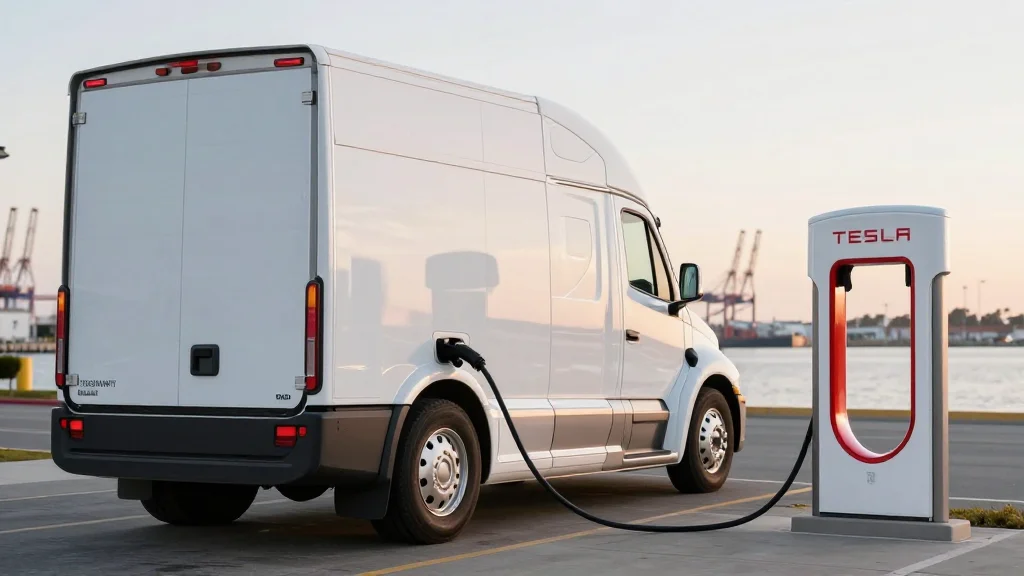
WattEV Orders 370 Tesla Semis for Port of Oakland Deployment

Companies Mentioned
Why It Matters
The WattEV order accelerates the transition from diesel to electric freight, directly reducing toxic emissions that affect air quality and driver health in densely populated logistics corridors. By pairing a large fleet purchase with a coordinated charging network, the initiative demonstrates that electric heavy‑duty vehicles can meet the operational demands of long‑haul transport while delivering cost advantages as diesel prices remain volatile. The deployment also provides a real‑world testbed for high‑power charging technology, informing future standards and regulatory frameworks for zero‑emission freight. If replicated across other ports and inland hubs, the model could reshape supply‑chain logistics, prompting manufacturers, shippers, and policymakers to prioritize electrified infrastructure investments. This shift would not only improve environmental outcomes but also create new market opportunities for charging equipment providers, renewable energy developers, and fleet operators seeking to future‑proof their operations.
Key Takeaways
- •WattEV orders 370 Tesla Semi trucks, the largest single electric‑semi purchase reported this year.
- •More than 300 trucks will be deployed with the Port of Oakland under a joint program.
- •First 50 Semis arrive alongside Tesla Megawatt Charging System stations in Oakland and Fresno.
- •Additional charging depots planned for Stockton this year and Sacramento in 2026.
- •WattEV cites diesel fuel cost volatility as a key driver for the electric fleet transition.
Pulse Analysis
WattEV’s aggressive procurement signals that electric heavy‑duty trucks are moving from niche pilots to mainstream fleet assets. The order leverages Tesla’s scaling of semi production, which has historically lagged behind passenger‑vehicle volumes. By securing a sizable fleet now, WattEV mitigates the risk of supply bottlenecks and locks in favorable pricing before the market potentially saturates.
The strategic placement of Megawatt Charging System stations at the Port of Oakland—a critical gateway for West Coast imports—addresses a long‑standing barrier: the lack of high‑power, fast‑charging infrastructure at freight hubs. This infrastructure‑fleet pairing creates a virtuous cycle; as more electric trucks operate, demand for fast chargers rises, prompting further investment and grid upgrades. The renewable‑energy focus also aligns with California’s aggressive climate targets, positioning WattEV as a partner in state‑level decarbonization initiatives.
From a competitive standpoint, the move puts pressure on traditional diesel OEMs and fuel suppliers, who must now contend with a fleet that can achieve comparable turnaround times without the price volatility of oil markets. It also challenges other electric‑truck manufacturers to accelerate their own charging solutions, potentially spurring industry standards around power levels, connector types, and grid integration. In the next 12 months, the performance data from WattEV’s initial deployments will be a key barometer for investors and policymakers assessing the scalability of zero‑emission freight across the United States.
WattEV Orders 370 Tesla Semis for Port of Oakland Deployment
Comments
Want to join the conversation?
Loading comments...