Why Delivery Robots Are Becoming Essential in Modern Automation
Why It Matters
Robots cut labor‑intensive last‑mile costs while delivering 24/7 service, reshaping competitive dynamics in logistics‑heavy industries. Their deployment accelerates the shift toward fully connected, AI‑powered supply chains.
Key Takeaways
- •Delivery robots cut last‑mile costs by automating transport.
- •AI navigation and sensor fusion enable autonomous operation in complex environments.
- •Healthcare uses robots for meds and sample delivery, improving speed.
- •Companies adopt robots to offset rising labor costs and 24/7 demand.
Pulse Analysis
The automation landscape is moving beyond static factory floors toward an AI‑powered, end‑to‑end network that can act in the real world. Delivery robots are the linchpin of this transition, translating digital instructions into physical movement across streets, hospitals, and office campuses. By handling the “last‑mile” segment that traditionally consumes the bulk of logistics spend, these mobile units unlock cost savings and service speed that were previously unattainable. Analysts estimate the global delivery‑robot market will exceed $10 billion by 2030, reflecting rapid commercial uptake.
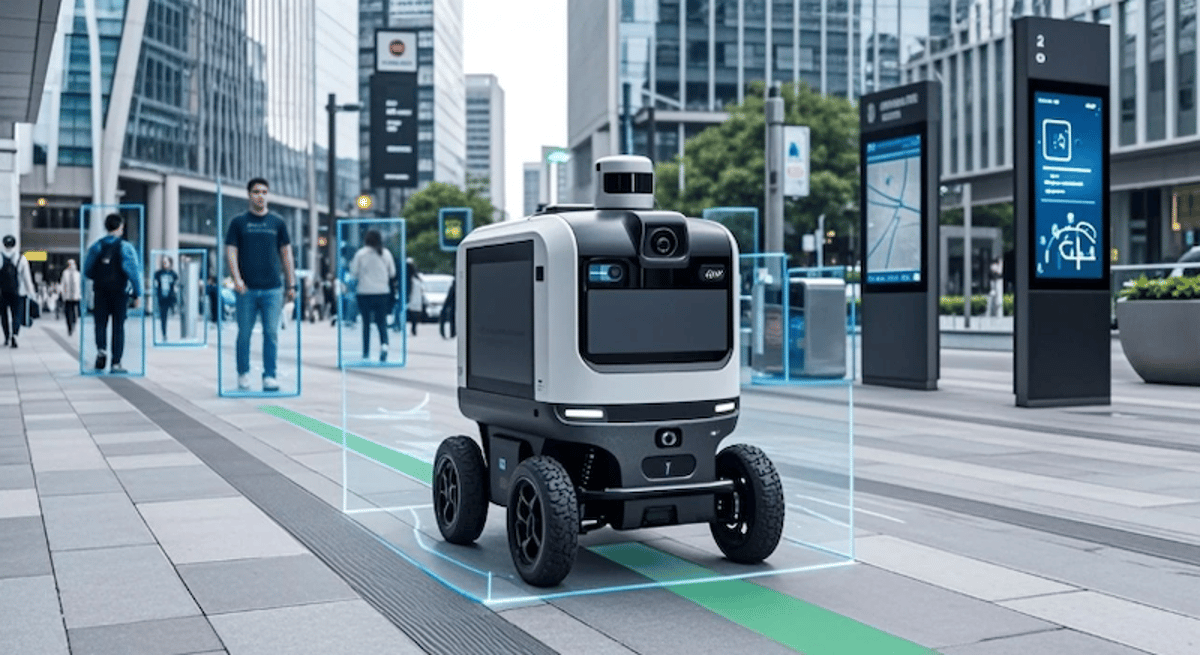
The technology that powers autonomous delivery hinges on AI‑driven navigation, computer‑vision, and multi‑sensor fusion. LiDAR, cameras, and ultrasonic arrays create a 3‑D perception map that the robot’s edge processor interprets in real time, while cloud‑based fleet management coordinates routes and load balancing across dozens of units. This modular platform allows manufacturers to scale from a single courier bot to city‑wide fleets without redesigning hardware, and it supports over‑the‑air updates that keep algorithms aligned with evolving traffic and regulatory conditions.
Enterprises across logistics, healthcare, and retail are already deploying robots to mitigate rising labor costs and meet 24/7 on‑demand expectations. Hospitals use them for medication and sample transport, cutting internal handling time by up to 30 percent, while retailers employ sidewalk bots to offer contactless deliveries that boost customer satisfaction. As AI models improve, robots will evolve from single‑purpose couriers to multifunctional service agents capable of inventory management, cleaning, and even security patrols. The resulting intelligent ecosystem promises a new efficiency frontier for any business that can integrate physical and digital workflows.
Why Delivery Robots Are Becoming Essential in Modern Automation
Comments
Want to join the conversation?
Loading comments...