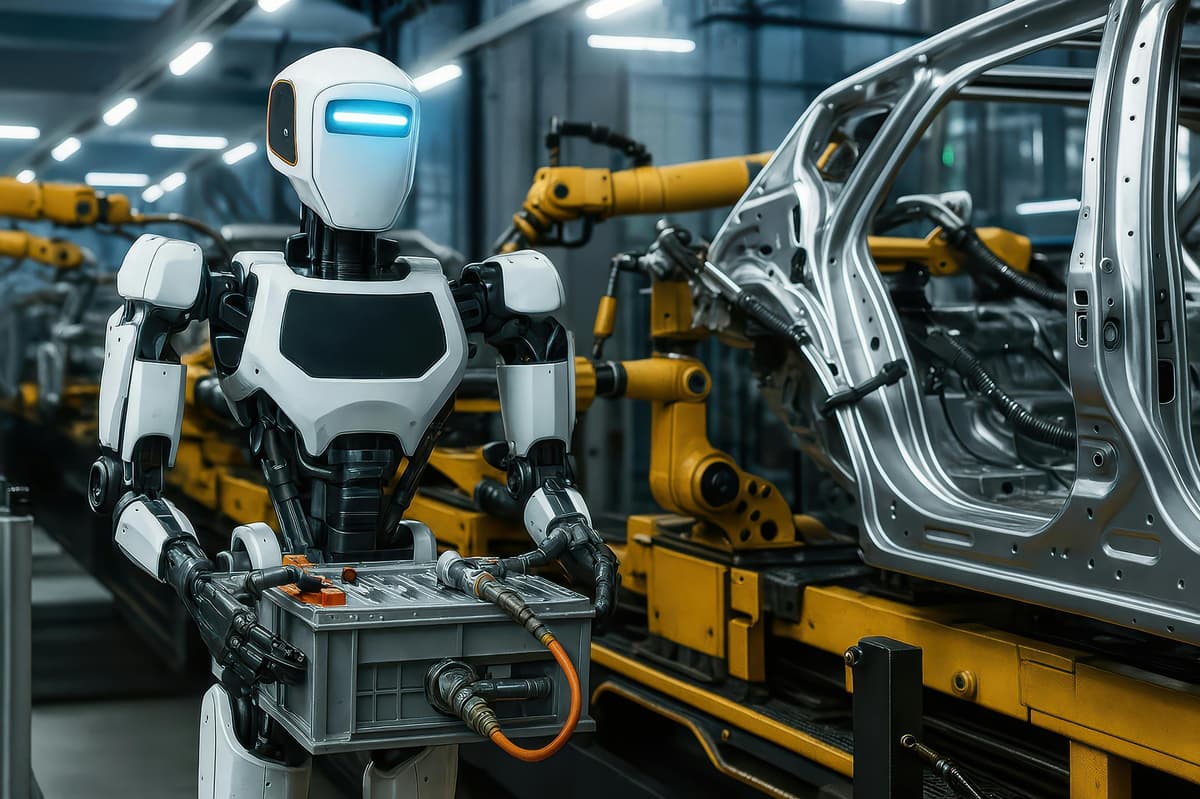
Why Humanoid Robots May Be the Wrong Bet for Industrial Automation
•February 26, 2026
0
Why It Matters
The engineering and safety drawbacks make humanoids a risky, cost‑inefficient bet for factories, steering capital toward proven, task‑optimized automation solutions.
Key Takeaways
- •Human-like form reduces stability versus quadruped designs.
- •High DoF increases complexity, lowering uptime.
- •Safety standards for manipulators don’t fully cover humanoids.
- •Redundancy needed for PL=e safety, raising costs.
- •Purpose-built robots outperform humanoids in reliability and cost.
Pulse Analysis
The allure of humanoid robots stems from their familiar shape, yet that very likeness imposes fundamental engineering penalties. Balancing a high center of gravity, intricate joint arrays and dexterous hands demands sophisticated control algorithms and robust hardware. In practice, the resulting systems suffer from poor static stability, limited agility and accelerated wear, especially when tasked with repetitive industrial cycles. By contrast, dedicated robotic arms with six degrees of freedom achieve higher availability because their simpler kinematics reduce failure points and streamline maintenance.
Safety considerations amplify these challenges. ISO 13849‑1 defines performance levels (PL) that quantify the likelihood of hazardous failures; a falling 30‑kg humanoid mandates at least PL c, often PL e in dynamic settings. Achieving such levels requires redundant actuators, fault‑tolerant sensors and rigorous risk assessments—features that inflate development costs and extend time‑to‑market. Moreover, existing standards like ISO 10218‑1 and ISO/TS 15066 address stationary manipulators but omit mobility risks, leaving a regulatory gray zone for walking robots. This gap hampers certification and erodes confidence among plant managers.
The market response reflects pragmatic risk management. Companies are investing in autonomous mobile robots, SCARA, delta and collaborative arms that are purpose‑engineered for specific tasks, delivering higher throughput, lower total cost of ownership and clearer compliance pathways. While research labs continue to explore humanoid prototypes, large‑scale adopters favor proven, task‑specific platforms that align with safety standards and operational reliability. As the industry matures, the emphasis will likely remain on specialization rather than mimicking human form, ensuring scalable automation without compromising safety or profitability.
Why Humanoid Robots May Be the Wrong Bet for Industrial Automation
0
Comments
Want to join the conversation?
Loading comments...