Why Most US Manufacturers Still Aren’t Using AI and Automation
Companies Mentioned
Why It Matters
The adoption gap threatens U.S. manufacturers’ global competitiveness and leaves a multi‑billion‑dollar productivity upside untapped. Accelerating AI deployment can boost output, lower costs, and strengthen supply‑chain resilience.
Key Takeaways
- •80% of U.S. plants have zero automation
- •Only 29% use AI/ML; 24% have generative AI
- •Digital maturity and structured data enable faster AI scaling
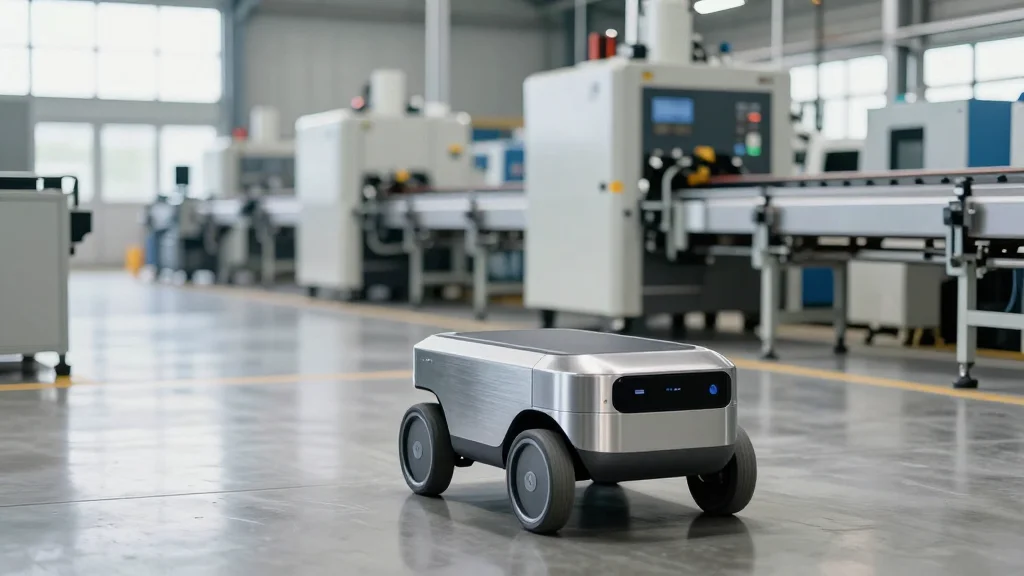
- •Incremental robots like AMRs lower risk versus full conveyor retrofits
- •Early adopters see 10‑20% output gains, spurring broader uptake
Pulse Analysis
U.S. manufacturers are at a crossroads as AI hype collides with on‑the‑ground reality. Recent surveys reveal that while 92% of firms consider smart manufacturing essential for future competitiveness, a stark 80% still operate without any automation and fewer than one‑third have integrated AI or machine learning. This lag contrasts sharply with Asian peers, where fully automated factories are becoming the norm, and underscores a systemic challenge: legacy equipment and siloed data that are ill‑suited for modern AI workloads.
The core impediments stem from digital immaturity. Companies entrenched in fragmented legacy systems struggle to cleanse and structure data, a prerequisite for reliable AI models. Moreover, many pilot projects deliver promising proofs of concept but fail to translate into enterprise‑wide ROI, prompting cautious capital allocation. Executives demand clear, quantifiable gains before committing to large‑scale rollouts, and without a solid data foundation, scaling remains risky. As a result, only about 20% of firms report having an AI‑ready model, and the majority linger in the planning stage.
Industry leaders suggest a pragmatic, incremental path forward. Deploying autonomous mobile robots (AMRs) or targeted automation for repetitive tasks can demonstrate quick wins without overhauling entire production lines. Early adopters have already logged 10‑20% improvements in output and labor productivity, creating a ripple effect that encourages peers to follow suit. Analysts project that, if these success stories proliferate, U.S. automation levels could triple by 2030, narrowing the gap with global competitors and unlocking significant economic value. Policymakers and technology providers alike are urged to support data‑centric initiatives and scalable pilot frameworks to accelerate this transition.
Why most US manufacturers still aren’t using AI and automation
Comments
Want to join the conversation?
Loading comments...