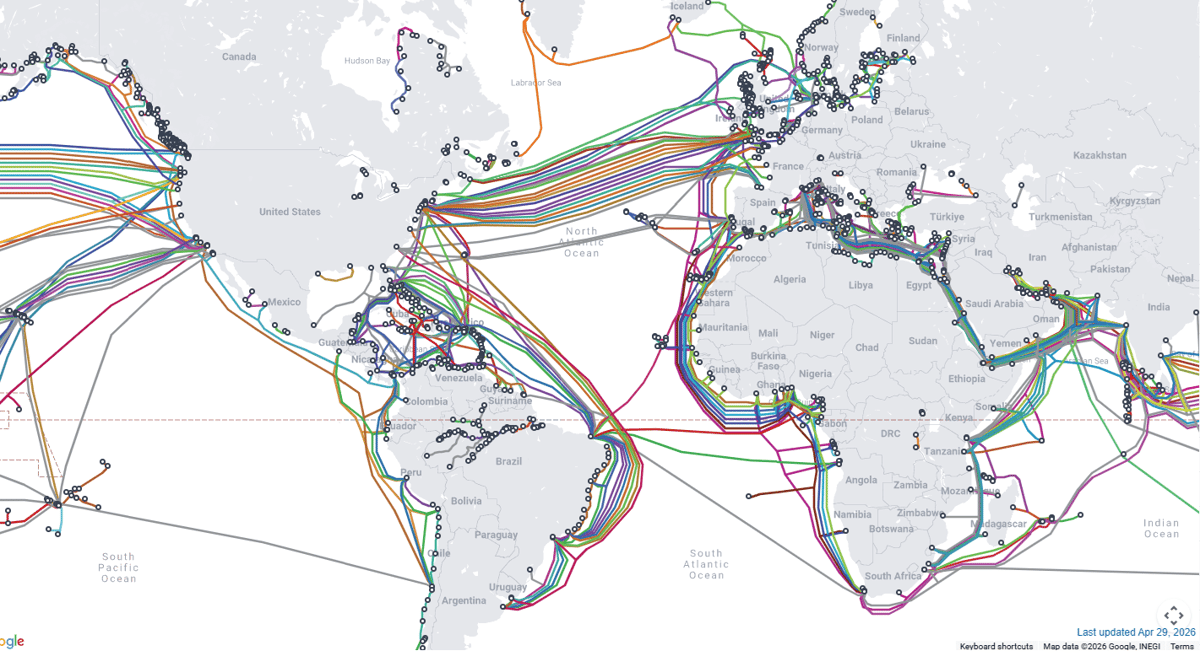
Why Undersea Internet Cables Matter to Global Supply Chains
Why It Matters
Because supply chains depend on near‑real‑time data, any cable outage can stall transactions and visibility, raising costs and uncertainty across the global trade network.
Key Takeaways
- •Undersea fiber cables are critical digital chokepoints for logistics
- •Disruptions can delay customs filings, payments, and visibility platforms
- •Supply chain risk programs must assess digital infrastructure dependencies
- •Redundancy planning should tier workflows by operational criticality
- •Geopolitical tensions, like over Hormuz, raise cable disruption risk
Pulse Analysis
The rise of data‑driven logistics has turned undersea fiber‑optic cables into the silent arteries of global trade. While ports and rail corridors have long been mapped in risk registers, the physical routes that carry transaction data, cloud workloads, and real‑time tracking signals have only recently entered the conversation. These cables support everything from customs filing systems to AI‑powered demand sensing, meaning a single fiber cut can ripple through payment settlements, inventory allocation and carrier communications, amplifying the impact of any physical disruption.
Geopolitical flashpoints such as the Strait of Hormuz illustrate how digital and physical chokepoints can converge. Nations can exert pressure not by blocking ships but by threatening the data pipelines that underpin trade finance and logistics platforms. The potential for legal, regulatory or even covert interference with cable landing stations adds a layer of uncertainty that traditional supply‑chain models do not capture. Companies therefore need to map their data flows, identify which routes cross high‑risk regions, and evaluate the likelihood of latency spikes or partial outages that could degrade critical applications.
For executives, the practical response is a tiered resilience strategy. Core workflows—customs submissions, payment authorizations, carrier tendering—must have documented fallback modes, such as alternative cloud regions, satellite links or manual processes that can operate under reduced bandwidth. Collaboration between supply‑chain, IT, risk and legal teams is essential to assign ownership of digital continuity and to embed escalation procedures into existing business‑continuity plans. By treating undersea cables as integral infrastructure, firms can close the governance gap and ensure that the invisible data layer remains as reliable as the ships and trucks that move goods across the world.
Why Undersea Internet Cables Matter to Global Supply Chains
Comments
Want to join the conversation?
Loading comments...