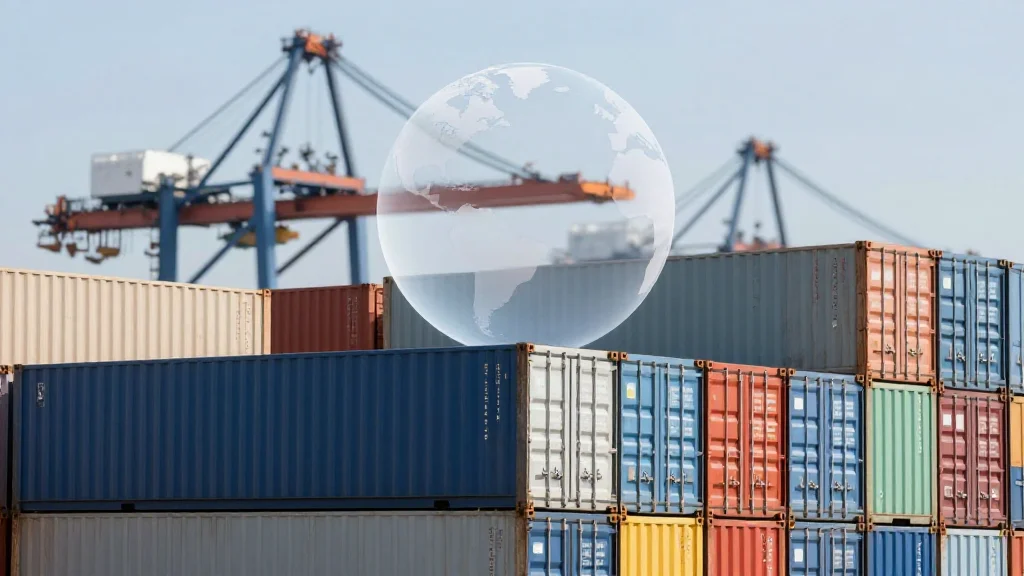
WTO Chief Urges ‘Re‑globalization’ to Cut Choke‑point Risks in Supply Chains

Why It Matters
Diversifying supply chains reduces the likelihood that a single geopolitical event or natural disaster can cripple global markets, a risk that has become starkly visible in recent years. By promoting multi‑regional production, the WTO aims to safeguard the flow of essential goods, protect consumer prices, and maintain the credibility of the multilateral trading system. A successful re‑globalization push could also recalibrate the balance of power between major economies. If countries collectively reduce dependence on any single dominant supplier, the leverage that major powers wield through export controls or sanctions may diminish, fostering a more stable and predictable trade environment.
Key Takeaways
- •WTO Director‑General Ngozi Okonjo‑Iweala called for "re‑globalization" of supply chains on May 18 in Tokyo.
- •The proposal targets choke‑point vulnerabilities in critical sectors such as semiconductors and pharmaceuticals.
- •Recent crises—including COVID‑19, the Russia‑Ukraine war, and US‑China tech decoupling—have highlighted supply‑chain fragility.
- •Re‑globalization emphasizes multi‑regional production, not protectionism, aiming to preserve the multilateral trade order.
- •Implementation will likely influence upcoming WTO Ministerial negotiations and regional trade agreements.
Pulse Analysis
Okonjo‑Iweala’s re‑globalization thesis arrives at a crossroads where resilience and openness must coexist. Historically, the WTO’s mandate has been to lower barriers, but the past decade has shown that a single‑sourcing model can be a strategic liability. By reframing resilience as a multilateral objective, the WTO is attempting to align national security concerns with its core principle of non‑discrimination. This could pave the way for a new class of trade rules that embed redundancy, akin to the aviation industry's shift toward diversified sourcing after the 2008 financial crisis.
The practical challenge lies in translating rhetoric into investment. Building parallel production lines demands capital, skilled labor, and policy certainty—resources that many emerging economies lack. Developed nations may step in with financing mechanisms, but they risk creating a new dependency cycle if subsidies are unevenly distributed. Moreover, firms will weigh the cost of duplication against the probability of disruption; without clear risk metrics, many may default to the status quo.
If the WTO can marshal consensus around a framework that incentivizes shared risk, the supply‑chain landscape could evolve into a more modular, networked system. Such a shift would not only blunt the impact of geopolitical flashpoints but also open opportunities for smaller players to enter global value chains, potentially democratizing access to high‑value manufacturing. The next few months—particularly the WTO Ministerial Conference—will reveal whether re‑globalization moves from concept to policy, and whether the trade body can retain relevance in an era where security and commerce are increasingly intertwined.
WTO chief urges ‘re‑globalization’ to cut choke‑point risks in supply chains
Comments
Want to join the conversation?
Loading comments...