ZIM Navigates Cooling Container Markets, Hapag-Lloyd Deal Looms
•March 9, 2026
0
Companies Mentioned
Why It Matters
The results illustrate the container market’s shift from pandemic‑driven excess to rate‑driven earnings pressure and signal accelerating consolidation among major liners.
Key Takeaways
- •2025 revenue fell 18% to $6.9 billion.
- •Net income dropped 78% to $481 million.
- •Fleet flexibility via 115 vessels, 36 new‑build charters.
- •Merger with Hapag‑Lloyd valued at $35 per share.
- •Dividend $240 million paid, half of net income.
Pulse Analysis
The 2025 financials from ZIM underscore a broader industry correction after years of unprecedented freight surges. While cargo volumes remained relatively stable, the sharp erosion of average rates—from $1,888 to $1,551 per TEU—driven by excess capacity and slower demand, has compressed margins across the sector. Investors are now focusing less on headline growth and more on operational efficiency, cash generation, and balance‑sheet resilience as the market normalizes.
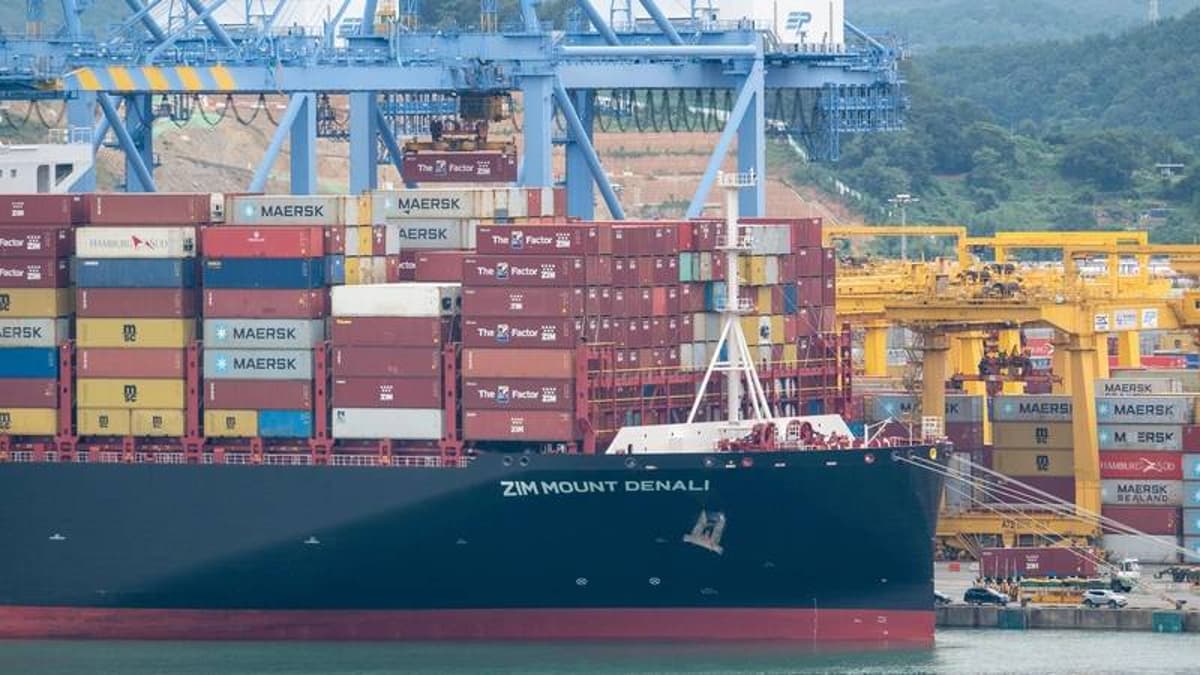
ZIM’s strategic emphasis on a charter‑centric fleet provides a clear hedge against cyclical volatility. Operating 115 containerships with a total capacity of roughly 707,000 TEU, the carrier can scale capacity quickly without the long‑term capital commitments of owned vessels. The recent charter agreements for 36 new‑build ships, many powered by dual‑fuel LNG engines, not only expand capacity by 250,000 TEU but also improve fuel efficiency and align with tightening environmental regulations. This flexible model supports ZIM’s niche‑route focus, allowing it to target profitable lanes while managing cost structures.
The pending acquisition by Hapag‑Lloyd marks a significant consolidation step, creating one of the world’s largest liner groups. Valued at $35 per share, the deal preserves ZIM’s brand through a new Israeli‑based operator, safeguarding regional identity while unlocking synergies in network optimization and vessel deployment. For shareholders, the merger promises continued dividend payouts and potential scale economies, but it also raises integration challenges as the combined entity navigates a market still pressured by new vessel deliveries and subdued freight rates. The outcome will shape competitive dynamics and could set a template for future mergers in a fragmented, cyclical industry.
ZIM Navigates Cooling Container Markets, Hapag-Lloyd Deal Looms
0
Comments
Want to join the conversation?
Loading comments...