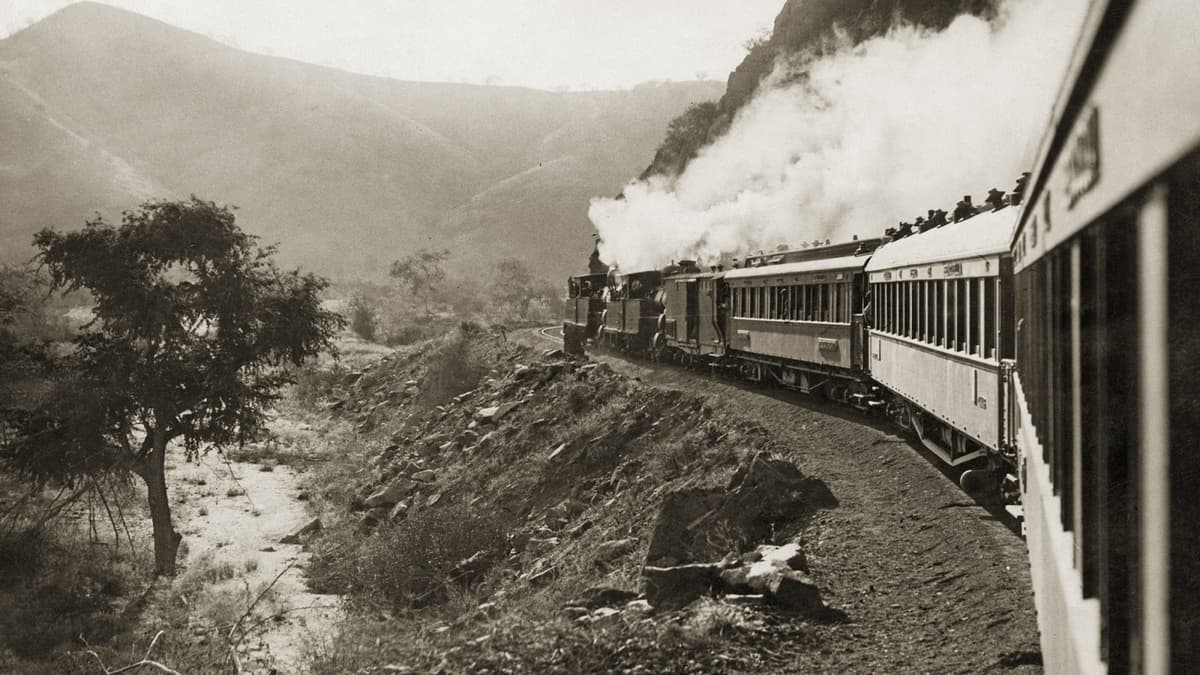
An Old Railroad Is Key to U.S.-China Race for Critical Metals in Africa
Key Takeaways
- •U.S., Angola, DRC sign 2023 MOU to revive Benguela Railway
- •China rebuilt Lobito line for $1.83 bn, now a geopolitical flashpoint
- •Only ~125,000 tonnes shipped by 2025, most still moved by road
- •Trump administration kept $550 m loan but ignored railway in mining deals
Pulse Analysis
The Democratic Republic of Congo sits atop a massive cache of cobalt, lithium and copper—minerals essential for electric vehicles, AI data centers and renewable‑energy infrastructure. For years, China has dominated both the extraction and processing stages, financing mines and building the transport networks that move ore to ports. As Washington seeks to reduce reliance on Beijing, the Lobito Corridor—an over‑a‑century‑old railway linking the Congolese Copperbelt to Angola’s Atlantic port—has become a symbolic and practical focal point for a new U.S. Africa strategy.
The railway’s revival hinges on a 2023 seven‑way memorandum of understanding that pledged to reopen the 1,300‑kilometre line, originally closed after a 1975 rebellion. Ironically, the very tracks the United States hopes to leverage were reconstructed by Chinese firms between 2006 and 2014 at a cost of $1.83 billion, giving China a lingering debt‑leveraged presence in Angola. Local trucking interests, entrenched since the 1970s, also resist a shift to rail, while Angola’s own political economy remains wary of foreign control over its infrastructure. These layers of historical, financial and political complexity have slowed cargo volumes, with just 125,000 tonnes—about a third of the projected capacity—moving through the corridor by mid‑2025.
Despite the modest throughput, the Lobito project remains a cornerstone of U.S. policy to counter Chinese influence in Africa’s critical‑metal supply chain. The Biden administration pledged a $550 million loan, and the Trump administration kept the financing while focusing on private‑sector mining deals, such as the acquisition of Congo’s Chemaf by a U.S. consortium. Yet road transport still dominates, and Chinese state‑owned firms continue to win construction contracts for feeder roads. The corridor’s future will depend on whether Washington can align private investment, local stakeholder interests, and diplomatic leverage to transform a symbolic railway into a reliable export artery, thereby reshaping the global metals market away from Beijing’s grip.
An old railroad is key to U.S.-China race for critical metals in Africa
Comments
Want to join the conversation?