Analysis: New CBO Projection Accounting for Trump Administration Policies Shows Americans Will Pay Billions More in Fuel Taxes
•March 3, 2026
0
Key Takeaways
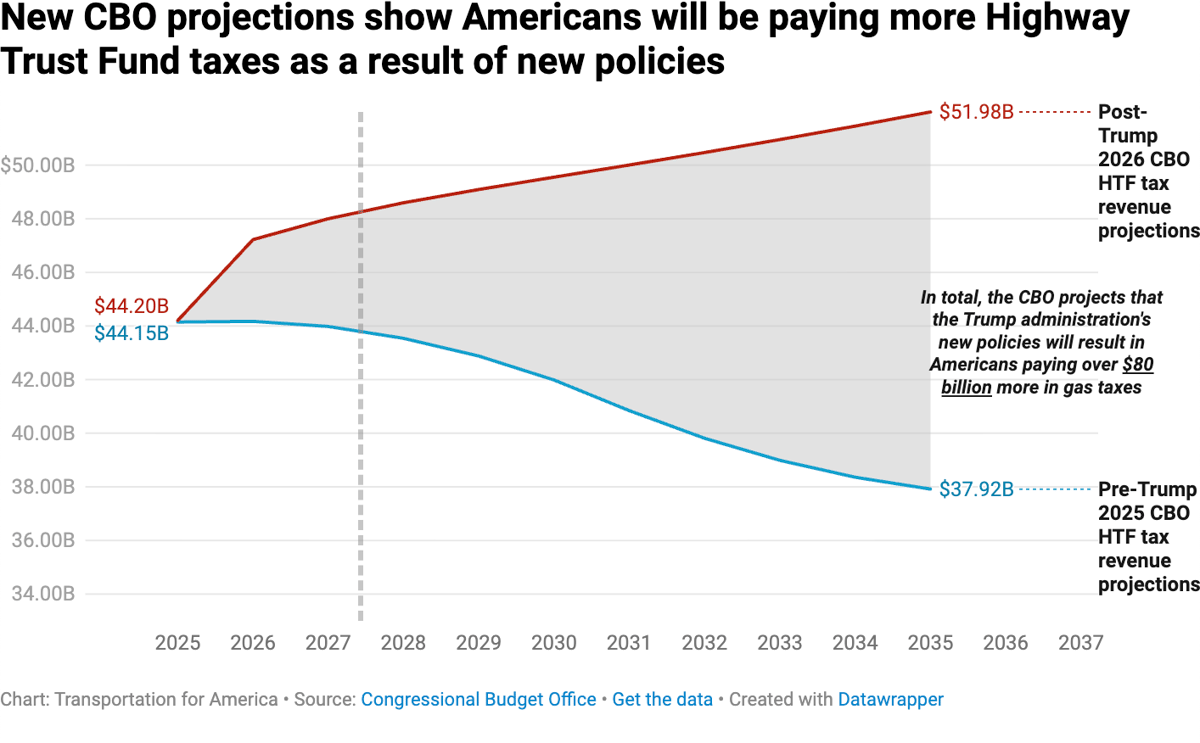
- •CBO forecasts $80 billion extra gas taxes by 2035.
- •Revenue rise barely delays Highway Trust Fund insolvency.
- •Trump rollbacks boost driving, curb fuel‑efficiency incentives.
- •Higher taxes increase costs for average motorists.
- •Critics say extra revenue insufficient for infrastructure needs.
Summary
The Congressional Budget Office now projects that Americans will pay more than $80 billion in additional gasoline taxes over the next decade, a sharp rise from earlier forecasts. The increase stems from Trump‑era transportation rollbacks that discourage fuel‑efficiency measures and freeze electric‑vehicle incentives, prompting higher vehicle miles traveled. Despite the higher revenue, the Highway Trust Fund’s balance still hits zero in 2028, meaning the extra taxes only postpone insolvency by a few weeks. Critics argue the boost is negligible compared with the fund’s mounting expenditure needs.
Pulse Analysis
The latest CBO projection marks a departure from the agency’s 2025 baseline, which assumed that expanding electric‑vehicle adoption and stricter fuel‑economy standards would erode gasoline tax receipts. By incorporating the Trump administration’s aggressive dismantling of EV grant programs, the suspension of CAFE standards, and the curtailment of numerous transportation grants, the office now anticipates a reversal: drivers will consume more fuel, pushing annual tax collections from $44.2 billion in 2025 to nearly $52 billion by 2035. This shift underscores how regulatory rollbacks can quickly translate into measurable fiscal outcomes.
Even with the projected revenue surge, the Highway Trust Fund’s solvency outlook improves only marginally. The fund, which finances federal highway construction and maintenance, is slated to run out of cash in 2028 under current spending patterns. The additional billions are expected to arrive primarily in the early 2030s, delaying the zero‑balance point by only a few weeks. Policymakers therefore face a stark choice: rely on modest tax gains that barely offset escalating project costs, or pursue comprehensive reforms that address both revenue sources and expenditure discipline.
For motorists, the policy calculus translates into higher out‑of‑pocket expenses without corresponding improvements in road safety, congestion, or emissions. As fuel‑efficiency incentives dwindle, average vehicle fuel consumption rises, inflating the cost of daily commutes and long‑distance travel. Meanwhile, the fund’s chronic underfunding threatens the quality of the nation’s highway network, potentially increasing accident rates and travel delays. Stakeholders—from think tanks to industry groups—must weigh the short‑term fiscal relief against the long‑term economic and environmental costs of a transportation system that remains under‑invested despite higher tax intake.
Comments
Want to join the conversation?