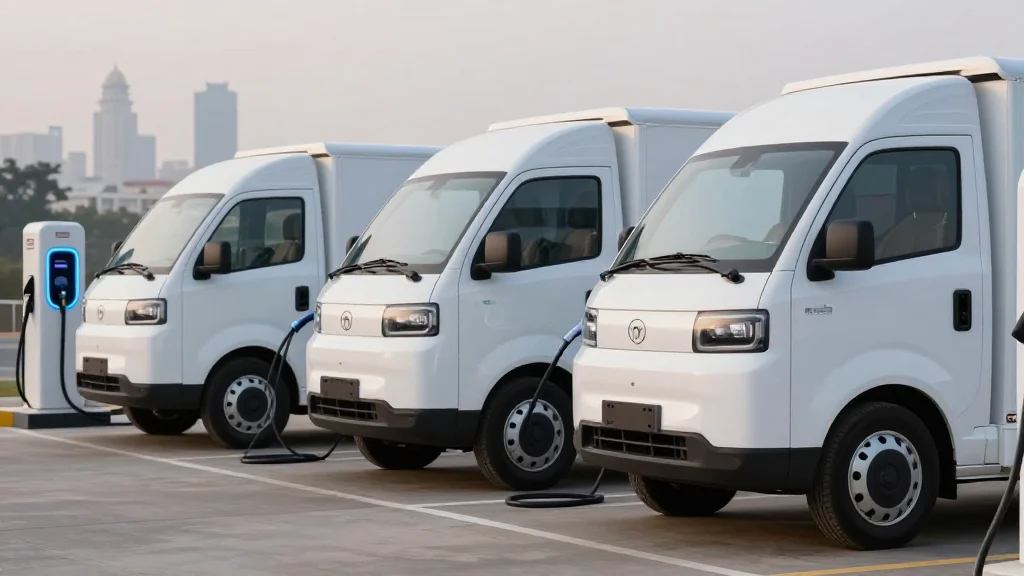
Amazon Leveraging Own Charging Infrastructure to Grow Electric Delivery Fleet in India
Companies Mentioned
Why It Matters
Scaling electric logistics in India demonstrates how major e‑commerce players can drive EV adoption despite infrastructure gaps, reshaping supply‑chain emissions and competitive dynamics.
Key Takeaways
- •Amazon aims to add 1,000 electric trucks in India by 2031.
- •Current Indian fleet already totals 10,000 electric delivery vehicles.
- •On‑site chargers at delivery stations handle most charging needs.
- •Partnership with Eicher will supply the new electric trucks.
- •Amazon is exploring rail freight electrification with Indian Railways.
Pulse Analysis
India’s logistics sector is at a crossroads, with e‑commerce giants like Amazon testing the limits of electric mobility in a market still grappling with limited public charging infrastructure. While the country’s power grid struggles to meet rising demand, Amazon’s strategy of installing proprietary chargers at delivery stations sidesteps the immediate need for widespread public stations, ensuring that its growing fleet can operate reliably. This approach mirrors similar tactics in Europe and the United States, where firms prioritize controlled charging environments to mitigate grid strain and maintain operational efficiency.
Beyond on‑site power, Amazon is forging partnerships to accelerate vehicle deployment and diversify energy sources. A recent agreement with commercial‑vehicle manufacturer Eicher will deliver 1,000 electric trucks, bolstering the company’s last‑mile capabilities. Simultaneously, discussions with Indian Railways aim to electrify freight corridors, potentially shifting bulk shipments from road to rail and reducing overall carbon intensity. These collaborations reflect a broader industry trend: leveraging local expertise and infrastructure to overcome systemic bottlenecks while keeping capital expenditures in check.
The implications extend beyond Amazon’s balance sheet. By committing to a sizable electric fleet, the retailer signals confidence in India’s long‑term EV viability, encouraging suppliers, policymakers, and competitors to invest in charging networks and renewable grid upgrades. As more packages travel on silent, zero‑emission trucks, urban air quality could improve, and the logistics cost curve may flatten as electricity prices remain competitive with diesel. Amazon’s actions thus serve as a catalyst for a greener, more resilient supply chain in one of the world’s fastest‑growing economies.
Amazon leveraging own charging infrastructure to grow electric delivery fleet in India
Comments
Want to join the conversation?
Loading comments...