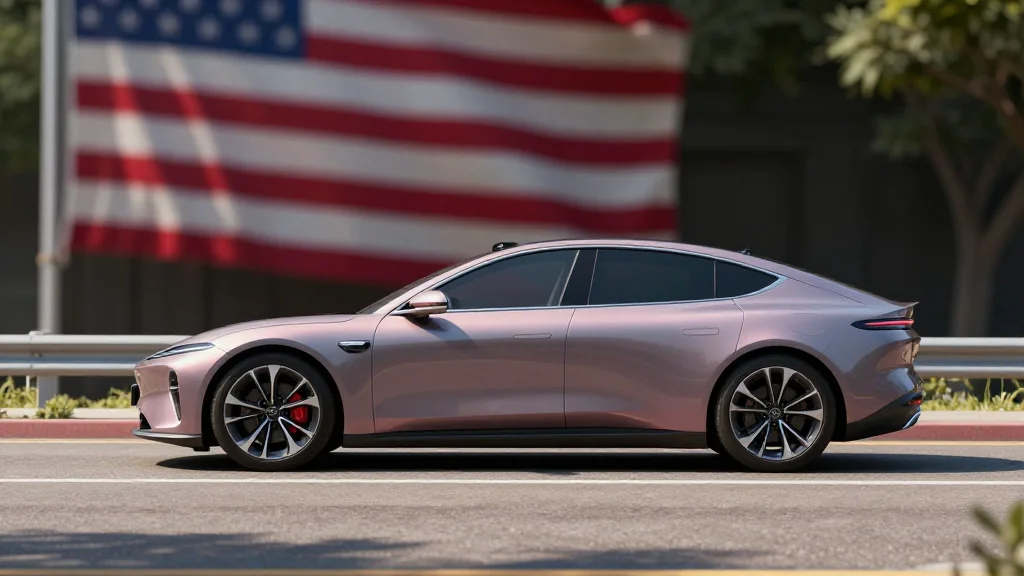
An Inevitable Rise in Chinese-Made EVs in America?
Companies Mentioned
Why It Matters
The debate pits national‑security and job‑preservation concerns against the inevitable pressure of lower‑cost, tech‑savvy Chinese EVs, shaping future trade policy and the competitive landscape of the U.S. auto industry.
Key Takeaways
- •Biden and Trump both support 100% tariff on Chinese EVs.
- •Chinese EVs are cheaper and feature advanced software.
- •Cars enter US through Mexican border dealerships.
- •National‑security concerns focus on data collection near sensitive sites.
- •Executives expect Chinese EVs will eventually capture US market share.
Pulse Analysis
Bipartisan resistance to Chinese electric vehicles reflects a rare policy alignment in Washington. President Biden’s 100% tariff, reinforced by former President Trump’s rhetoric, frames the issue as both a national‑security threat and an economic safeguard for domestic manufacturers. Lawmakers argue that Chinese EVs could harvest sensitive location data, especially near military installations, while also undercutting the pricing power of legacy automakers. This dual‑pronged stance has hardened trade barriers, yet it also signals a willingness to revisit policy if market dynamics shift.
Chinese automakers have leveraged a decade of joint‑venture production in China to master both hardware assembly and sophisticated software ecosystems. Their vehicles often undercut U.S. competitors by 20‑30% on price while offering intuitive infotainment and over‑the‑air updates that appeal to tech‑savvy consumers. Despite the tariff, these cars are finding a back‑door entry point: Mexican border towns where dealers sell them to dual‑citizens and cross‑border commuters. This informal channel provides American drivers a glimpse of the competition, eroding the perceived protection offered by tariffs and highlighting the porous nature of North American trade.
The long‑term implications for Detroit are profound. If Chinese EVs secure a larger U.S. footprint, traditional manufacturers could face accelerated market‑share erosion and pressure to lower prices or accelerate innovation. Policymakers may need to balance security concerns with realistic trade enforcement, possibly shifting from blanket tariffs to targeted regulations on data handling and safety standards. For investors and industry executives, the message is clear: preparing for a competitive influx of Chinese EVs is no longer optional but a strategic imperative.
An inevitable rise in Chinese-made EVs in America?
Comments
Want to join the conversation?
Loading comments...