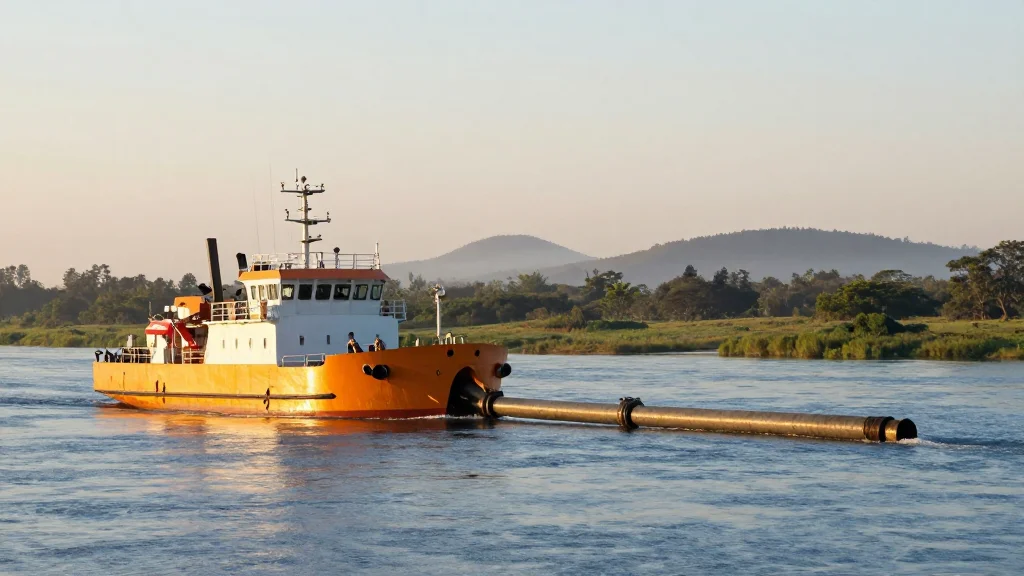
Argentina Gives $10 Billion Parana River Upgrade to Jan De Nul, Raising US‑China Stakes

Why It Matters
The Parana River upgrade reshapes the logistics backbone of the Southern Cone, potentially lowering freight costs and expanding market access for agricultural exporters. By involving a firm with Chinese ties, the contract becomes a proxy battleground for U.S. and Beijing influence in Latin America, where infrastructure projects often double as strategic footholds. The outcome will affect not only trade volumes but also the diplomatic calculus of regional powers seeking to secure economic corridors. For the broader transportation sector, the project illustrates how mega‑infrastructure deals are increasingly evaluated through a geopolitical lens. Investors, shippers, and policymakers must now weigh technical merit against the strategic affiliations of contractors, a dynamic that could redefine how future ports, railways, and waterways are financed and built across emerging markets.
Key Takeaways
- •Argentina awarded a 25‑year, $10 billion contract to Jan de Nul NV for Parana River deepening
- •Parana River links Buenos Aires to Rosario, handling >$30 billion in annual cargo
- •Contract involves a venture with historic Chinese equity, sparking U.S. concerns
- •Projected 20% increase in vessel capacity could add $6 billion in trade revenue
- •Project slated to start engineering in Q4 2024, dredging operations in 2027
Pulse Analysis
The Parana River contract underscores a new era where infrastructure procurement is inseparable from great‑power rivalry. Milei’s administration, eager to showcase fiscal prudence, chose a technically proven contractor despite its Chinese connections, signaling that economic imperatives can outweigh geopolitical caution in the short term. However, the decision also opens a diplomatic back‑channel for Washington to engage Argentina through alternative financing or joint‑venture opportunities, potentially reshaping the competitive landscape for future Latin American projects.
Historically, South America’s riverine transport has lagged behind road and rail investments, limiting export efficiency. By committing $10 billion to a single waterway, Argentina is betting on a modal shift that could set a precedent for other nations with underutilized inland waterways. If the project delivers the projected capacity gains without environmental fallout, it may catalyze a wave of similar upgrades across the continent, attracting both private capital and state support.
Yet the geopolitical undercurrents cannot be ignored. China’s Belt and Road strategy has long leveraged infrastructure to cement trade ties, and the Parana deal fits that pattern, albeit through a European intermediary. The United States is likely to counter with its own infrastructure diplomacy, perhaps accelerating projects like the Panama Canal expansion or offering loan guarantees to rival firms. The success or failure of Jan de Nul’s execution will therefore be measured not just in meters of dredged depth but in the balance of influence it tips between Washington and Beijing in the region.
Argentina Gives $10 Billion Parana River Upgrade to Jan de Nul, Raising US‑China Stakes
Comments
Want to join the conversation?
Loading comments...