Asian Operators and Shipowners Spearhead More Feeder Ordering
Companies Mentioned
Why It Matters
The surge underscores Asian dominance in feeder‑segment newbuilding, tightening shipyard pipelines and reshaping global container capacity. It also signals a shift toward larger, more fuel‑efficient vessels as the industry adapts to trade patterns and environmental mandates.
Key Takeaways
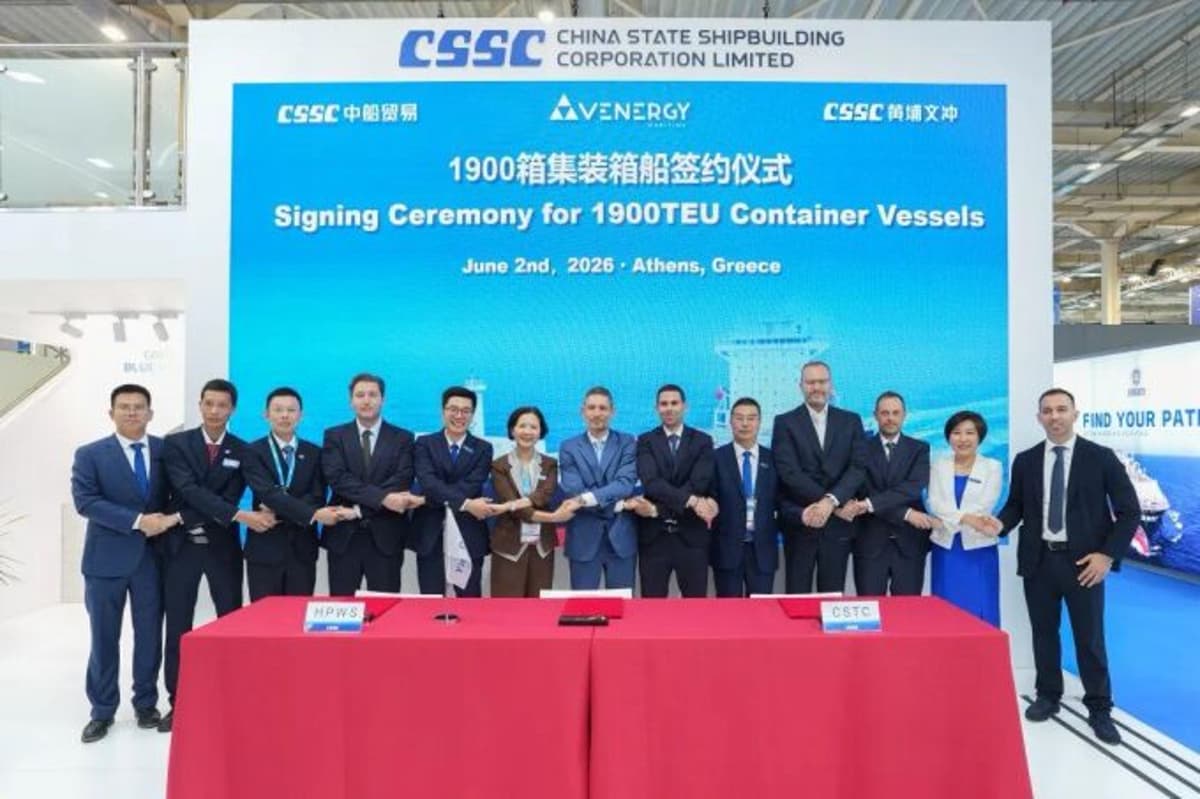
- •Venergy Maritime adds two 1,900 teu vessels, options for four more.
- •MTT Shipping invests $80 m in two 3,300 teu ships for 2029 delivery.
- •NBOSCO orders four 1,900 teu ships, budgeting $251 m.
- •Baozhou launches first newbuilds: two 2,700 teu vessels, options pending.
- •Zodiac and K Line commission LNG‑dual‑fuel car carriers for EV export growth.
Pulse Analysis
The feeder market is experiencing a renaissance, largely fueled by Asian carriers seeking to capture intra‑regional trade growth and alleviate port congestion. Chinese shipyards, especially CSSC Huangpu Wenchong and Wuhu, are benefitting from deep order books, allowing them to scale production while offering competitive pricing. This regional focus contrasts with a historically European‑led newbuilding cycle, indicating a strategic pivot toward the high‑volume Asia‑Pacific lanes where demand for 1,800‑2,000‑teu vessels remains robust.
Financially, the orders represent billions of dollars in capital commitment. MTT Shipping’s allocation of roughly $80 million from its $165 million IPO illustrates how fresh capital is being directed toward fleet expansion and modernization. Similarly, NBOSCO’s $251 million budget reflects confidence in sustained cargo volumes, while Baozhou’s entry into newbuilds signals that newer, financially agile players are leveraging cost‑effective Chinese shipyards to accelerate growth. The shift toward larger feeder sizes, such as 3,300‑teu ships, improves economies of scale and aligns with port infrastructure upgrades across the region.
Beyond containers, the commissioning of LNG‑dual‑fuel car carriers by Zodiac Maritime and K Line highlights the industry’s broader environmental transition. These vessels, priced around $90 million each, are positioned to support the burgeoning export of Chinese electric vehicles, meeting stricter emissions standards while tapping into lucrative European markets. As Asian demand continues to dominate, European buyers may find opportunities in niche segments, but the overall supply dynamics will be shaped by Chinese shipyard capacity, fuel‑efficiency mandates, and the evolving trade landscape.
Asian operators and shipowners spearhead more feeder ordering
Comments
Want to join the conversation?
Loading comments...