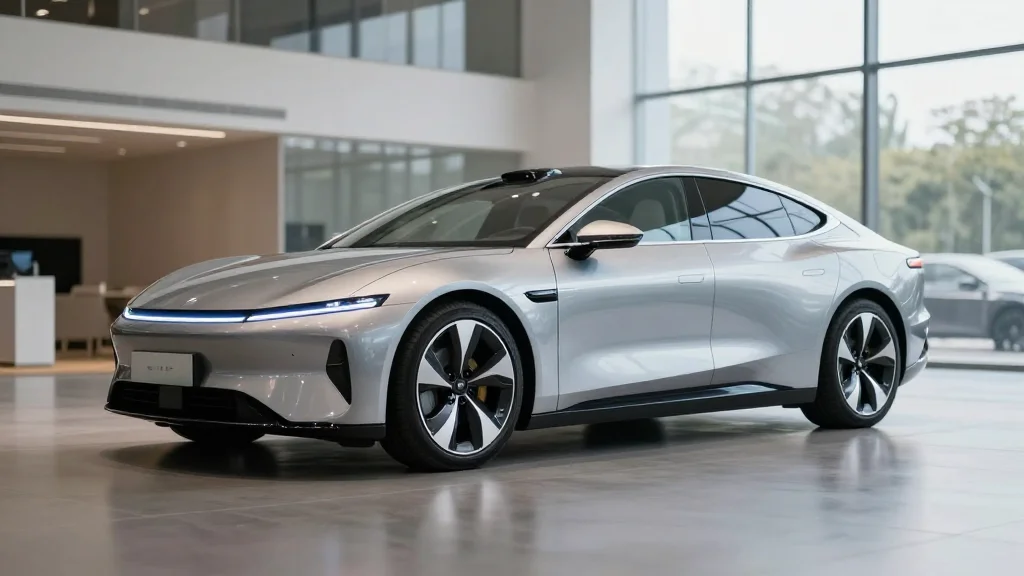
Auto China 2026: Huawei’s Ascent From Backend Supplier to Automotive Industry Front-Runner
Companies Mentioned
Why It Matters
Huawei’s ascendancy gives it control over critical vehicle software and hardware, forcing traditional OEMs to become contract assemblers and reshaping profit dynamics across China’s auto market.
Key Takeaways
- •Huawei occupies 4,400 m², outpacing BYD and German rivals
- •Huawei’s “Smart Selection” model drives profit for Seres
- •OEMs pay $13,400 per vehicle for Huawei tech
- •Partners become contract manufacturers, losing R&D autonomy
- •Industry faces dependence risk on Huawei’s “Auto Wintel” platform
Pulse Analysis
The 2026 Beijing Auto Show turned into a visual barometer of power realignment in the automotive sector, with Huawei commanding more than 4,400 square meters of exhibition space—slightly larger than BYD’s pavilion and the combined footprint of Mercedes‑Benz, BMW and Audi. The Chinese tech giant displayed its Harmony Intelligent Mobility Alliance, Qiankun Intelligent Automotive Technology and a network of partner booths, signalling a deliberate move from a backend parts supplier to the architect of the next intelligent‑driving era. By clustering its ecosystem across multiple pavilions, Huawei announced that it now defines standards, software platforms and user experiences rather than merely providing chips.
Huawei’s “Smart Selection” model, already proven by Seres, charges roughly $13,400 per vehicle for parts, IP licensing and technical services, yet still leaves the OEM with a per‑car net profit of about $2,050 and a total 2025 profit of $872 million. The arrangement pushes brands such as AITO, Luxeed and Xiangjie into a Huawei‑led product definition, R&D and marketing hierarchy, while the “Qiankun HI Plus” tier relegates partners like Huajing and Yijing to pure contract assembly. Analysts label the structure an “Auto Wintel” – a hardware‑software partnership that gives Huawei control of chassis, cockpit and autonomous‑driving stacks across China’s mass‑market segment.
The rapid ascendancy creates both opportunity and vulnerability. OEMs gain accelerated intelligent‑driving upgrades without massive R&D spend, but they also surrender strategic technology ownership, raising concerns about long‑term dependence and homogenized vehicle platforms. Global manufacturers watching the Beijing show must decide whether to adopt Huawei’s ecosystem, develop competing in‑house solutions, or seek alternative partnerships to preserve R&D independence. The emerging balance between innovation speed, supply‑chain resilience and ecosystem control will shape the competitive dynamics of the automotive industry for the next decade.
Auto China 2026: Huawei’s ascent from backend supplier to automotive industry front-runner
Comments
Want to join the conversation?
Loading comments...