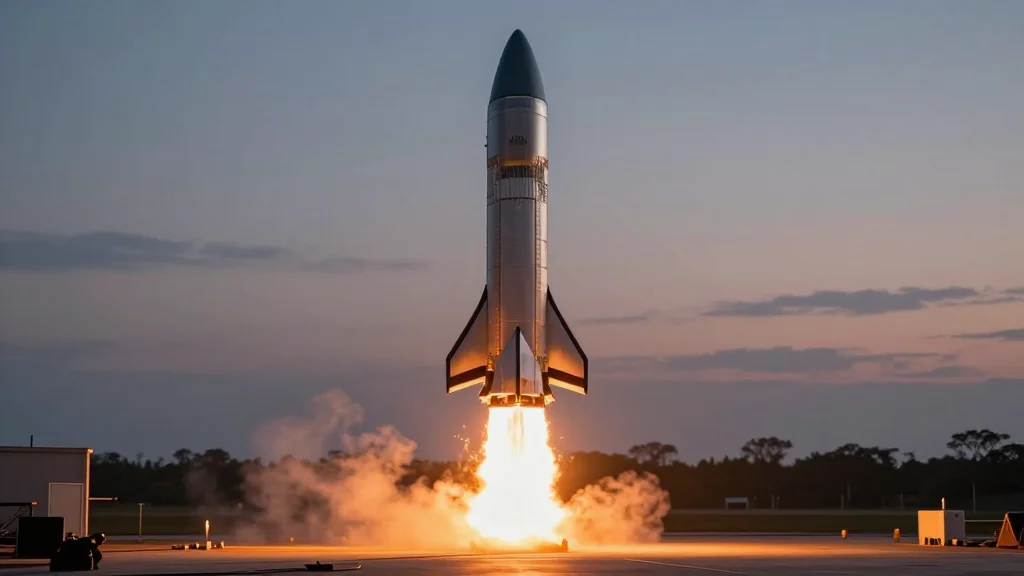
Blue Origin's New Glenn Rocket Explodes in Test, Threatening Artemis Timeline

Companies Mentioned

Why It Matters
The New Glenn explosion strikes at the heart of the United States' strategy to return humans to the Moon and establish a permanent lunar base. NASA’s Artemis program depends on reliable heavy‑lift launchers to deliver cargo, habitats, and eventually crew. A delay in New Glenn’s return to service could force NASA to lean more heavily on SpaceX’s Starship, reshaping the competitive dynamics of the emerging space‑transportation market. Beyond government missions, the incident underscores the technical risks of methane‑based rocket engines, which promise higher performance but also introduce new failure modes. Commercial satellite operators, lunar‑resource companies, and investors will reassess risk models for future launches, potentially affecting financing, insurance premiums, and the pace of infrastructure development in low‑Earth orbit and beyond.
Key Takeaways
- •New Glenn exploded during a hot‑fire test at Kennedy Space Center on May 29, 2026.
- •No injuries reported; Jeff Bezos pledged to rebuild and investigate.
- •Explosion likely originated at the base of the first stage during BE‑4 engine ignition.
- •NASA’s Artemis lunar‑landing schedule could be delayed from 2028 to 2029.
- •The incident may impact United Launch Alliance’s Vulcan program, which also uses BE‑4 engines.
Pulse Analysis
Blue Origin’s setback is a stark reminder that the commercial space sector is still in a formative, high‑risk phase. While methane‑fuelled BE‑4 engines promise higher specific impulse and lower carbon emissions compared with kerosene, they also demand new materials and cooling techniques that have not yet been proven at scale. The New Glenn failure could accelerate industry‑wide scrutiny of methane propulsion, prompting both regulators and insurers to tighten safety requirements and premiums for future launches.
Strategically, the incident could tilt the balance of power toward SpaceX, which already commands a dominant share of U.S. heavy‑lift capability. If New Glenn cannot be certified before the end of 2027, NASA may be forced to rely exclusively on SpaceX’s Starship for Artemis cargo and crew missions, consolidating market share and potentially stifling competition. This concentration risk could spur policy discussions about diversifying launch providers to safeguard national security and scientific objectives.
Finally, the broader economic impact may be muted in the short term but could manifest in delayed revenue streams for Blue Origin’s satellite‑launch services and the lunar‑base construction contracts tied to Artemis. Investors will likely monitor the timeline for the rebuilt launch pad and the next test flight closely, as any prolonged gap could erode confidence in Blue Origin’s ability to meet its contractual obligations, influencing future funding rounds and partnership negotiations.
Blue Origin's New Glenn Rocket Explodes in Test, Threatening Artemis Timeline
Comments
Want to join the conversation?
Loading comments...