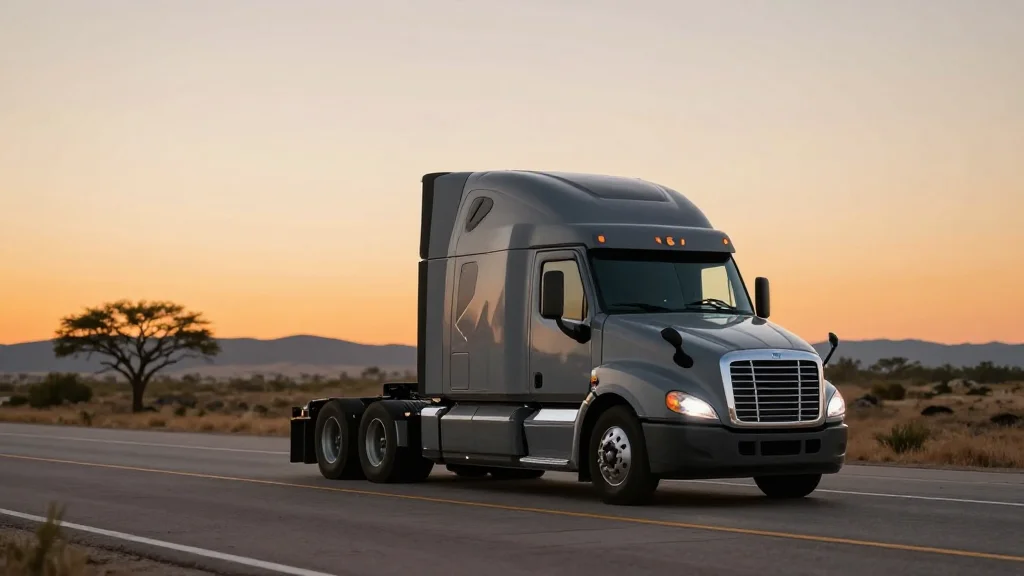
Bot Auto Names Brett Suma as President and COO to Scale Autonomous Trucking
Why It Matters
By pairing proven autonomous technology with seasoned freight leadership, Bot Auto aims to create a commercially viable, driver‑free logistics model that could reshape cost structures and network design in the trucking industry.
Key Takeaways
- •Bot Auto hires Brett Suma, veteran of TrailerHawk.ai, as President & COO
- •Suma emphasizes building a purpose‑built AI freight network, not retrofitting existing fleets
- •Company plans to launch corridor‑by‑corridor autonomous service starting in Texas by 2026
- •Mixed fleets idle autonomous trucks; Bot Auto avoids driver conflict, starts clean
- •First human‑less commercial load proves technology, shifting focus to scalable operations
Pulse Analysis
The autonomous trucking sector has long wrestled with the paradox of advanced vehicles trapped in legacy networks. Bot Auto’s recent human‑less commercial run demonstrates that the hardware and software are finally ready for real‑world use, but the company’s next hurdle is operational scalability. By recruiting Brett Suma—an industry veteran who helped build and sell TrailerHawk.ai—the firm signals a shift from pure technology development to seasoned freight‑network execution, a move that investors and carriers are watching closely.
Suma’s philosophy centers on constructing a native AI freight network rather than bolting autonomous tractors onto existing routes. Traditional fleets suffer from driver‑centric inefficiencies: mismatched corridors, under‑utilized hours, and the inevitable friction when autonomous assets compete with seasoned drivers for preferred loads. Bot Auto sidesteps these pain points by launching a clean‑sheet network, optimizing lane selection, facility placement, and asset deployment from the ground up. This purpose‑built approach promises higher utilization rates and lower per‑mile costs, addressing the core economic barrier that has stalled many autonomous pilots.
Looking ahead, Bot Auto’s Texas‑first rollout serves as a proving ground for its corridor‑by‑corridor model. The state’s dense freight corridors and supportive regulatory environment provide an ideal laboratory for scaling autonomous fleets without legacy constraints. If the company can demonstrate consistent, cost‑effective service across multiple corridors by 2026, it could force incumbents to reconsider retrofitting strategies and accelerate industry‑wide adoption of driver‑free logistics. The success of this model will likely become a benchmark for evaluating the commercial viability of autonomous freight solutions.
Bot Auto names Brett Suma as president and COO to scale autonomous trucking
Comments
Want to join the conversation?
Loading comments...