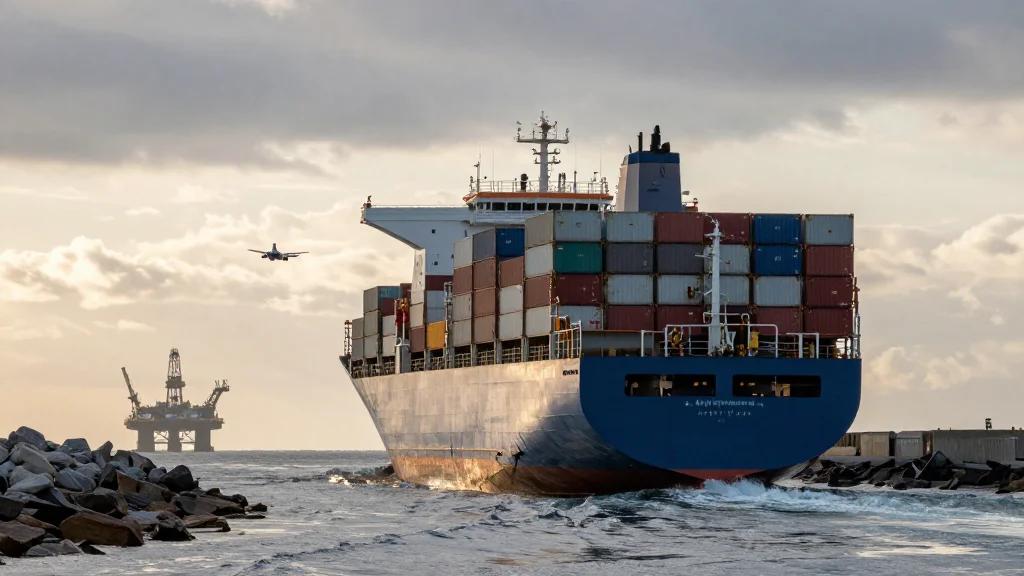
Breakbulk26: Maritime Partnerships Transcend Uncertainty Amid Middle East War
Why It Matters
Disruptions to a key chokepoint threaten global supply chains and energy security, prompting firms to rethink routing, partnerships, and diversification strategies.
Key Takeaways
- •Strait of Hormuz closure forces shipments to reroute via Sri Lanka, India
- •Strong vendor-client relationships become critical amid geopolitical disruptions
- •Iran may monetize Hormuz with future toll system, analyst warns
- •US aims to expand energy exports to Asia, Europe as alternatives
- •China‑Taiwan tensions could cause sporadic maritime blockades, not full war
Pulse Analysis
The closure of the Strait of Hormuz, a vital artery for oil and container traffic, has immediate ripple effects across global logistics. When vessels are forced to off‑load in Sri Lanka or India, shippers must rely on established contacts at steamship lines to secure space, obtain real‑time updates, and manage cost differentials. This reality underscores a broader industry lesson: resilient supply chains now hinge on deep, reciprocal relationships between carriers, forwarders, and end‑users, turning partnership depth into a competitive advantage.
Beyond routing challenges, the conflict accelerates the urgency for diversified energy supplies. Analysts at S&P Global note that Iran may leverage the chokepoint by instituting a toll regime, turning a geopolitical lever into a revenue stream. Simultaneously, the United States is amplifying domestic production and courting Asian and European buyers for its surplus, seeking to reduce reliance on Middle Eastern oil. These dynamics encourage EPC firms and traders to embed energy‑source flexibility into project financing and procurement, mitigating exposure to sudden price spikes or supply cuts.
Looking farther east, the specter of China‑Taiwan tensions adds a layer of uncertainty that could manifest as intermittent maritime blockades rather than full‑scale conflict. While a large‑scale war remains unlikely through 2027, sporadic disruptions could still impact shipping lanes in the South China Sea, compelling logistics planners to develop multi‑route contingency frameworks. Companies that invest now in diversified port networks, digital visibility tools, and cross‑regional alliances will be better positioned to sustain operations amid an increasingly volatile geopolitical landscape.
Breakbulk26: Maritime partnerships transcend uncertainty amid Middle East war
Comments
Want to join the conversation?
Loading comments...