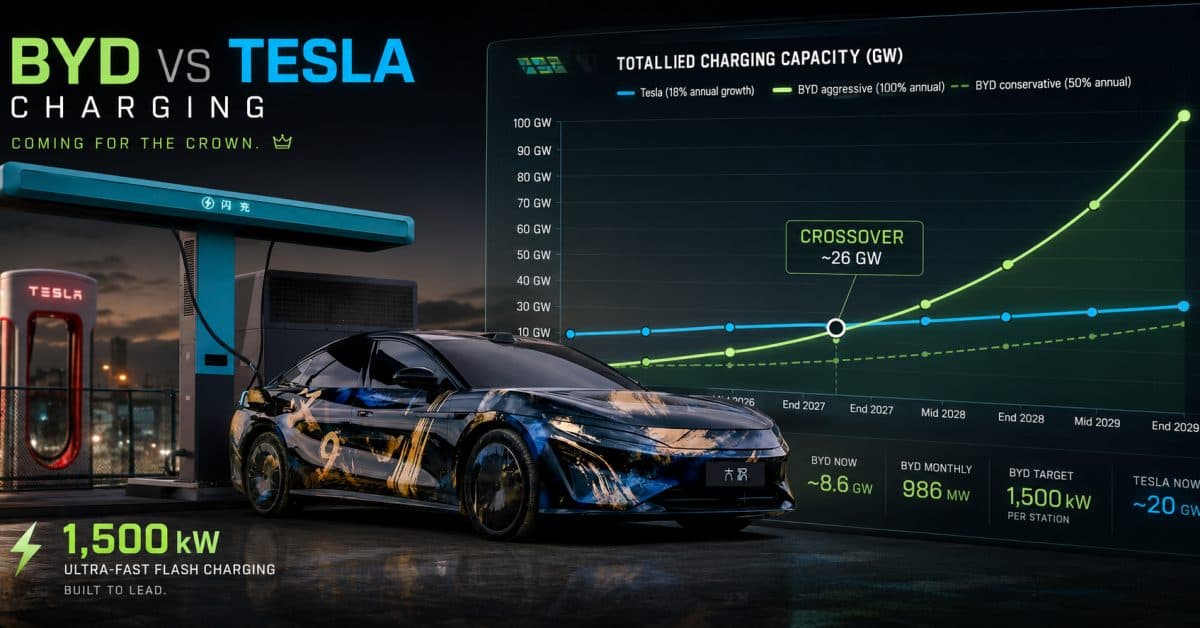
BYD Is Deploying 2.4x More Charging Power per Month than Tesla
Companies Mentioned
Why It Matters
BYD’s aggressive rollout and higher charging power could pressure Tesla to accelerate its own network upgrades, reshaping global EV infrastructure competition. The disparity also highlights how trade policy can limit U.S. consumers from benefiting from rapid charging innovations.
Key Takeaways
- •BYD's Flash Charging delivers up to 1,500 kW, triple Tesla V4 capacity
- •BYD installed 5,715 stations in China within two months, ~650/month
- •Tesla has ~8,500 stations; BYD aims for 20,000 in China by 2026
- •BYD's chargers use CCS2 and aim for sub‑$0.65/kWh pricing in Europe
- •U.S. tariffs keep BYD's Flash Charging out of the American market
Pulse Analysis
BYD’s Flash Charging network is redefining the speed benchmark for electric‑vehicle refueling. By delivering up to 1,500 kW, the system can replenish a BYD vehicle from 10 % to 70 % state‑of‑charge in just five minutes—far outpacing Tesla’s V4 Superchargers, which top out at 500 kW and are limited by vehicle compatibility. This power advantage, combined with the open‑access CCS2 connector, positions BYD as a potential catalyst for broader industry adoption of ultra‑fast charging standards, especially in markets where Tesla’s proprietary NACS plug dominates.
The rollout velocity underscores BYD’s strategic ambition. After launching on March 5, 2026, the company reached 5,000 stations in under a month and surpassed 5,700 by early May, averaging 650‑700 new sites each month. Partnerships with Sinopec’s 30,000‑plus fuel stations and a nascent European footprint—already featuring a German pilot and a target of 6,000 overseas stations by 2027—suggest a scaling model that could eclipse Tesla’s 8,500‑station global network within the next few years. Pricing signals, such as sub‑50 pence (≈ $0.64) per kWh, aim to undercut existing fast‑charging operators and attract a broader EV customer base.
The competitive dynamic promises benefits for global EV adoption but also exposes geopolitical friction. While Europe, Southeast Asia, and Australia may see faster, cheaper charging options, U.S. consumers remain locked out due to 100 % tariffs on Chinese EVs and software bans. This protectionist stance not only limits market choice but could slow domestic innovation as Tesla faces less pressure to upgrade its infrastructure. As BYD continues to expand, the industry will watch whether regulatory shifts or strategic alliances can bridge the gap, potentially reshaping the global charging landscape.
BYD is deploying 2.4x more charging power per month than Tesla
Comments
Want to join the conversation?
Loading comments...