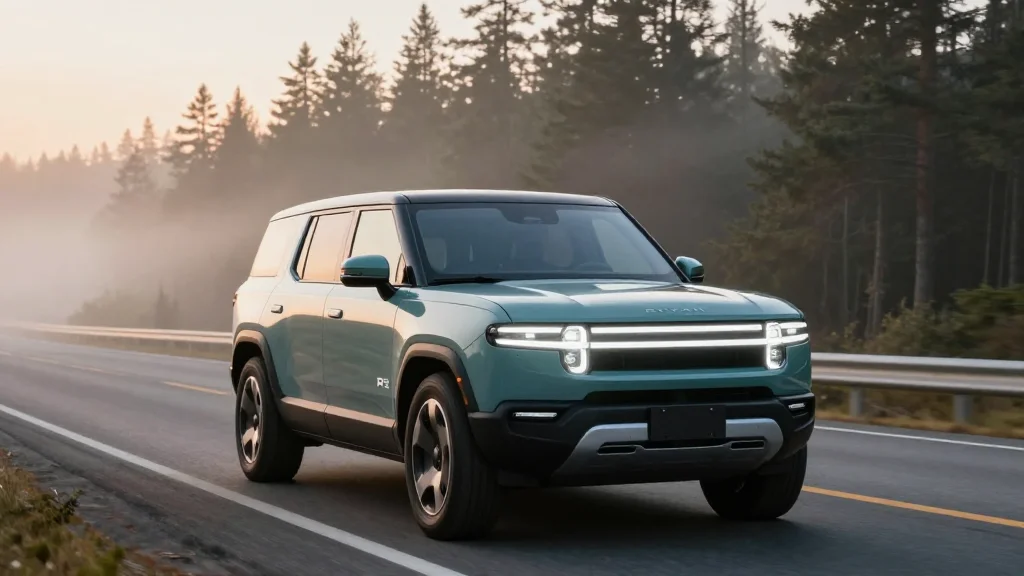
Can Rivian Beat Tesla in the Long Term?
Companies Mentioned
Why It Matters
The R2 could broaden Rivian’s customer base and improve cash flow, challenging Tesla’s lead in the mass‑market EV segment. Success would validate Rivian’s dual‑track model of profitable software services paired with volume vehicle sales.
Key Takeaways
- •Rivian's R2 starts under $47,000, targeting mainstream buyers.
- •Automotive division still loss‑making; software/services already profitable.
- •Q1 2026 revenue $1.38 billion, up 11% YoY.
- •Stock down ~20% YTD; price $16.76, market cap $21 B.
- •Tesla and BYD together hold ~25% of global EV market.
Pulse Analysis
The electric‑vehicle market entered 2026 on a cautious note, with the federal tax credit for EVs eliminated and overall demand softening. Tesla continues to dominate, holding a sizable share of global sales, while legacy automakers scale back ambitious EV rollouts. In this environment, any new entrant that can offer a competitively priced model stands to capture attention, especially as consumers seek affordable alternatives to premium brands.
Rivian’s strategy hinges on the R2, an SUV priced below $47,000, designed to appeal to a broader demographic than its earlier $70,000‑plus models. The lower price point aims to boost volume, but it also raises capital requirements for scaling production lines and supply‑chain logistics. Meanwhile, the company’s software and services division, already profitable, provides a recurring‑revenue cushion that could offset automotive losses. This dual‑track approach mirrors a growing trend among EV makers to monetize data, over‑the‑air updates, and subscription services, creating a more resilient business model.
Investors weighing Rivian’s long‑term prospects must balance the promise of a mainstream vehicle against the reality of entrenched competition from Tesla and Chinese giant BYD, which together command roughly a quarter of global EV sales. If the R2 gains traction, Rivian could improve cash flow, reduce its reliance on high‑margin luxury models, and potentially shift market dynamics. However, sustained profitability will depend on execution—delivering the R2 at scale, managing costs, and expanding the software ecosystem—making the next 12‑18 months a decisive period for the company’s future.
Can Rivian Beat Tesla in the Long Term?
Comments
Want to join the conversation?
Loading comments...