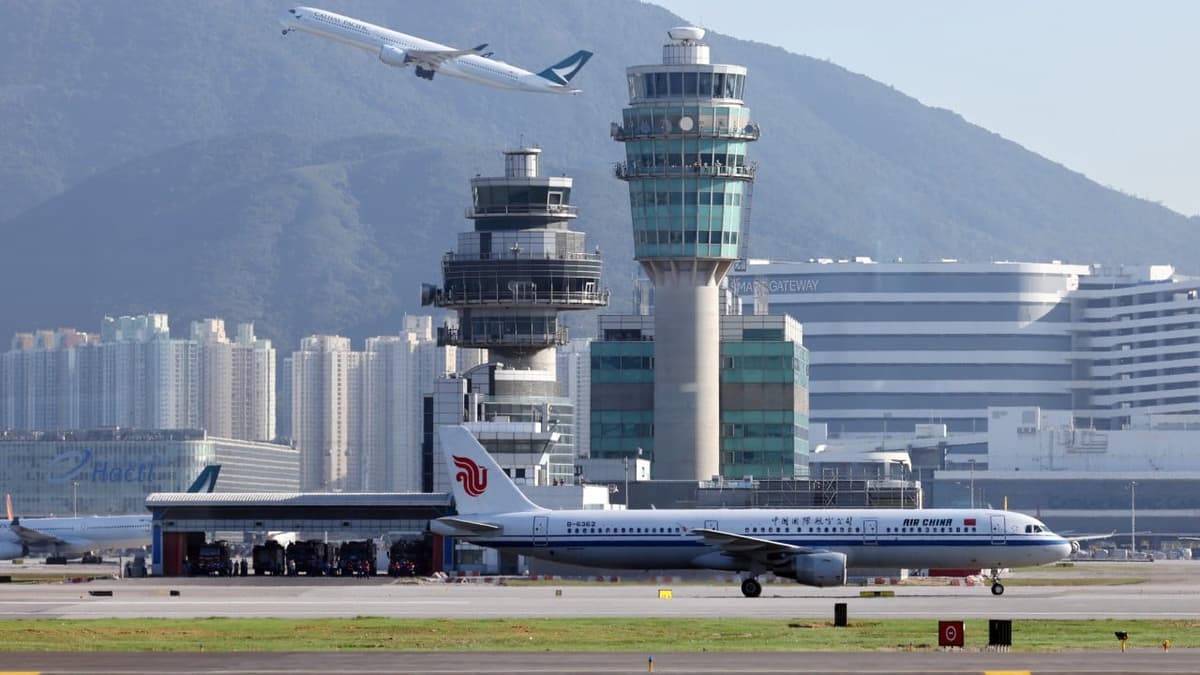
Central Asia Tipped to Be Hong Kong’s Next Logistics Hub: Airport Authority Head
Why It Matters
The shift underscores Hong Kong’s effort to diversify cargo routes amid Middle‑East and European conflicts, offering new growth channels for airlines and logistics firms. It also signals confidence in the airport’s recovery, boosting investor sentiment in the region’s transport infrastructure.
Key Takeaways
- •Cargo between Hong Kong and Kazakhstan/Uzbekistan rose to 3,300 tonnes, up fivefold
- •Cathay Pacific will restart direct flights to Almaty in 2025
- •HKIA expects passenger traffic to hit 70 million, near pre‑COVID levels
- •Over 96 MOUs signed, boosting Hong Kong‑Central Asia logistics ties
- •HK$100 billion (≈$13 bn) Skytopia project under renegotiation with New World Development
Pulse Analysis
Central Asia’s emerging role as a logistics conduit reflects a broader realignment of global supply chains. With wars in the Middle East and Ukraine disrupting traditional cargo corridors, Hong Kong’s Airport Authority is eyeing the region’s geographic advantage between Europe and the rest of Asia. The five‑fold jump in cargo tonnage to 3,300 tonnes this year highlights a rapid uptake by freight forwarders seeking alternative routes, especially for shipments destined for Eastern Europe. This strategic pivot not only mitigates risk but also opens new revenue streams for Hong Kong’s air cargo operators.
The recent delegation led by Chief Executive John Lee and Airport Authority chairman Fred Lam cemented the partnership through 96 memorandums of understanding, covering everything from airport infrastructure to airline collaborations. Cathay Pacific’s decision to resume direct flights to Almaty in 2025 signals confidence in passenger and cargo demand, even as Lam cautions that passenger volumes to Central Asia will remain modest. Nonetheless, the airport’s forecast of 70 million passengers—approaching the 71.5 million recorded in 2019—suggests a robust rebound, driven by a 13 percent year‑on‑year footfall increase in the first four months of the year.
Beyond aviation, the HK$100 billion (approximately $13 billion) Skytopia megaproject illustrates Hong Kong’s broader ambition to diversify its economic base. While negotiations with New World Development aim to refine the project's terms, the initiative’s inclusion of entertainment, retail, and maritime facilities could enhance the airport’s non‑aeronautical revenue. Together, the logistics push into Central Asia and the Skytopia development reinforce Hong Kong’s positioning as a resilient, multi‑modal hub, offering investors a compelling narrative of growth amid geopolitical uncertainty.
Central Asia tipped to be Hong Kong’s next logistics hub: Airport Authority head
Comments
Want to join the conversation?
Loading comments...