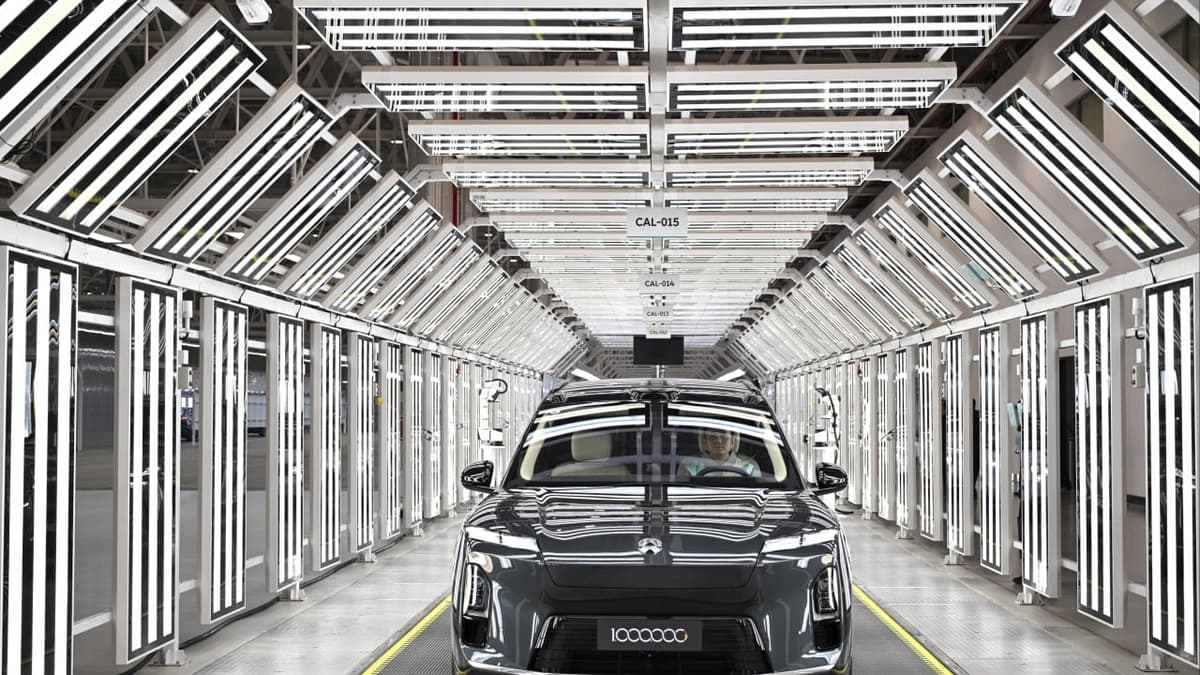
Chinese Ministry Focuses on Car Standards to Put Industry in Global Driving Seat
Companies Mentioned
Why It Matters
The accelerated standards will give Chinese manufacturers a competitive edge in the fast‑growing EV and autonomous‑vehicle markets, influencing global regulatory frameworks. This could reshape supply chains and accelerate adoption of Chinese technology worldwide.
Key Takeaways
- •China will fast‑track auto standards over the next five years.
- •New standards target EV battery life and AI‑driven vehicle tech.
- •BYD joins International Automotive Task Force to shape global benchmarks.
- •MIIT released first international autonomous‑driving test‑scenario standard.
- •Chinese auto output rose 10.4% last year, outpacing global growth.
Pulse Analysis
China’s latest five‑year plan places automotive standardisation at the heart of its industrial strategy, signaling a shift from merely scaling production to shaping the rules that govern next‑generation vehicles. By fast‑tracking technical specifications for battery durability, AI integration, and autonomous‑driving test scenarios, the Ministry of Industry and Information Technology (MIIT) aims to embed Chinese engineering priorities into global benchmarks. This approach mirrors the country’s broader ambition to transition from a manufacturing hub to a standards‑setting powerhouse, leveraging its massive domestic market to influence international regulations.
The push is already bearing fruit through high‑profile collaborations. BYD’s entry into the International Automotive Task Force underscores a deliberate move to embed Chinese expertise in global quality‑system requirements, while joint work with German experts on autonomous‑driving scenarios demonstrates a willingness to co‑author rules rather than merely adopt them. Such partnerships not only elevate Chinese brands on the world stage but also accelerate technology diffusion, giving domestic firms a head start in markets that will soon demand higher battery cycle life and sophisticated AI capabilities.
For the global auto industry, China’s standardisation drive could reshape competitive dynamics. Stronger national benchmarks are expected to streamline domestic M&A activity, weed out legacy production capacity, and boost export‑oriented manufacturers. As Chinese output grew 10.4% last year, surpassing global growth rates, tighter standards may further cement its market share, compelling foreign OEMs to align with Chinese specifications or risk losing access to one of the world’s largest consumer bases. The coming years will test whether these standards become de‑facto global norms or remain regionally confined, a question that will shape supply‑chain strategies and investment decisions across the sector.
Chinese ministry focuses on car standards to put industry in global driving seat
Comments
Want to join the conversation?
Loading comments...