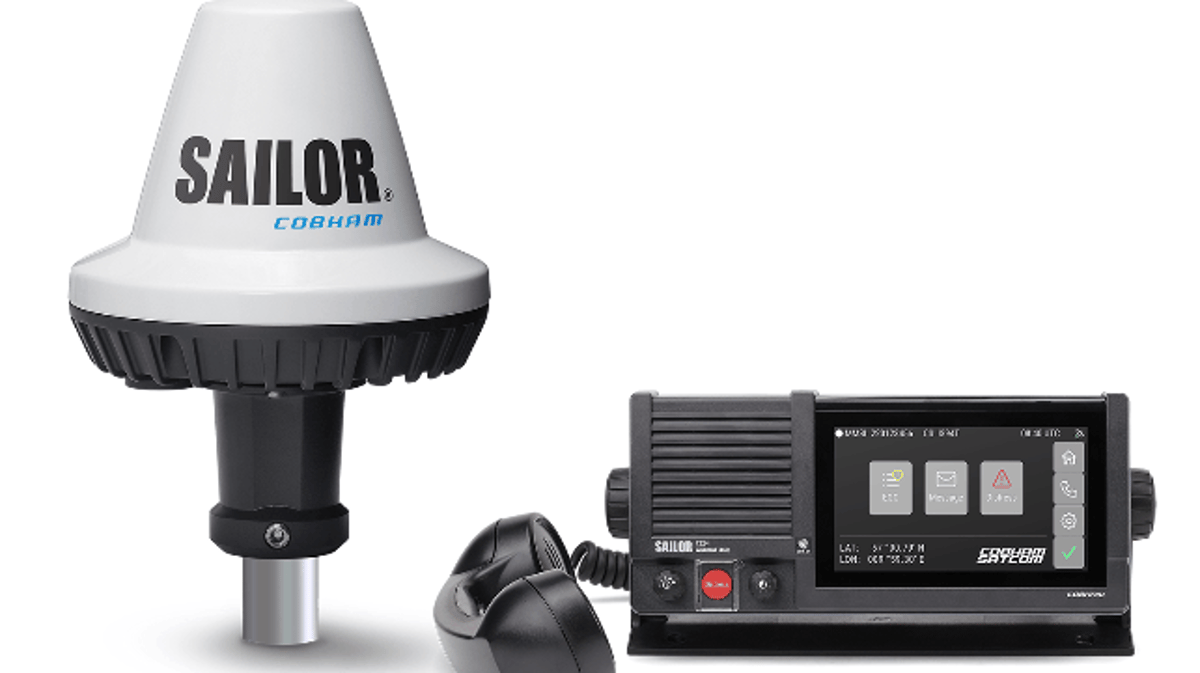
Cobham Satcom Expands GMDSS Choice with New SAILOR 7200 Terminal
Companies Mentioned
Why It Matters
The dual‑network offering expands fleet flexibility and cuts reliance on a single satellite provider, a strategic advantage as global shipping seeks resilient, cost‑effective safety communications.
Key Takeaways
- •SAILOR 7200 adds Iridium Certus to Cobham's GMDSS portfolio.
- •First dual‑network GMDSS offering eliminates vendor lock‑in for shipowners.
- •Omni‑directional antenna requires no pointing, cutting installation time.
- •Integrated GMDSS, SSAS, LRIT reduces equipment footprint and power use.
- •Over 300,000 SAILOR antennas already deployed worldwide.
Pulse Analysis
The Global Maritime Distress & Safety System (GMDSS) remains a regulatory cornerstone for vessel safety, mandating reliable satellite communication for distress alerts, ship security, and tracking. Historically dominated by Inmarsat’s L‑band services, the market has opened to Iridium’s low‑Earth‑orbit (LEO) constellation, which offers true global coverage, including polar routes. Cobham Satcom leverages its decades‑long partnership with Inmarsat to now deliver Iridium Certus capability through the SAILOR 7200, positioning the company at the intersection of legacy reliability and emerging LEO performance.
SAILOR 7200’s design centers on operational simplicity and cost efficiency. Its compact, omni‑directional antenna eliminates the need for manual pointing, a common pain point for traditional GMDSS hardware. By consolidating GMDSS, Ship Security Alert System (SSAS) and Long‑Range Identification and Tracking (LRIT) into a single platform, the terminal reduces hardware footprint, power consumption, and crew training requirements. These attributes are especially valuable for smaller vessels and operators seeking to modernize fleets without extensive retrofitting, while still meeting stringent international compliance standards.
For the maritime industry, the introduction of a dual‑network GMDSS solution signals a shift toward greater vendor independence and resilience. Shipowners can now align satellite service selection with trade routes, operational patterns, and cost structures, mitigating the risk of service disruptions tied to a single provider. As Posidonia 2026 showcases the terminal, analysts anticipate heightened competition among satellite operators to deliver integrated safety services, spurring further innovation in maritime connectivity and potentially driving down overall equipment costs. Cobham’s move underscores the strategic importance of flexible, next‑generation communications in a sector increasingly focused on digital transformation and sustainability.
Cobham Satcom Expands GMDSS Choice with New SAILOR 7200 Terminal
Comments
Want to join the conversation?
Loading comments...