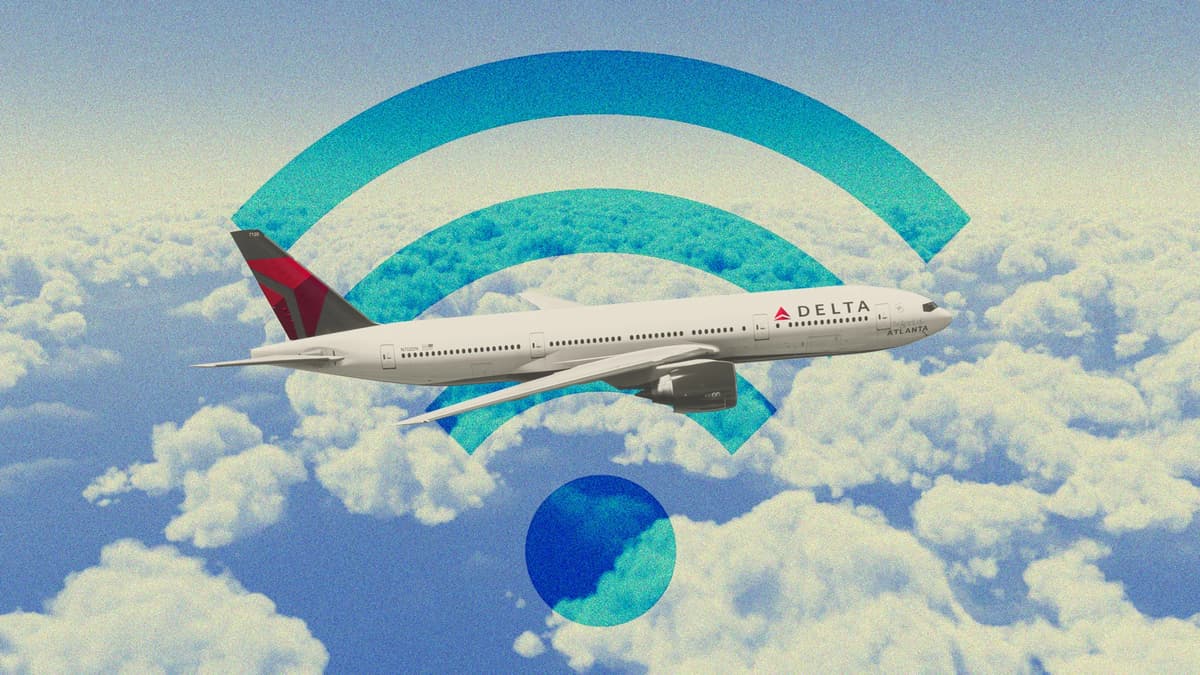
Delta Could Have Had the World’s Best Wi-Fi. It Chose Something Else Instead
Companies Mentioned

Why It Matters
The delay could erode Delta’s competitive edge as passengers increasingly view high‑speed, low‑latency Wi‑Fi as a core service, influencing airline choice and ancillary revenue streams.
Key Takeaways
- •Delta’s new Wi‑Fi rollout targets 2028, two years behind United.
- •United’s Starlink fleet offers LEO speeds on 344 aircraft, 3.7M devices.
- •Delta still depends on Viasat GEO and Hughes hybrid satellite mix.
- •LEO advantage: lower latency, higher bandwidth, crucial for passenger experience.
Pulse Analysis
In‑flight connectivity has moved from a luxury to an expectation, driven by business travelers who need reliable broadband at 35,000 feet. United Airlines’ early adoption of SpaceX’s Starlink LEO constellation illustrates this shift: with 344 equipped aircraft, the carrier recorded 167,000 flights and 3.7 million device sessions in the first quarter of 2026. LEO satellites sit merely 500‑1,200 km above Earth, cutting latency to under 30 ms and delivering speeds comparable to ground‑based broadband, a stark improvement over traditional geostationary (GEO) links that sit 22,000 miles away.
Delta Air Lines, by contrast, continues to lean on Viasat’s GEO network for its mainline fleet while deploying a hybrid GEO/LEO solution from Hughes on regional jets. The airline’s announced 2028 rollout promises a blended architecture, but the two‑year gap leaves it trailing United’s pure‑LEO offering. The delay stems partly from the complexity of negotiating satellite capacity, integrating hardware across 500 aircraft, and ensuring regulatory compliance. Meanwhile, the LEO market is consolidating around a few players—Starlink with over 10,000 satellites and Amazon’s Leo with a few hundred—making partnership choices critical for long‑term cost and performance.
For the broader industry, the Delta‑United contrast underscores how connectivity strategy can become a differentiator in airline competition. Faster, lower‑latency Wi‑Fi not only improves passenger satisfaction but also unlocks new revenue streams such as in‑flight e‑commerce, premium streaming bundles, and real‑time operational analytics. Airlines that secure scalable LEO contracts early may capture higher ancillary yields and strengthen brand loyalty, while those that lag risk commoditizing their service and losing market share to tech‑savvy rivals. As satellite constellations expand and hardware costs fall, the next wave of connectivity upgrades is likely to be rapid, making the timing of Delta’s rollout a pivotal factor in its future market positioning.
Delta Could Have Had the World’s Best Wi-Fi. It Chose Something Else Instead
Comments
Want to join the conversation?
Loading comments...