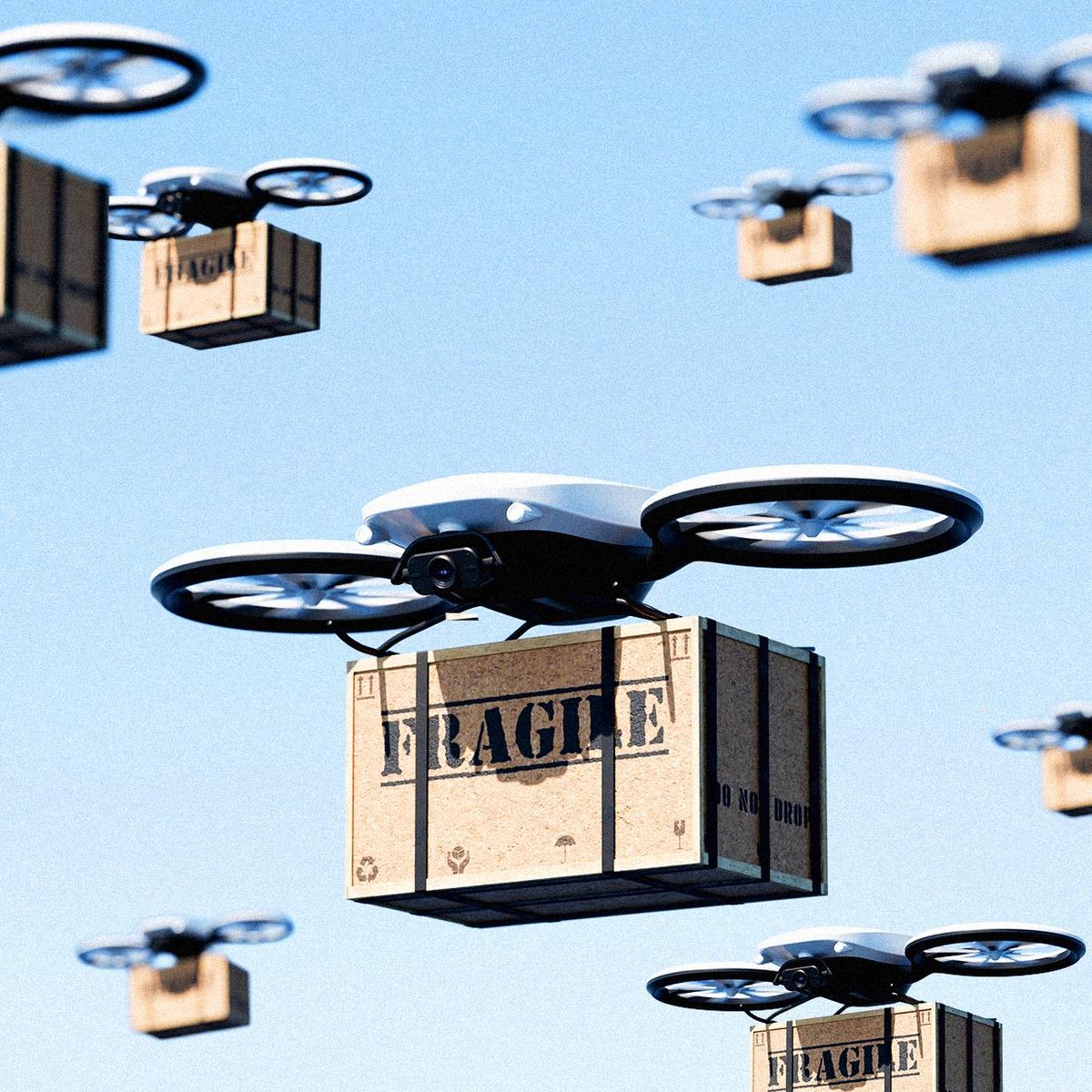
Do City Delivery Drones Make Sense? No One Knows, but They're Flying Over NYC
Companies Mentioned
Why It Matters
If the pilot proves faster and cost‑effective, it could unlock regulated urban drone networks and transform medical logistics in congested cities.
Key Takeaways
- •Skyports drones fly weekday routes Manhattan‑Brooklyn for a health system
- •Flights carry a few pounds of paper, may expand to light pharmaceuticals
- •FAA mandates certified pilot; weekly NYPD permits and community board approvals required
- •Noise ranges 60‑100 dB, similar to lawnmowers, prompting resident concerns
Pulse Analysis
The New York City East River corridor marks one of the most high‑profile urban drone trials in the United States. While most commercial drone programs focus on rural or suburban deliveries, Skyports’ six‑propeller aircraft aim to prove that even the nation’s busiest airspace can accommodate scheduled, low‑payload flights. By limiting payloads to a few pounds of paper and eventually light medical supplies, the pilot sidesteps the heavier‑weight challenges that have hampered larger‑scale operations, allowing regulators to assess safety and efficiency without overwhelming the sky.
Regulatory scrutiny is intense. The Federal Aviation Administration requires a certified drone pilot on every sortie, and the Port Authority must secure a weekly NYPD permit, after consulting three local community boards. These layers of oversight reflect broader concerns about air‑traffic congestion, noise, and public acceptance. Noise levels between 60 and 100 decibels—comparable to a lawnmower—have prompted a dedicated 311 complaint portal, echoing resident pushback seen in Texas. As the FAA finalizes rules for beyond‑visual‑line‑of‑sight operations, the outcome of this pilot could accelerate policy shifts that streamline permitting while preserving safety.
For the healthcare sector, the stakes are high. Faster transport of critical items such as vaccines, blood products, or emergency medications could shave minutes off response times in a city where traffic snarls are routine. If the pilot demonstrates reliable, cost‑effective service, insurers and hospitals may adopt drone logistics as a standard contingency, spurring investment in dedicated urban corridors. Success would also signal to logistics giants—Alphabet’s Wing, Amazon Prime Air, and others—that dense metropolitan markets are no longer a technical dead‑end, potentially reshaping the future of last‑mile delivery across America.
Do City Delivery Drones Make Sense? No One Knows, but They're Flying Over NYC
Comments
Want to join the conversation?
Loading comments...