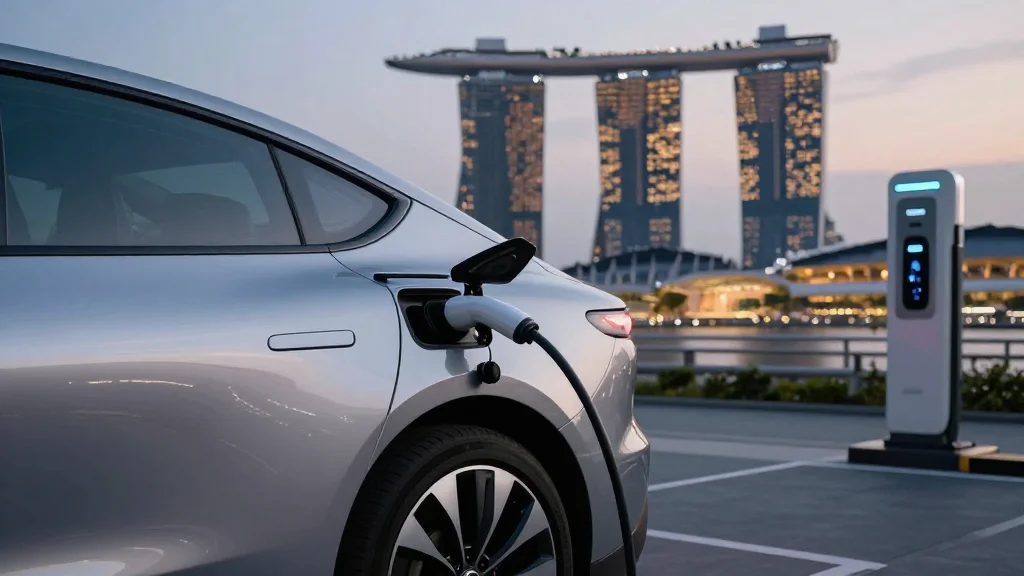
Electric Cars Dominate Singapore’s New Registrations
Companies Mentioned
Why It Matters
The rapid EV adoption reshapes Singapore’s automotive landscape, pressuring legacy manufacturers and signaling a broader regional transition toward electric mobility.
Key Takeaways
- •EVs made up 57.6% of Q1 Singapore registrations
- •BYD led with 3,239 registrations, 24% market share
- •Chinese brands entered Singapore top‑10 for first time
- •Tesla rose to third place with 11.4% share
- •$30k rebates for EVs, $35k penalties for high‑emission cars
Pulse Analysis
Singapore’s Q1 2026 vehicle market illustrates how policy incentives can tip the scales toward electrification. With up to US$30,000 rebates offsetting upfront taxes, consumers are gravitating toward electric models, propelling EVs to a 57.6% share of new registrations. The penalty framework—charging up to US$35,000 for high‑emission vehicles—further nudges buyers away from traditional powertrains, creating a virtuous cycle that fuels dealer inventory shifts and accelerates infrastructure investment.
Chinese automakers have capitalized on this environment through aggressive pricing, localized marketing, and product suites that align with Singaporean preferences. BYD’s dominance, reflected in a 24% market share, underscores its ability to combine range, reliability, and value. Meanwhile, newcomers Chery, GAC and MG cracked the top‑10, leveraging “value for money” propositions and tailored after‑sales support. Their rapid ascent mirrors trends in neighboring Malaysia and Thailand, where Chinese brands have moved from early adopters to the early‑middle majority, eroding the foothold of established Japanese and Korean players.
The shift carries strategic implications for legacy manufacturers. While Toyota retains a solid 14.5% share, its reliance on hybrid models highlights a transitional niche for high‑mileage drivers. Tesla’s climb to third place demonstrates that premium EVs can compete on price when subsidies are generous. Looking ahead, sustained incentives and expanding charging networks will likely push EV penetration beyond 70% by 2028, compelling incumbents to accelerate electrified line‑ups or risk marginalization in a market that is quickly redefining its mobility paradigm.
Electric cars dominate Singapore’s new registrations
Comments
Want to join the conversation?
Loading comments...