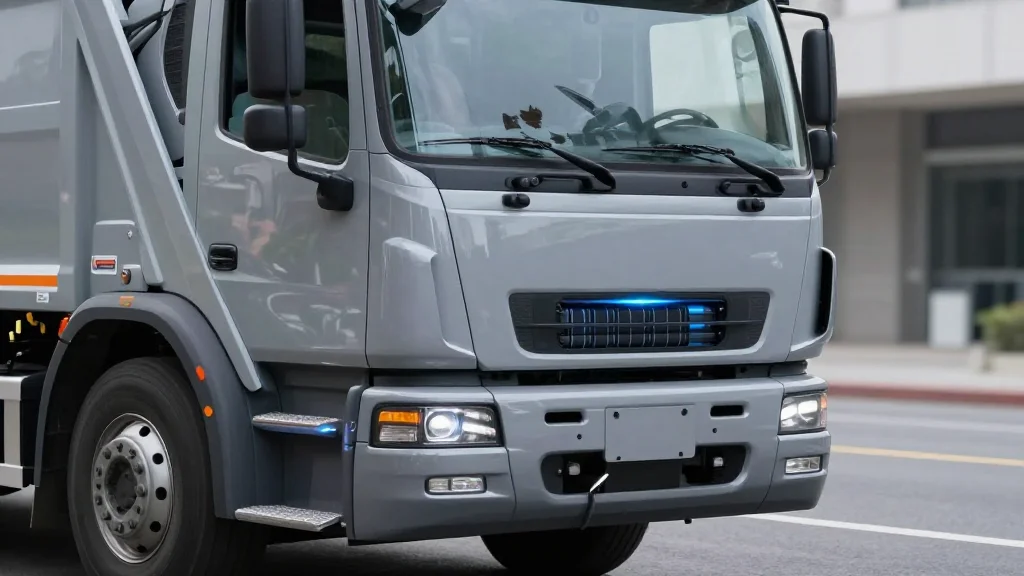
Republic Services Orders 150 Electric Garbage Trucks, Highlighting Heavy‑Duty EV Niche

Companies Mentioned
Why It Matters
Electrifying garbage trucks tackles a hidden source of urban air pollution that directly affects workers and residents in close proximity to collection routes. By eliminating diesel exhaust, cities can achieve immediate health benefits, especially in densely populated neighborhoods where children and the elderly are most vulnerable. Moreover, the shift aligns with broader municipal climate commitments, offering a tangible pathway to reduce greenhouse‑gas emissions without requiring behavioral changes from the public. The rollout also tests the scalability of heavy‑duty electric powertrains, a segment that has lagged behind passenger vehicles due to higher payload demands and longer duty cycles. Demonstrated success with refuse trucks could unlock financing models, utility rate designs, and policy incentives that accelerate electrification across the entire spectrum of municipal services, from street cleaning to emergency response vehicles. In turn, this could reshape the demand profile for utility grids, prompting investments in managed charging and renewable‑energy integration to support a growing fleet of stationary, high‑capacity chargers.
Key Takeaways
- •Republic Services orders 150 electric garbage trucks, the largest North American order to date.
- •The order represents roughly 0.08% of the estimated 180,000 U.S. refuse‑truck fleet.
- •About 90% of U.S. garbage trucks currently run on diesel or natural gas, according to Energy Vision and NREL data.
- •Electrification eliminates on‑site diesel emissions, improving air quality for workers and nearby residents.
- •Full deployment is slated for the next 12‑18 months, with potential ripple effects for other municipal heavy‑duty fleets.
Pulse Analysis
The Republic Services purchase is less a market‑share grab than a proof‑of‑concept for a segment that has long been overlooked. Heavy‑duty electrification faces a classic chicken‑and‑egg problem: manufacturers need volume to drive down costs, while operators need affordable, reliable units before committing large budgets. This order nudges the equilibrium forward by providing a real‑world data set that utilities, municipalities, and OEMs can analyze for performance, charging patterns, and total cost of ownership.
Historically, diesel‑powered refuse trucks have been a low‑visibility but high‑impact source of urban pollution. Their replacement with electric models offers an immediate emissions win that is easier to quantify than the more aspirational benefits of long‑haul electric trucks, which still grapple with range anxiety and infrastructure gaps. As cities tighten air‑quality standards and seek to meet net‑zero pledges, the regulatory environment will likely become more favorable for electric waste‑collection fleets, potentially unlocking subsidies or low‑interest financing.
Looking ahead, the real catalyst will be the aggregation of data from these early deployments. If the trucks demonstrate comparable uptime, lower maintenance costs, and predictable charging loads, utilities may develop dedicated demand‑response programs that reward fleets for off‑peak charging. Such synergies could lower electricity rates for municipalities and create a virtuous cycle of adoption. Conversely, if reliability issues surface, the sector could face a setback, reinforcing skepticism about heavy‑duty electrification. For now, the 150‑truck order is a modest but meaningful step that could reshape how cities think about electrifying the workhorses that keep streets clean.
Republic Services Orders 150 Electric Garbage Trucks, Highlighting Heavy‑Duty EV Niche
Comments
Want to join the conversation?
Loading comments...