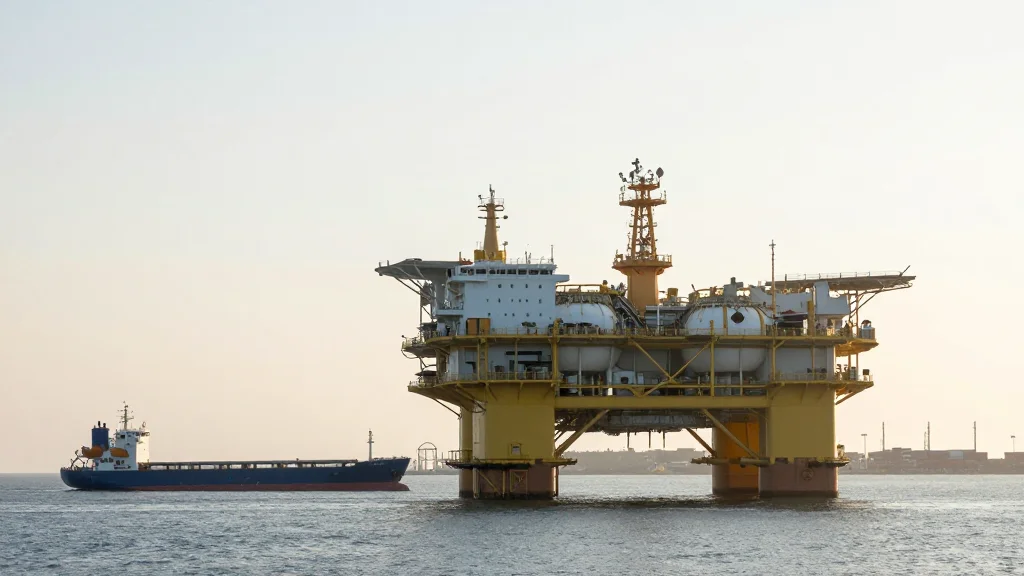
FreightWaves Today: U.S. Approves $5B Offshore LNG Export Platform
Companies Mentioned

Why It Matters
The LNG approval expands U.S. energy export capacity, while Amazon’s LTL move reshapes freight competition and heightened duties safeguard U.S. trailer producers; together they signal shifting dynamics across energy, logistics, and supply‑chain security.
Key Takeaways
- •$5B offshore LNG platform licensed, 1.8 Bcf/d capacity by 2030
- •Amazon opens LTL service to all, shares of carriers dip 5%
- •U.S. imposes up to 100.7% duties on Chinese trailer imports
- •Cargo fraud schemes rise >30% YoY, many incidents unreported
- •Export approvals boost U.S. energy market, but regulatory scrutiny remains
Pulse Analysis
The approval of the offshore liquefied natural gas (LNG) export platform marks a watershed moment for U.S. energy strategy. Situated 40 miles off Cameron Parish, Louisiana, the $5 billion project, led by Delfin Midstream, will employ three South Korean‑built vessels to deliver up to 1.8 billion cubic feet of natural gas daily by 2030. This capacity not only diversifies the nation’s export portfolio but also positions the United States as a more competitive player in the global LNG market, where demand is accelerating amid Europe’s energy transition and Asia’s growing appetite.
Amazon’s decision to open its less‑than‑truckload (LTL) network to every business adds a new variable to an already crowded freight landscape. While the move caused a modest 5% dip in publicly traded LTL carrier shares, analysts stress that Amazon’s asset‑light, brokerage‑style model targets the economy‑segment, leaving premium, heavy‑pallet lanes largely untouched. The expansion underscores the broader trend of e‑commerce giants leveraging technology and scale to capture logistics market share, prompting traditional carriers to double down on specialized services and operational efficiency.
In parallel, the Commerce Department’s countervailing duties—up to 100.7% on Chinese trailer imports and 2% on Mexican units—aim to level the playing field for U.S. manufacturers such as Wabash National and Great Dane. Coupled with Overhaul’s warning of a 30% surge in organized cargo‑fraud schemes, the regulatory environment is tightening around both physical and cyber‑enabled supply‑chain threats. These measures signal heightened vigilance from policymakers and industry leaders alike, emphasizing the need for robust compliance, risk‑management frameworks, and domestic production resilience.
FreightWaves Today: U.S. approves $5B offshore LNG export platform
Comments
Want to join the conversation?
Loading comments...