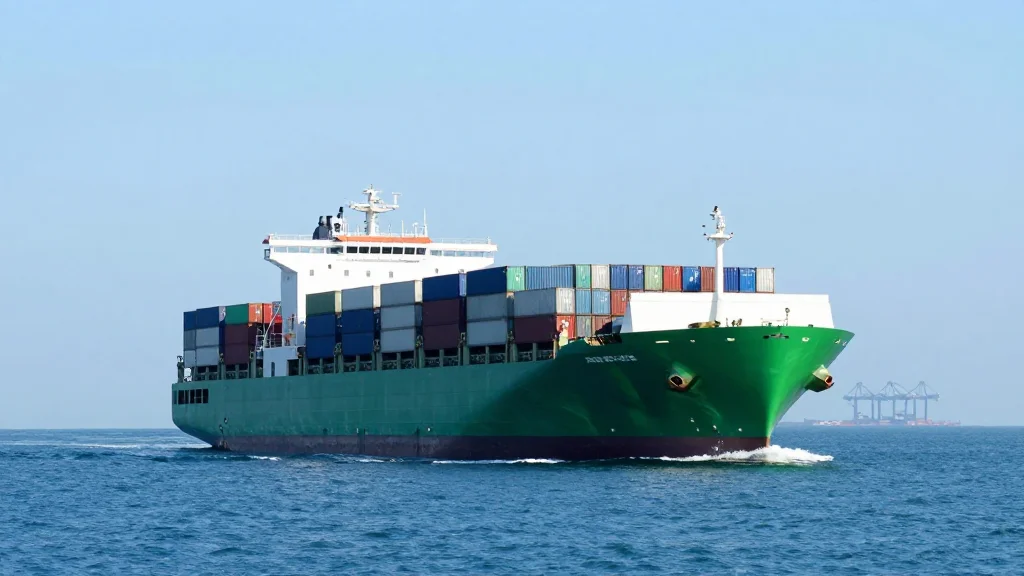
Hapag-Lloyd Scales up Biofuel Transport Services with Forwarder Partners
Companies Mentioned
Why It Matters
The expanded biofuel offering helps shippers meet Scope 3 emission targets, accelerating the maritime industry's decarbonisation and giving Hapag‑Lloyd a competitive edge in sustainable logistics.
Key Takeaways
- •Hapag‑Lloyd moved 380,000 TEUs using Ship Green biofuel last year
- •Kuehne+Nagel, DSV, Scan Global Logistics join Ship Green service
- •Service now supports over 750 global customers reducing Scope 3 emissions
- •More than 1,500 customers have cut CO₂e emissions via Hapag‑Lloyd biofuels
- •Biofuel adoption accelerates shipping industry's path to net‑zero targets
Pulse Analysis
Second‑generation biofuels are emerging as a practical bridge toward fully carbon‑neutral shipping. Unlike first‑generation fuels derived from food crops, these biofuels use waste residues and non‑edible feedstocks, offering lower lifecycle emissions without compromising vessel performance. Hapag‑Lloyd’s Ship Green program leverages this technology, allowing customers to purchase verified carbon‑offset credits tied to actual fuel consumption, thereby turning a traditional freight transaction into a measurable sustainability action.
The recent addition of Kuehne + Nagel, DSV and Scan Global Logistics expands the program’s reach across key forwarder networks. By integrating Ship Green into their booking platforms, these partners enable shippers to select low‑carbon options at the point of origin, directly addressing Scope 3 emissions that account for the majority of a product’s carbon footprint. The service’s book‑and‑claim model also simplifies compliance, providing third‑party verification that satisfies corporate ESG reporting standards and regulatory expectations in Europe and North America.
Market analysts view Hapag‑Lloyd’s scaling effort as a signal that sustainable fuel solutions are moving from niche pilots to mainstream logistics. As more carriers adopt similar biofuel schemes, the competitive landscape will reward those with robust verification frameworks and extensive forwarder partnerships. This could spur further investment in biofuel production capacity, lower costs through economies of scale, and ultimately bring the maritime sector closer to the International Maritime Organization’s 2050 net‑zero ambition. Companies that act now can lock in lower‑cost green fuel contracts and differentiate their supply chains in an increasingly climate‑conscious market.
Hapag-Lloyd scales up biofuel transport services with forwarder partners
Comments
Want to join the conversation?
Loading comments...