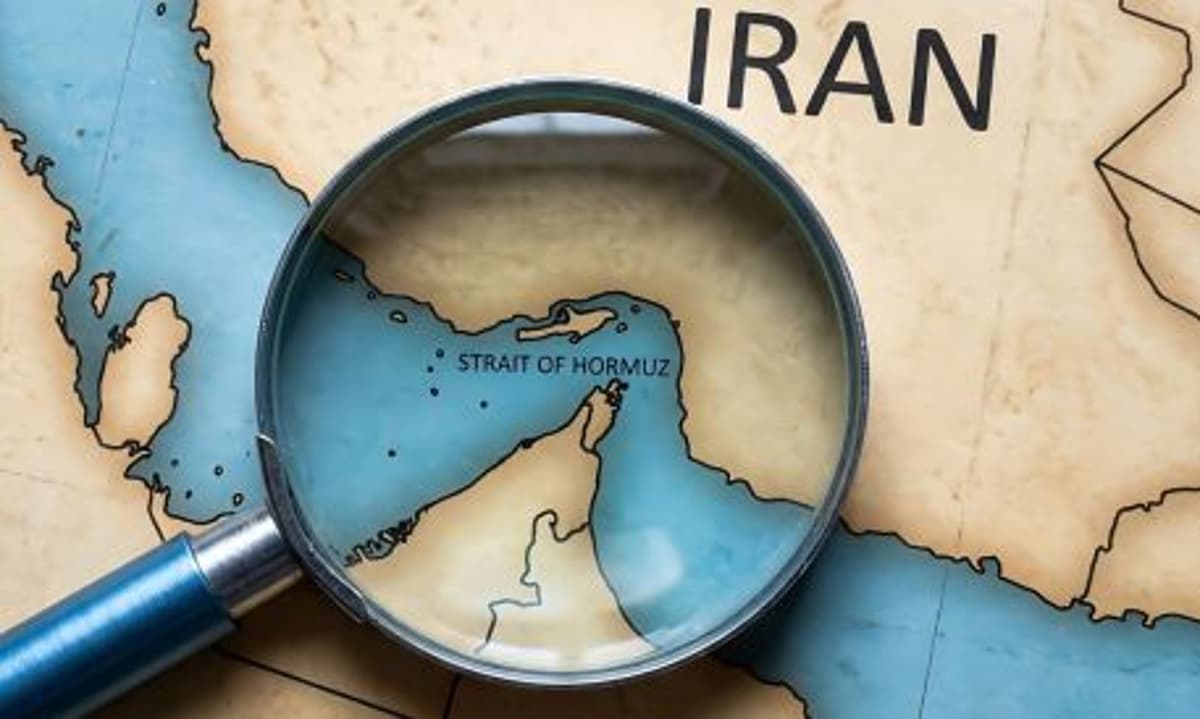
Hormuz Disruption Opens New Test for Crypto in Global Trade
Companies Mentioned
Why It Matters
Hormuz Safe illustrates how cryptocurrencies can become tools for sanctioned nations to access global trade finance, potentially reshaping insurance markets and prompting regulatory scrutiny. Its success or failure will signal whether digital assets can reliably replace conventional financial rails in high‑risk geopolitical contexts.
Key Takeaways
- •Iran proposes "Hormuz Safe" to sell bitcoin‑settled maritime insurance.
- •Strait of Hormuz handles ~20% of global oil, making disruption costly.
- •Crypto insurance aims to bypass sanctions and create new revenue stream.
- •Adoption faces legal risk, regulator scrutiny, and insurer acceptance challenges.
- •Success could signal broader state use of digital assets for trade finance.
Pulse Analysis
The Strait of Hormuz remains a chokepoint that moves roughly one‑fifth of the world’s oil, so any interruption instantly reverberates through energy markets, freight rates and insurance pricing. Recent flare‑ups have already driven up war‑risk premiums, forcing shippers to seek coverage from a shrinking pool of insurers willing to underwrite voyages through the Gulf. Because traditional maritime insurance settles in U.S. dollars via correspondent banks, sanctions‑hit nations like Iran face delayed payments or outright denial of coverage, amplifying the financial strain on operators.
In response, Iran’s Economy Ministry unveiled a pilot called “Hormuz Safe,” which would let vessel owners purchase war‑risk policies with bitcoin or other digital assets. The platform leverages blockchain‑based verification and smart‑contract settlement to certify coverage and trigger payouts without touching the sanctioned banking system. By converting geopolitical risk into a programmable financial product, Tehran hopes to capture recurring revenue, maintain influence over a vital trade route, and demonstrate a sanctions‑resilient alternative to the conventional dollar‑based insurance model.
The experiment, however, runs into steep obstacles. U.S. regulators could label any crypto‑linked service that supports sanctioned parties as illicit, prompting enforcement actions against exchanges and wallet providers. Global reinsurers may reject policies that lack recognized legal backing, and ship operators could fear secondary sanctions for using a non‑compliant system. If Hormuz Safe can surmount these challenges, it could pave the way for other states to embed digital assets into trade finance, reshaping how strategic chokepoints are monetized and signaling a broader shift toward blockchain‑enabled geopolitical finance.
Hormuz Disruption Opens New Test for Crypto in Global Trade
Comments
Want to join the conversation?
Loading comments...