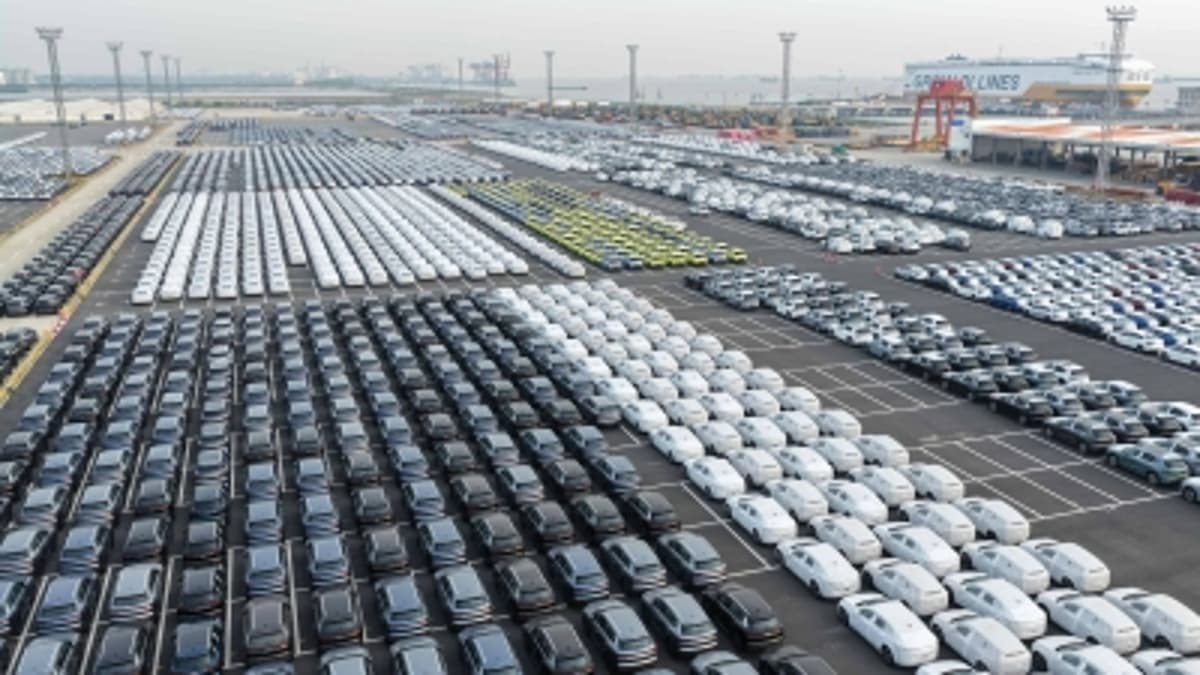
How BYD Gets an Edge From Ships that Brave War, Outrun Storms
Companies Mentioned
Why It Matters
Owning its own vessels gives BYD cost certainty and routing flexibility, turning geopolitical volatility into a competitive advantage that can accelerate its global EV rollout.
Key Takeaways
- •BYD operates eight dedicated car‑carrier vessels, moving ~300,000 cars annually
- •Own fleet avoids $110,000 daily charter fees, cutting export costs
- •Ships bypass Cape of Good Hope, saving 14 days versus longer routes
- •BYD’s vessels navigate Red Sea and Strait of Hormuz despite geopolitical risks
- •Self‑sufficiency strategy lets BYD control 75% of key component supply
Pulse Analysis
BYD’s decision to internalize ocean logistics reflects a broader shift among Chinese automakers toward supply‑chain self‑reliance. Born out of the 2022 pandemic scramble for container space, the eight‑ship armada now handles roughly 300,000 vehicles annually, covering routes from the Pacific to the Atlantic. By owning vessels, BYD sidesteps the dramatic rise in spot charter rates—up from $10,000 in 2020 to $110,000 in 2023—thereby preserving margins while delivering cars ahead of tariff deadlines. This vertical integration also dovetails with BYD’s in‑house production of batteries, chips and lithium, creating a tightly controlled ecosystem that reduces exposure to external shocks.
Operationally, the fleet provides tangible advantages in speed and risk mitigation. BYD’s ships routinely choose the Suez Canal over the Cape of Good Hope, shaving up to 14 days off transit times and avoiding a 25% distance penalty. Their willingness to traverse contested waters such as the Strait of Hormuz and the Red Sea—areas many charterers avoid—demonstrates a calibrated risk appetite supported by dedicated crews and real‑time weather analytics. These routing choices not only cut freight costs but also ensure that inventory reaches key markets like Mexico before tariff cliffs, preserving sales momentum in regions where BYD is expanding its EV footprint.
The broader industry watches BYD’s model as a potential blueprint for resilience. While rivals like Hyundai and SAIC rely heavily on third‑party carriers, BYD’s fleet illustrates how proprietary logistics can become a strategic moat, especially when global shipping rates remain volatile due to geopolitical tensions. If BYD can achieve high vessel utilisation, the capital outlay may be justified, prompting other manufacturers to consider similar investments or joint ventures with shipping firms. Ultimately, BYD’s maritime strategy could reshape export dynamics, giving the Chinese EV maker a decisive edge in the race for worldwide market share.
How BYD gets an edge from ships that brave war, outrun storms
Comments
Want to join the conversation?
Loading comments...