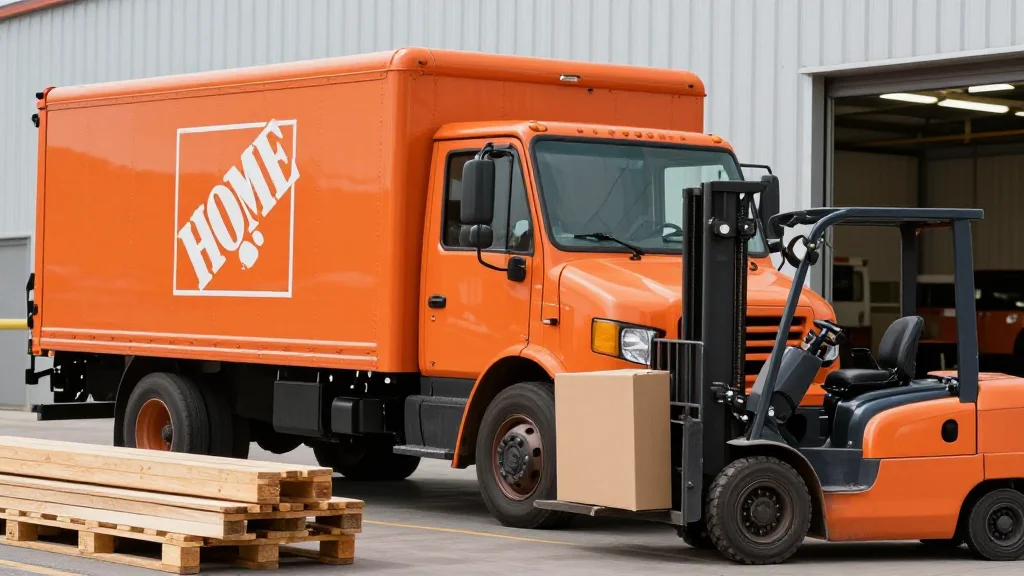
How Home Depot Turned Its Supply Chain Into a “Strategic Weapon”
Why It Matters
The supply‑chain overhaul gives Home Depot a durable competitive edge in an increasingly fast‑delivery market, boosting sales efficiency and customer satisfaction while setting a benchmark for omnichannel retailers.
Key Takeaways
- •Rapid‑deployment centers give Home Depot control over product flow.
- •Flat‑bed hubs handle bulky items, boosting in‑store inventory speed.
- •Fulfillment centers power a $20 billion e‑commerce operation.
- •Stores act as delivery hubs, turning locations into logistical assets.
- •Flexible network adapts to pandemic‑driven demand swings.
Pulse Analysis
Home Depot’s logistics renaissance illustrates how legacy retailers can repurpose physical footprints into digital‑age advantages. In the early 2000s, the chain relied on vendors shipping directly to stores, a model that strained inventory visibility and escalated costs. By establishing rapid‑deployment centers, the company gained granular control over inbound flow, enabling real‑time stock allocation and reducing lead times. This infrastructure laid the groundwork for a layered network that now includes flat‑bed hubs for oversized goods and high‑throughput fulfillment sites that power a $20 billion e‑commerce platform, effectively turning warehousing into a profit center.
The strategic pivot also redefined the role of Home Depot’s 2,300 stores. Once viewed as a liability in the e‑commerce era, stores now function as micro‑fulfillment nodes, consolidating online orders, in‑store pickups, and same‑day deliveries. This omnichannel approach shortens the last‑mile journey, allowing the retailer to meet the emerging sub‑one‑day delivery expectations that have become the new norm. By integrating inventory management systems across retail and distribution channels, Home Depot can dynamically route products, balancing shelf stock with online demand while minimizing out‑of‑stock incidents—a critical factor in contractor and DIY customer loyalty.
Looking ahead, Home Depot’s supply chain strategy emphasizes flexibility and data‑driven decision making. The pandemic exposed the need for scalable capacity, prompting investments in modular facilities and AI‑powered demand forecasting. As the retailer continues to refine its network, it is poised to leverage emerging technologies such as autonomous vehicles and robotics to further accelerate fulfillment. Competitors will likely follow suit, making supply‑chain excellence a decisive factor in the broader home improvement market and reinforcing the notion that logistics is no longer a back‑office function but a core growth engine.
How Home Depot Turned Its Supply Chain Into a “Strategic Weapon”
Comments
Want to join the conversation?
Loading comments...