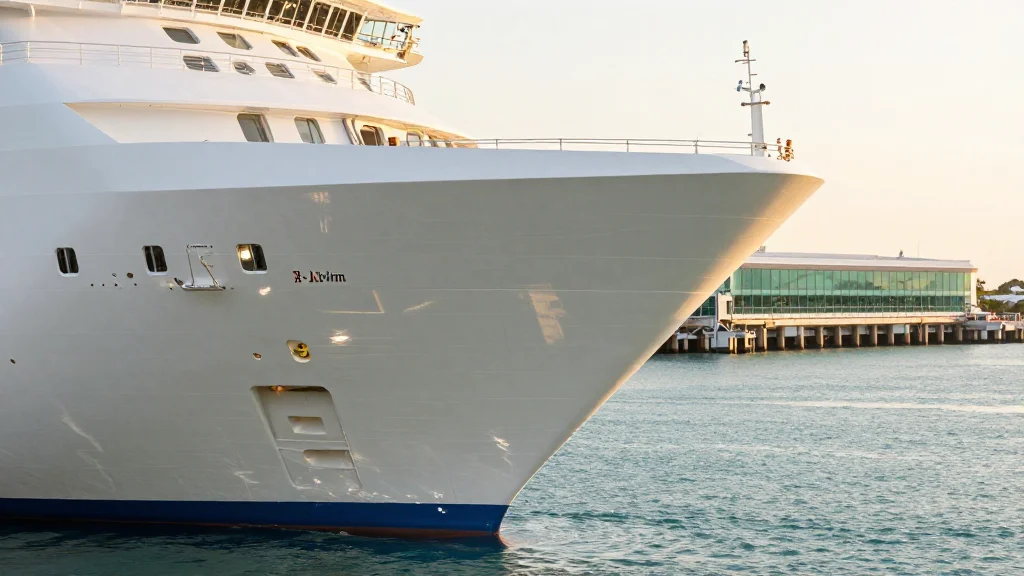
How Port Canaveral Is Powering Record Cruise Growth
Companies Mentioned
Why It Matters
Port Canaveral’s efficiency‑first model shows how a smaller footprint can outpace larger rivals, reshaping U.S. cruise hub competition and delivering significant economic upside for the region.
Key Takeaways
- •8.6 million cruise guests in 2025, 13% YoY growth.
- •Port revenues rose from $77.7 M to $218 M (2015‑2025).
- •Six terminals host 18 ships, targeting 9 million guests in 2026.
- •$93 M garage and terminal upgrades aim to ease congestion.
- •First U.S. port to support LNG‑powered cruise ships, eight by 2027.
Pulse Analysis
Port Canaveral’s ascent to the world’s busiest cruise port underscores a broader shift in the industry toward operational agility over sheer size. By leveraging six terminals that can host multiple cruise lines simultaneously, the port maximizes berth utilization and reduces idle days, a contrast to Miami’s eleven‑terminal layout. This model has attracted a diverse fleet—including Disney’s newest ships and Royal Caribbean’s mega‑liners—fueling a 13% year‑over‑year passenger increase and tripling revenue over a decade. The result is a virtuous cycle: higher traffic justifies further investment, which in turn draws more carriers.
To accommodate the surge, Port Canaveral is investing $93 million in a 13‑story garage that will lift total parking capacity to nearly 17,500 spaces, while Terminal 5 expands to 170,000 sq ft and Terminal 10 upgrades are slated for late 2027. These projects focus on passenger flow, security screening, and luggage handling, aiming to prevent the congestion that can erode the cruise experience. The port’s emphasis on measured growth—balancing new ship arrivals with infrastructure readiness—reflects a data‑driven approach that monitors vehicle turnaround times and garage occupancy, ensuring that expansion does not outpace operational capability.
Sustainability is another differentiator. Port Canaveral pioneered LNG‑powered cruise ship support in North America and now hosts five such vessels, with eight expected by 2027. This early adoption reduces emissions and positions the port as a green gateway for the cruise sector, appealing to environmentally conscious travelers and regulators alike. Combined with its efficient terminal design and strategic parking solutions, the port is set to maintain its competitive edge, potentially redefining the hierarchy of U.S. cruise hubs for years to come.
How Port Canaveral is Powering Record Cruise Growth
Comments
Want to join the conversation?
Loading comments...