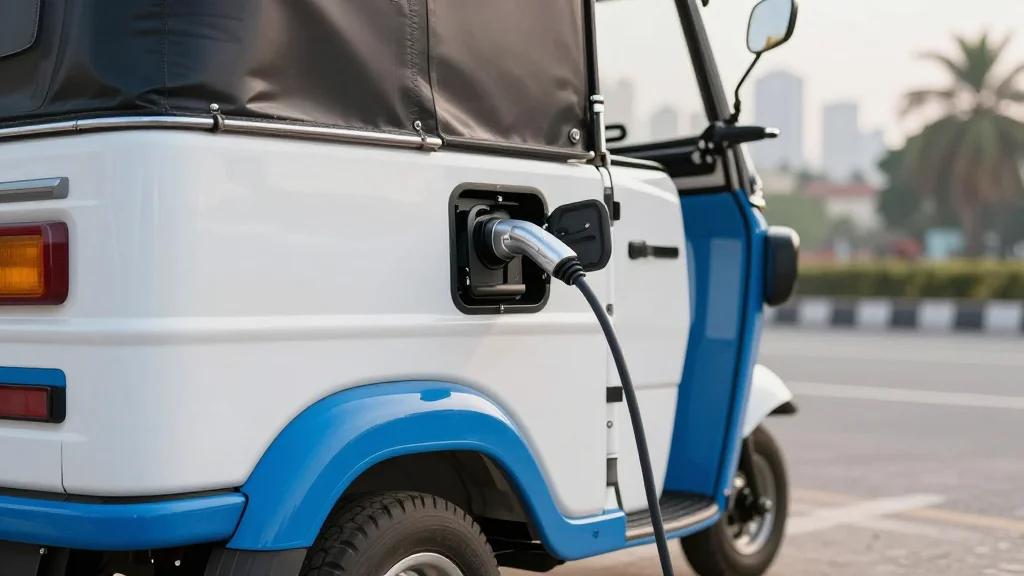
Hyundai and TVS Motor Sign Joint Deal to Launch Electric Three‑Wheelers in India

Why It Matters
The Hyundai‑TVS partnership tackles a critical gap in India’s urban mobility ecosystem: affordable, zero‑emission three‑wheelers for last‑mile transport. By marrying global design expertise with local engineering and manufacturing, the deal could accelerate the shift away from diesel‑powered auto‑rickshaws, reducing air pollution in megacities like Delhi and Mumbai. Moreover, the collaboration signals a broader trend of multinational OEMs partnering with indigenous players to navigate regulatory, cost and consumer‑behavior complexities in emerging markets. Successful commercialization could spur further investment in charging infrastructure, create new jobs in EV manufacturing, and set a precedent for similar joint ventures across Asia and Africa. Beyond environmental benefits, the venture could reshape competitive dynamics. Established three‑wheeler manufacturers will face pressure to upgrade their product lines, while new entrants may find it harder to compete without comparable design and supply‑chain capabilities. The partnership also offers a blueprint for scaling EV solutions beyond passenger transport to cargo and logistics, sectors that are increasingly looking for low‑cost, low‑emission alternatives. Finally, the deal aligns with India’s ambitious climate targets, helping the country meet its Nationally Determined Contributions under the Paris Agreement. If the joint vehicles achieve projected adoption rates, they could contribute significantly to the nation’s goal of 30% electric vehicle penetration by 2030, reinforcing the policy momentum behind sustainable urban transport.
Key Takeaways
- •Hyundai Motor and TVS Motor sign a Joint Development Agreement to co‑develop electric three‑wheelers for India and export markets.
- •Hyundai will lead design and R&D; TVS will provide its electric platform, engineering expertise, and local manufacturing.
- •Targeted launch: pilot production by Q4 2026, market rollout in early 2027, with a prototype reveal at India Auto Expo 2026.
- •Projected vehicle range of 150 km per charge and price under ₹1.2 million (~$15,000) to compete with diesel auto‑rickshaws.
- •Partnership aims to cut urban CO₂ emissions by up to 30 million tonnes annually and support India’s goal of all new three‑wheelers being electric by 2030.
Pulse Analysis
Hyundai’s entry into India’s three‑wheeler segment via TVS reflects a strategic pivot from its traditional passenger‑car focus toward high‑volume, low‑margin mobility solutions. The joint venture mitigates the risk of building a new supply chain from scratch, leveraging TVS’s entrenched dealer network and manufacturing footprint. This model mirrors recent trends where global OEMs partner with local firms to accelerate EV rollouts in price‑sensitive markets, as seen with Toyota’s partnership with Mahindra in electric buses.
From a competitive standpoint, the alliance could force incumbents like Mahindra Electric and Bajaj Auto to accelerate their own three‑wheeler EV programs. The projected price point, while higher than a conventional auto‑rickshaw, may be justified by lower operating costs and compliance with upcoming emission regulations. If the joint vehicles achieve the targeted 150 km range, they will address a key consumer pain point—range anxiety—making them viable for daily commercial use.
Looking ahead, the success of this partnership will hinge on three factors: the speed of charging infrastructure deployment, the ability to secure financing for fleet operators, and regulatory clarity around subsidies and tax incentives. Should these elements align, Hyundai and TVS could capture a sizable share of a market that could exceed 2 million units annually by 2030, establishing a new benchmark for electric last‑mile mobility in emerging economies.
Hyundai and TVS Motor Sign Joint Deal to Launch Electric Three‑Wheelers in India
Comments
Want to join the conversation?
Loading comments...