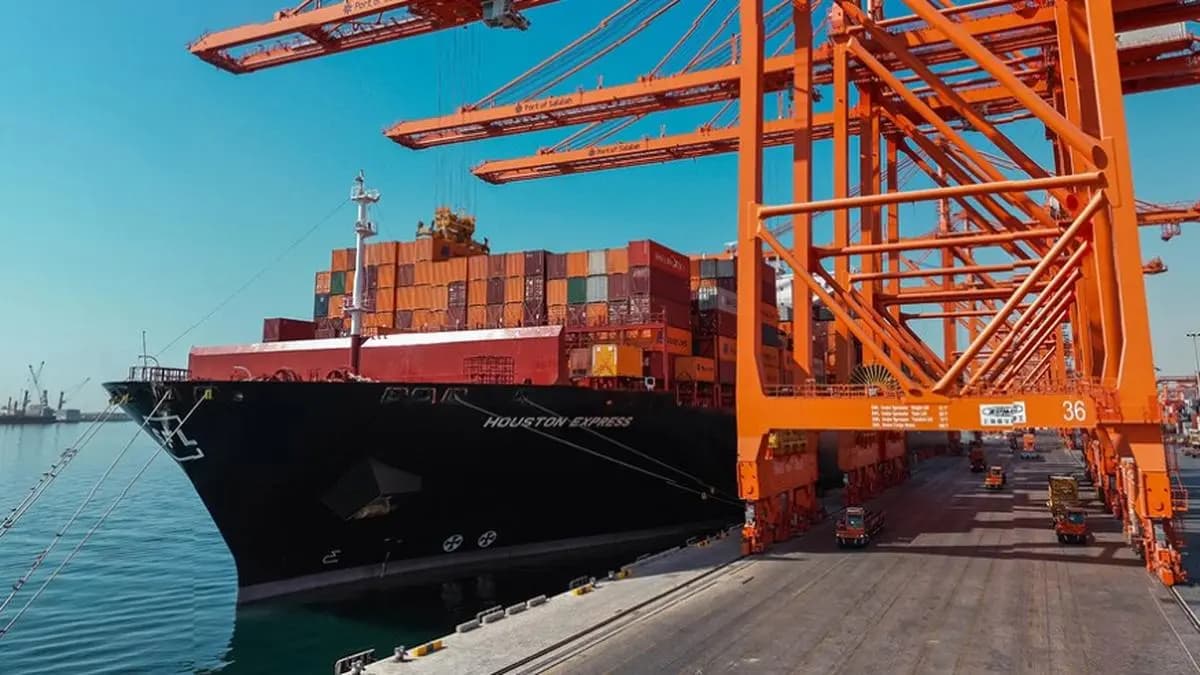
India Taps Oman to Rescue $11.8 Billion Food Exports to West Asia
Why It Matters
The rerouting safeguards a critical supply chain for staple foods and preserves a major revenue stream for India’s agricultural sector while reducing exposure to geopolitical disruptions.
Key Takeaways
- •India reroutes $11.8bn food exports via Omani ports.
- •Strait of Hormuz blockage cut West Asia shipments 28% YoY.
- •Oman’s Salalah and Duqm ports avoid Hormuz risk.
- •High land‑transport costs challenge exporters on new route.
- •June 1 FTA activation expected to boost India‑Oman trade.
Pulse Analysis
The closure of the Strait of Hormuz, a chokepoint that handles roughly a third of global oil and a significant share of maritime trade, has sent shockwaves through supply chains that depend on Gulf routes. For India, whose agricultural exports to West Asia total about $11.8 billion a year, the disruption threatened the flow of rice, meat, dairy and spices to markets that absorb more than one‑fifth of its farm output. Oman’s coastline lies on the open Arabian Sea, giving its ports – especially Salalah, Duqm and Sohar – a natural bypass that keeps vessels out of the contested waterway.
Recognizing the urgency, the Agricultural and Processed Food Products Export Development Authority convened with an Omani trade delegation to map a viable corridor that combines sea lift to Omani ports with over‑land trucking into Saudi Arabia and other GCC states. While the route preserves market access, exporters flag steep inland freight rates that erode margins, prompting negotiations to subsidize or streamline customs procedures. The imminent India‑Oman Free Trade Agreement, set to take effect on June 1, promises tariff reductions and regulatory harmonization that could offset these cost pressures and revive the 28 % YoY export slump recorded in April.
Beyond the immediate rescue of food shipments, the partnership positions Oman as a strategic logistics hub for South‑Asian exporters seeking resilience against geopolitical volatility. A reliable alternative corridor not only protects revenue streams but also deepens economic interdependence between New Delhi and Muscat, encouraging further infrastructure investment along the Gulf of Oman corridor. If the cost curve can be managed, the model may be replicated for other commodities, reinforcing a broader shift toward diversified trade routes that mitigate single‑point failures in an increasingly uncertain global environment.
India taps Oman to rescue $11.8 billion food exports to West Asia
Comments
Want to join the conversation?
Loading comments...