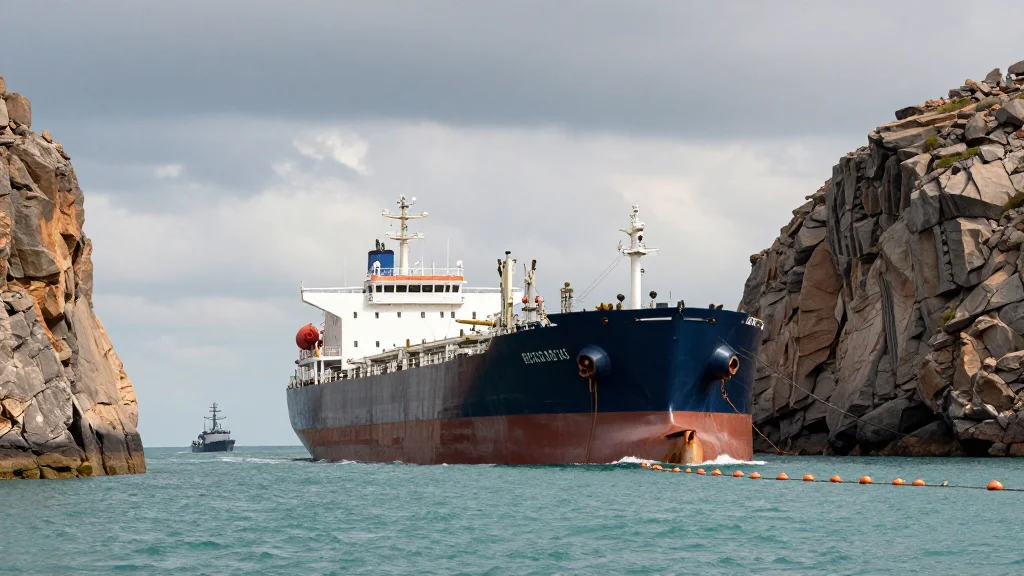
Iran’s $1‑2 Million Security Toll Cripples Hormuz Shipping, Sends Insurance Costs Soaring

Companies Mentioned
Why It Matters
The Strait of Hormuz handles a fifth of the world’s oil trade; any disruption reverberates through global energy prices, shipping costs and inflationary pressures on consumer goods. Iran’s security toll not only inflates the direct cost of moving crude but also forces carriers to take longer, fuel‑intensive detours, amplifying carbon emissions and eroding supply‑chain efficiency. Moreover, the episode tests the resilience of international maritime law: if a state can monetize a strategic waterway through coercion, other powers may emulate the tactic, threatening the stability of critical trade arteries worldwide. For economies heavily reliant on imported oil—such as India, Japan and South Korea—the heightened risk translates into higher import bills, potentially prompting policy shifts toward energy diversification and strategic petroleum reserves. Financial markets, already jittery from geopolitical flashpoints, will likely price in a risk premium for any cargo that must navigate the Gulf, affecting everything from container freight indices to insurance underwriting standards.
Key Takeaways
- •Iran announced a $1‑2 million security fee per tanker and declared the Strait of Hormuz closed on March 4, 2026.
- •The strait normally carries 20‑21 million barrels of oil per day, about 20% of global petroleum liquids consumption.
- •Shipping traffic fell sharply; insurers raised war‑risk premiums, though exact amounts were not disclosed.
- •Higher costs are expected to push up container freight rates as carriers seek longer alternative routes.
- •The move challenges international transit‑passage rights and could set a precedent for other chokepoints.
Pulse Analysis
The Hormuz episode underscores a growing trend where geopolitical leverage is monetized through direct fees on commercial traffic. Historically, states have used blockades or outright closures as a bargaining chip; Iran’s shift to a per‑vessel levy marks a more sophisticated, revenue‑driven approach that blurs the line between coercion and taxation. This tactic forces the shipping industry to reassess risk models that have long treated the Gulf as a low‑cost, high‑throughput corridor.
From a market perspective, the immediate fallout is a compression of margins for carriers that must absorb higher fuel, crew and insurance costs. Larger container lines may pass these expenses to shippers, inflating freight indices such as the Shanghai Containerized Freight Index (SCFI) and the Drewry World Container Index. Smaller operators, lacking the balance sheet depth of majors, could see reduced capacity as they withdraw from high‑risk lanes, potentially tightening supply and driving spot rates higher.
Strategically, the incident could accelerate the diversification of energy logistics. Nations may accelerate investments in overland pipelines, rail corridors, or even floating storage solutions to hedge against maritime chokepoint volatility. In the longer term, the precedent set by Iran could embolden other littoral states to extract fees from passing traffic, prompting a re‑evaluation of the United Nations Convention on the Law of the Sea (UNCLOS) enforcement mechanisms. The international community’s response—whether through diplomatic pressure, sanctions, or naval presence—will shape the next chapter of maritime security and the economics of global trade.
Iran’s $1‑2 Million Security Toll Cripples Hormuz Shipping, Sends Insurance Costs Soaring
Comments
Want to join the conversation?
Loading comments...