Companies Mentioned
Why It Matters
The slowdown signals tightening demand in Malaysia’s traditional auto segment, but the rapid rise of EVs highlights a shifting growth engine for manufacturers and policymakers.
Key Takeaways
- •March new vehicle registrations dropped 13% year‑on‑year
- •BEV sales more than doubled, reaching 14,591 units in Q1
- •Perodua’s sales fell 13% despite launching Traz SUV and QV‑E
- •Proton’s global sales surged 40% driven by Saga and e.Mas 5
- •Toyota registrations rose 13% thanks to Vios Hybrid and Corolla Cross HEV
Pulse Analysis
The March dip in Malaysia’s vehicle registrations reflects a confluence of seasonal and macro‑economic factors. An earlier Eid holiday pulled the peak buying window forward, leaving March weaker than the same month last year. Even as GDP growth accelerated to 6.3% YoY in Q4 2025, consumer sentiment has grown cautious amid inflation pressures and geopolitical uncertainty, curbing discretionary spending on new cars.
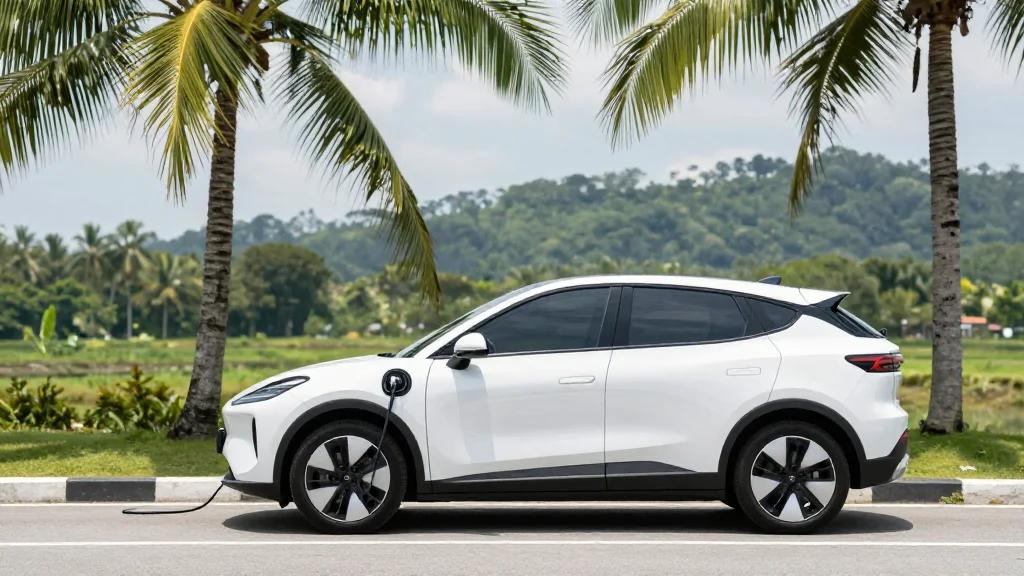
Against this backdrop, electric mobility is emerging as a bright spot. Battery‑electric vehicle sales more than doubled to 14,591 units in the first quarter, driven primarily by Proton’s e.Mas 5, which alone accounted for 6,701 registrations. The surge underscores growing consumer acceptance of EVs and aligns with Malaysia’s policy push for greener transport, including tax incentives and charging infrastructure expansion. Competitors such as BYD and local startups are also gaining traction, suggesting a broader market shift.
Manufacturer performance diverged sharply. Perodua, the market leader, saw a 13% sales decline despite the launch of the Traz SUV and its inaugural QV‑E BEV, indicating that new model introductions alone may not offset broader demand weakness. In contrast, Proton leveraged its global network and the popularity of the Saga and e.Mas 5 to achieve a 40% increase in worldwide sales, while Toyota’s hybrid lineup propelled a 13% rise in registrations. Looking ahead, GlobalData forecasts a near‑6% drop in light‑vehicle sales for 2026, with a modest rebound in 2027, highlighting the importance of EV strategy and product timing for future growth.
Malaysia vehicle sales fall 13% in March
Comments
Want to join the conversation?
Loading comments...