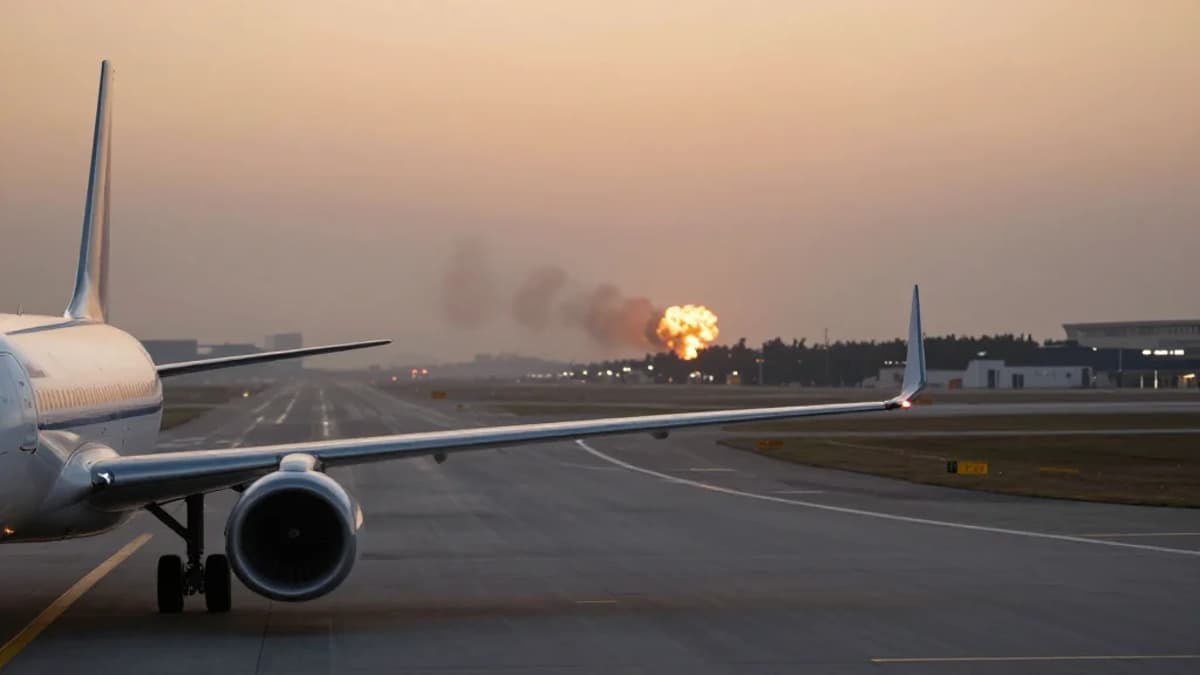
Middle Eastern Airports Are Now Targets Of War. Are European Airports Next?
•March 2, 2026
0
Why It Matters
Normalizing airports as viable war targets escalates security threats and could trigger massive operational and economic disruptions across European aviation networks.
Key Takeaways
- •Iran struck Dubai and Kuwait airports with drones
- •Attacks caused structural damage and injuries to staff
- •European airports previously disrupted by drones, raising security concerns
- •Russia's rhetoric hints at possible future airport targeting
- •Airports' soft‑target nature amplifies economic and psychological impact
Pulse Analysis
The February 2026 drone incursions into Dubai International and Kuwait International airports represent a watershed moment for commercial aviation security. Unlike traditional collateral damage, these strikes deliberately targeted civilian infrastructure, demonstrating that modern unmanned systems can breach even the most fortified air hubs. The incidents forced immediate flight suspensions, highlighted vulnerabilities in perimeter defenses, and underscored how quickly a regional conflict can spill over into the global travel ecosystem. Analysts now view airport facilities as strategic assets rather than passive by‑standers in warfare.
Europe’s exposure to similar threats is already evident. In September 2025, Copenhagen and Oslo airports were temporarily shut down after unidentified drones—suspected to be Russian—triggered emergency protocols. Although no physical damage occurred, the disruptions caused cascading flight cancellations and revealed gaps in detection and response capabilities. Coupled with recent Russian statements about “horror strikes” on Europe, the precedent set in the Gulf suggests a low psychological barrier for replicating airport attacks using drones, missiles, or cyber means. European authorities must therefore reassess risk models that previously treated airports as peripheral to direct conflict.
The broader implication is a shift in how states and non‑state actors perceive soft targets. Airports, by design, are open, crowded, and economically critical, making them attractive for both kinetic and informational warfare. Policymakers are urged to invest in layered airspace monitoring, hardened terminal structures, and resilient digital systems to mitigate both physical and cyber threats. As the line between battlefield and civilian infrastructure blurs, proactive coordination between aviation regulators, intelligence agencies, and defense ministries will be essential to safeguard the continuity of global air travel.
Middle Eastern Airports Are Now Targets Of War. Are European Airports Next?
0
Comments
Want to join the conversation?
Loading comments...