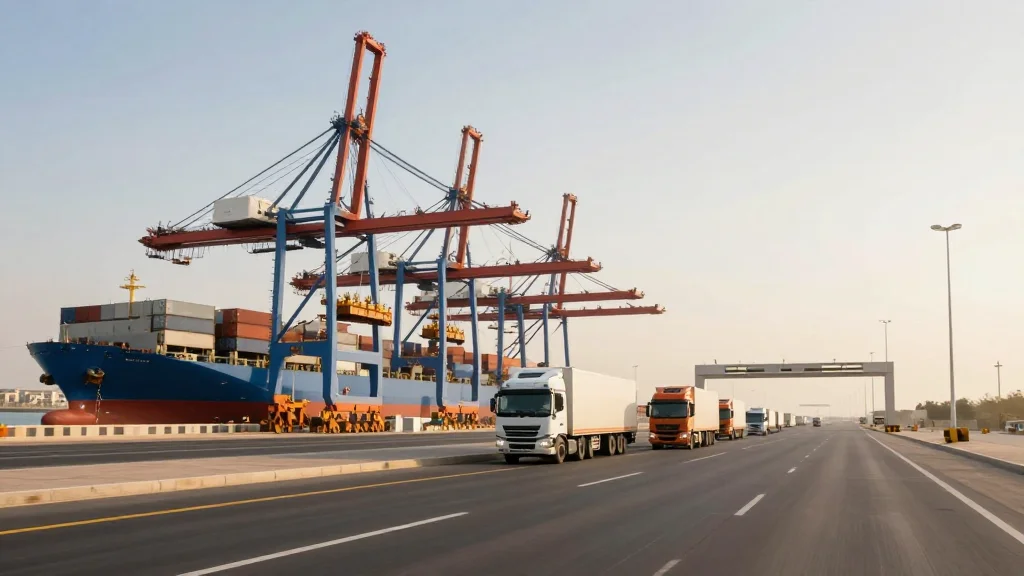
New Pakistan-Iran Road Routes and Central Asian Trade
Why It Matters
The corridors reshape regional logistics by providing a secure, land‑based alternative to the Strait of Hormuz, bolstering trade for Pakistan, Iran and landlocked Central Asian economies.
Key Takeaways
- •Six corridors link Gwadar, Karachi, Port Qasim to Iran’s Gabd, Taftan
- •Pakistan’s April 25 transit order lets third‑country cargo move through its ports
- •Gwadar handled 11,000 containers in April, up from 8,300 in 2025
- •Central Asian exporters can avoid Afghanistan via Iran’s road‑rail links
- •Route success depends on Pakistan’s port upgrades and security for truck convoys
Pulse Analysis
The sudden U.S. and Israeli strikes on Iran and the ensuing blockade of the Strait of Hormuz have forced regional supply chains onto land routes. By operationalizing six road corridors, Pakistan and Iran are creating a strategic bypass that shields cargo from maritime disruptions and sanctions pressures. This shift not only mitigates the immediate bottleneck at Karachi but also repositions Pakistan as a pivotal transit hub for goods destined for Iran’s ports of Chabahar and Bandar Abbas.
At the port level, the new corridors have already revitalized activity. Gwadar, long criticized for underutilization, recorded a dramatic jump to 11,000 TEU moves in April, eclipsing its 2025 total. Karachi’s chronic congestion eases as containers destined for Iran are off‑loaded earlier, while Port Qasim gains a fresh stream of transit cargo. For Iran, the overland lifeline restores export capacity and deepens economic interdependence with Pakistan, potentially reshaping bilateral trade balances.
For Central Asian states, the corridors open a Hormuz‑free, Afghanistan‑avoiding trade corridor. Goods can now travel from landlocked markets to Pakistani ports, then cross into Iran where more robust rail and road networks facilitate onward shipment to the Caspian or Indian Ocean. However, the route’s attractiveness hinges on Pakistan’s ability to streamline port operations and guarantee security for truck convoys, as well as Iran’s capacity to maintain its inland infrastructure amid ongoing conflict. If these conditions are met, the six corridors could become a cornerstone of Eurasian trade, diversifying routes and reducing geopolitical risk.
New Pakistan-Iran road routes and Central Asian trade
Comments
Want to join the conversation?
Loading comments...