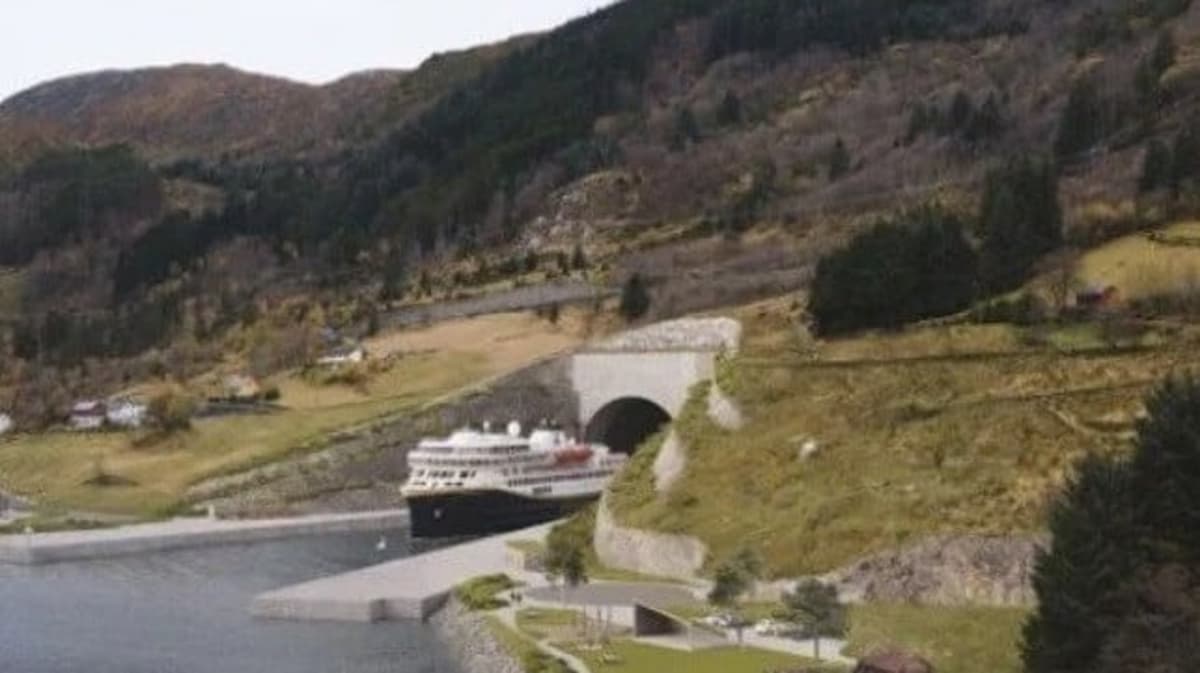
Norwegian Budget Includes Money to Construct World’s First Ship Tunnel
Companies Mentioned
Why It Matters
The tunnel could dramatically improve safety and efficiency for Norway’s coastal shipping, a critical component of its economy, while showcasing large‑scale infrastructure innovation.
Key Takeaways
- •$15.8 M budget allocation jumpstarts ship tunnel planning.
- •Project cost trimmed to about $900 M, down from $1 B.
- •Tunnel dimensions: 1 mile long, 50 m high, 36 m wide.
- •Early contracts include demolition and water‑pipeline works.
- •Construction target set for 2027 pending parliamentary approval.
Pulse Analysis
Norway’s jagged western coastline has long been a bottleneck for the nation’s coastal ferry network, with the Stad peninsula notorious for gale‑force winds and treacherous seas. A dedicated ship tunnel—essentially a submerged roadway for vessels—promises to bypass this exposure, cutting travel time and reducing weather‑related delays for passenger and cargo services that move millions of tonnes each year. The concept, first floated decades ago, gained traction in 2024 when the Norwegian Coastal Administration produced detailed engineering studies, confirming that a one‑mile, 50‑meter‑high conduit could accommodate the full range of coastal ships.
The latest budget move injects $15.8 million into the project, a modest seed compared with the roughly $900 million total outlay now projected after a series of design optimisations. Earlier estimates hovered around $1 billion, prompting Prime Minister Jonas Gahr Støre to label the scheme unaffordable in late 2025. Competitive bids from AF Gruppen, Eiffage Génie Civil and a Skanska‑led consortium have already been screened, and the new funding will allow the Coastal Administration to award early contracts for site demolition and water‑pipeline installation, de‑risking the front end of construction.
If the Storting green‑lights the financing by mid‑June, construction could commence in 2027, positioning Norway as the first country to operate a full‑scale ship tunnel. The infrastructure would not only enhance safety for the nation’s vital coastal trade routes but also generate a showcase project for large‑scale tunnelling, potentially attracting international interest and ancillary economic activity. Moreover, the tunnel could improve fuel efficiency and lower emissions by shortening voyages, aligning with Norway’s broader climate‑neutral shipping ambitions and reinforcing its reputation for engineering innovation.
Norwegian Budget Includes Money to Construct World’s First Ship Tunnel
Comments
Want to join the conversation?
Loading comments...