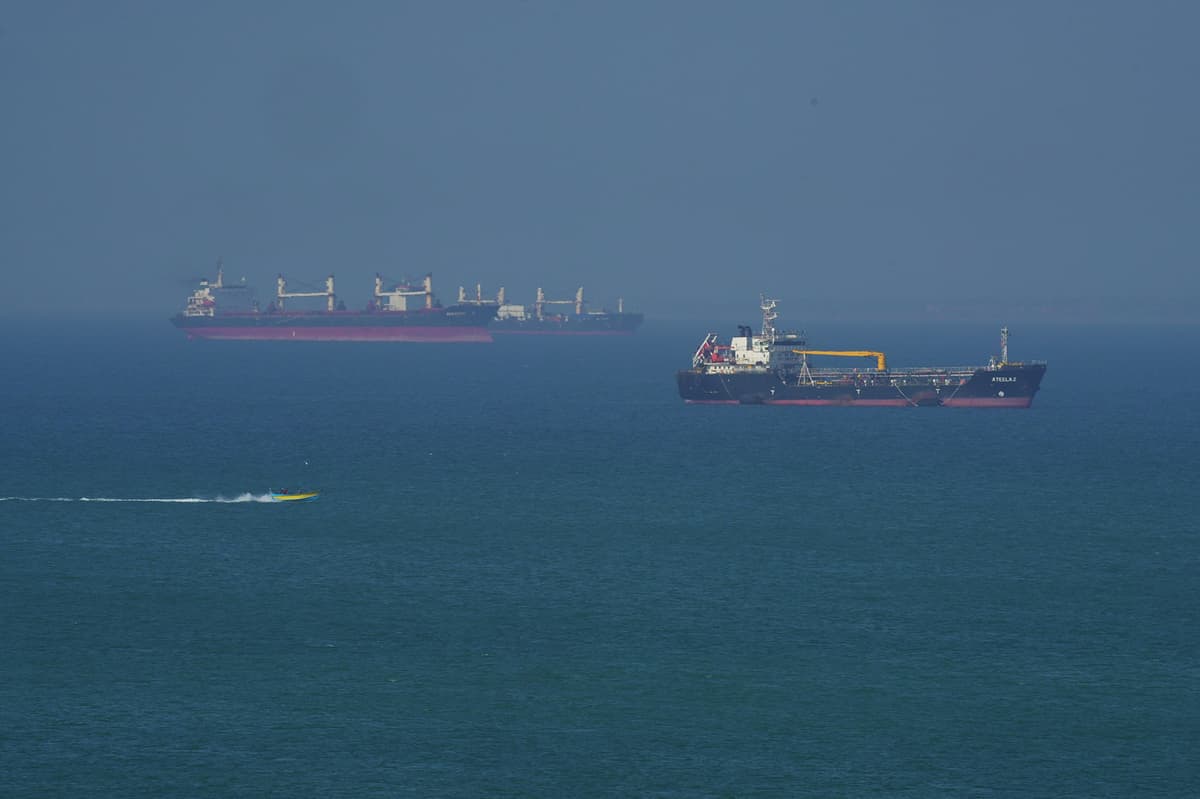
Oil Tankers Transiting Strait of Hormuz Since Start of Iran War
Companies Mentioned
Why It Matters
The continued transit demonstrates that global oil markets can adapt to geopolitical friction, preserving supply to key Asian refiners and limiting price spikes. It also signals Tehran’s willingness to grant selective passage, shaping future maritime risk assessments.
Key Takeaways
- •Multiple non‑Iranian VLCCs and suezmaxes crossed Hormuz since Feb 28
- •Japan received 3.2 million barrels from Kuwait and Saudi sources
- •India off‑loaded over 4 million barrels from Abu Dhabi and Saudi crude
- •China’s Unipec‑chartered tankers moved nearly 8 million barrels to Asia
- •Malaysia cleared seven vessels, highlighting Tehran’s selective transit policy
Pulse Analysis
The Strait of Hormuz, handling about 20% of global oil, has long been a flashpoint for geopolitical maneuvering. When the United States imposed a naval blockade on Iranian ports and Iran responded with its own restrictions, the corridor’s operational status appeared uncertain. Yet the data reveal that non‑Iranian carriers have largely maintained their routes, leveraging Iran‑approved lanes or, in some cases, being redirected by U.S. forces. This dual‑track approach illustrates how major oil exporters and shippers balance compliance with both sanctions regimes and commercial imperatives.
Asian demand drives much of the traffic. Japan’s Eneos Endeavor and Idemitsu Maru together moved over three million barrels of Kuwaiti and Saudi crude, while Indian refiners received more than four million barrels from Abu Dhabi and Saudi sources. China’s state‑linked Unipec chartered several VLCCs that collectively shipped close to eight million barrels of Iraqi and Saudi oil to eastern ports. Meanwhile, Malaysia’s coordinated clearances allowed seven vessels to pass, underscoring Tehran’s selective but functional role in sustaining trade flows despite broader diplomatic pressure.
For market participants, the pattern signals that supply disruptions from Hormuz are likely to be localized rather than systemic. Traders can anticipate continued, albeit monitored, shipments to Asia, reducing the risk of abrupt price spikes. However, the presence of U.S. naval enforcement and Iran’s fluctuating policy introduces a layer of operational risk that insurers and logistics firms must price in. As the conflict evolves, stakeholders will watch for any shift toward tighter restrictions, which could force rerouting through longer, costlier passages such as the Cape of Good Hope, reshaping global oil logistics.
Oil Tankers Transiting Strait of Hormuz Since Start of Iran War
Comments
Want to join the conversation?
Loading comments...