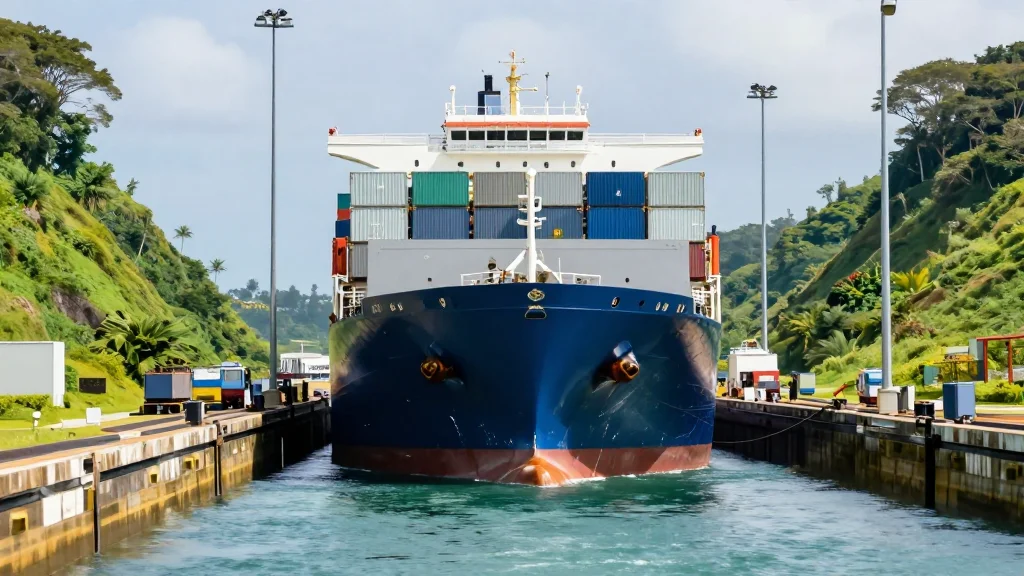
Panama Reaffirms ‘Neutrality’ of Canal Amid Middle East War
Why It Matters
The shift underscores the Panama Canal’s role as a critical backup for energy shipments, affecting global supply chains and pricing dynamics. Maintaining neutrality ensures uninterrupted flow for major economies amid geopolitical turbulence.
Key Takeaways
- •Panama Canal traffic rose to 50 ships daily amid Hormuz closure.
- •Canal neutrality remains crucial for U.S. and China trade flows.
- •Five percent of world maritime trade still relies on Panama route.
- •Strait of Hormuz blockage pushes oil shipments toward Panama.
- •Increased traffic may strain canal capacity and raise fees.
Pulse Analysis
The ongoing conflict in the Middle East has effectively shut the Strait of Hormuz, a chokepoint that moves roughly 20% of the world’s oil and natural‑gas exports. Shippers, seeking to avoid the risk‑laden Gulf, have rerouted vessels through the Panama Canal, pushing daily transits from the low‑30s to around 50 ships. This sudden volume increase highlights the canal’s strategic flexibility, but also raises questions about its ability to absorb sustained surges without operational delays.
Panama’s explicit reaffirmation of canal neutrality serves both legal and commercial purposes. The 1977 Torrijos‑Carter Treaties guarantee free passage for all nations, a principle that underpins the United States’ and China’s reliance on the waterway for bilateral trade. By publicly emphasizing neutrality, Panama signals to global shippers that the canal will not become a geopolitical pawn, preserving confidence in a route that connects the U.S. East Coast with Asian manufacturing hubs such as South Korea and Japan.
Looking ahead, the canal faces a balancing act. Higher traffic could strain lock capacity, prompting the Panama Canal Authority to consider fee adjustments or schedule optimizations to manage congestion. Moreover, the episode may accelerate investments in alternative routes, like the Arctic Northwest Passage or expanded overland pipelines, as companies diversify risk. Nonetheless, for the foreseeable future, the Panama Canal remains a vital safety valve for energy logistics, reinforcing its status as a cornerstone of international maritime trade.
Panama reaffirms ‘neutrality’ of canal amid Middle East war
Comments
Want to join the conversation?
Loading comments...