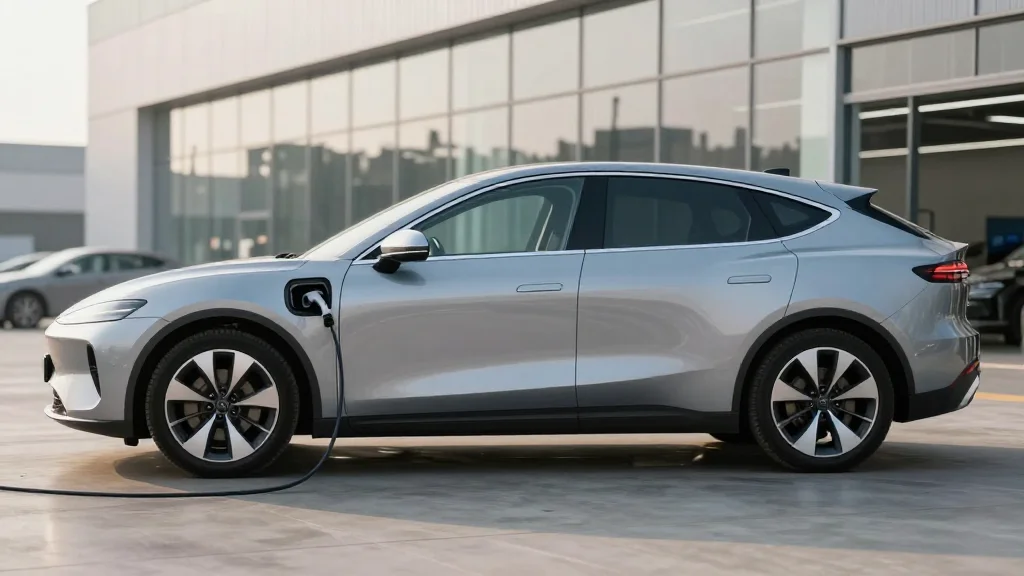
Stellantis Wants to Build Chinese EVs in Canada and Mexico. Just Not in the US.
Companies Mentioned
Why It Matters
By leveraging Chinese EV technology, Stellantis can quickly populate underutilized plants and offer affordable models in markets where tariffs are low, boosting its global sales mix. The strategy also highlights how geopolitical constraints are reshaping production footprints for legacy automakers.
Key Takeaways
- •Stellantis holds 21% stake in Leapmotor, 51% JV rights outside China
- •Brampton plant idle since Dec 2023 could produce Leapmotor EVs tariff‑free
- •No US space due to political backlash; Canada/Mexico open for Chinese EVs
- •Leapmotor models priced ~$20k–$39k, undercutting US average $49k
- •Partnerships aim to fill idle capacity while reviving legacy brands
Pulse Analysis
Stellantis’s decision to manufacture Leapmotor electric cars in Canada and Mexico reflects a pragmatic response to two converging forces: the rapid cost advantage of Chinese EV engineering and the tightening political climate in the United States. Leapmotor’s modular, software‑defined architecture allows rapid model updates and pricing that undercuts most mainstream American offerings, with the T03 hatchback starting near $20,000 and the B10 SUV around $39,000. By sidestepping the modest 6.1% Canadian tariff, Stellantis can deliver truly North‑American‑built Chinese EVs, preserving margins while expanding its product breadth.
The Brampton assembly line, idle since the end of Charger and Challenger production in December 2023, offers a ready‑made platform to absorb Leapmotor’s production volume. Utilizing this capacity not only generates cash flow but also cushions the company’s broader $70 billion turnaround plan, which hinges on reviving legacy brands like Ram and Chrysler for the U.S. market. In Mexico, similar plant flexibility can meet regional demand without incurring the higher labor costs of the United States, positioning Stellantis to compete with BYD and Xiaomi, whose sub‑$35,000 models are gaining traction globally.
Beyond immediate plant utilization, the partnership signals a strategic bifurcation: Chinese‑engineered, price‑competitive EVs for markets where political barriers are low, and traditional Detroit marques for the United States where legislation threatens any Chinese‑linked vehicle. This dual‑track approach mirrors the industry’s broader shift toward collaborative ecosystems, as seen in other joint ventures with Dongfeng and Jaguar Land Rover. If executed well, Stellantis could capture a sizable share of the affordable EV segment abroad while safeguarding its legacy brand revival at home, setting a template for how legacy automakers navigate the evolving global EV landscape.
Stellantis wants to build Chinese EVs in Canada and Mexico. Just not in the US.
Comments
Want to join the conversation?
Loading comments...