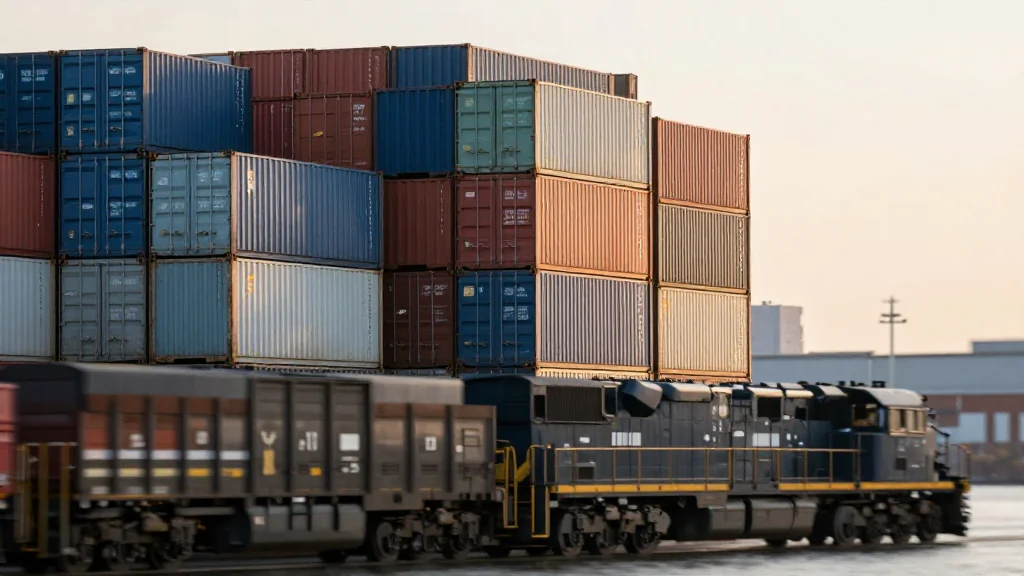
Supply‑Chain Strain Drives Transport Costs to Decade‑High, Raising Inflation Risks

Companies Mentioned
Why It Matters
Rising freight costs ripple through the entire economy, inflating the price of consumer goods, raw materials, and ultimately household budgets. When logistics expenses become a dominant component of the cost structure, they can embed a supply‑side inflationary bias that is resistant to traditional demand‑side policy tools, forcing central banks to reconsider the balance between rate hikes and targeted supply‑chain interventions. For the transportation sector, sustained cost pressure threatens carrier profitability, may accelerate consolidation, and could spur a shift toward more efficient modes such as rail or intermodal solutions. Policymakers and industry leaders will need to coordinate on infrastructure upgrades, regulatory reforms, and strategic stockpiling to mitigate future spikes and preserve economic stability.
Key Takeaways
- •UBS analyst Pierre Lafourcade flagged fastest‑since‑pandemic supply‑chain stress in mid‑May 2026.
- •May 2026 Logistics Managers' Index shows transport costs at a ten‑year high, with capacity falling.
- •Global Supply Chain Stress Index rose 1.2 standard deviations in March‑April, second‑largest jump since July 2020.
- •Report projects logistics costs to increase 253.6 % over the next 12 months, heightening inflation risk.
- •Fed Beige Book cites growing business concern over freight and supply‑chain costs.
Pulse Analysis
The convergence of record freight costs and shrinking capacity signals a structural bottleneck that could redefine inflation dynamics for the next economic cycle. Historically, supply‑side shocks—such as the 1970s oil crisis—forced central banks to adopt a more nuanced stance, blending rate policy with targeted interventions. In today’s context, the logistics sector’s price elasticity appears low; carriers cannot quickly scale up fleets or routes, especially when geopolitical chokepoints like Hormuz remain volatile. This rigidity means that even aggressive rate hikes may only dampen demand without alleviating the underlying supply constraints, potentially entrenching a higher‑for‑longer inflation floor.
From a competitive standpoint, firms that can diversify routing, invest in fuel‑efficient technologies, or secure long‑term freight contracts may gain a pricing advantage. Meanwhile, smaller carriers lacking capital reserves could be forced out, accelerating industry consolidation. The Fed’s dilemma is acute: tightening too fast risks choking growth, while easing could cement inflation expectations. A calibrated approach that pairs monetary policy with strategic infrastructure spending—perhaps through public‑private partnerships aimed at expanding truck terminals and enhancing rail interconnectivity—could provide the necessary supply‑side relief.
Looking ahead, the October LMI will be a critical barometer. A sustained upward trend would likely push the Fed to consider non‑conventional tools, such as targeted credit facilities for logistics firms, to boost capacity without inflating demand. Conversely, any sign of cost moderation could validate a more conventional tightening path. Stakeholders across the supply chain should therefore monitor both the index and policy signals closely, as the interplay between freight pricing and macro‑policy will shape the inflation outlook for the remainder of the decade.
Supply‑Chain Strain Drives Transport Costs to Decade‑High, Raising Inflation Risks
Comments
Want to join the conversation?
Loading comments...