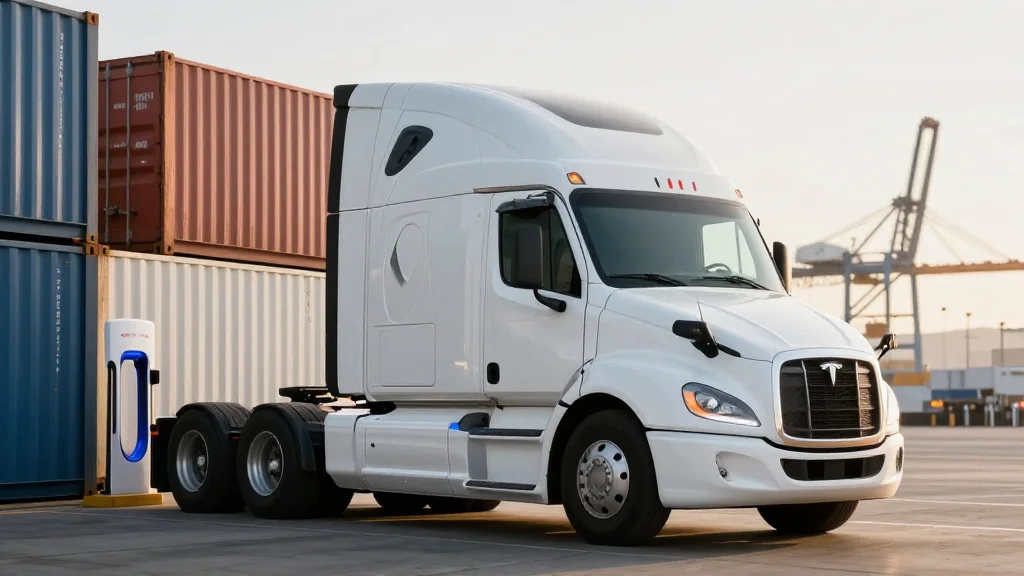
Tesla Secures 60-Truck Order From California Port Drayage Fleets

Companies Mentioned
Why It Matters
The deal illustrates how electric heavy‑duty trucks are moving from pilot projects to large‑scale commercial deployments in one of the most emissions‑intensive freight segments. By securing a 60‑truck order, Tesla not only validates the Semi’s suitability for high‑turnover drayage routes but also showcases the effectiveness of integrated financing and charging solutions offered by firms like Forum Mobility. This could catalyze broader adoption across the U.S. logistics network, reducing diesel emissions at critical gateway ports and reshaping the economics of short‑haul freight. Furthermore, the order underscores a shift in competitive dynamics. Traditional diesel‑truck manufacturers such as Daimler, PACCAR and Volvo have struggled to gain traction in the California voucher market, while Tesla’s aggressive pricing and rapidly scaling production give it a clear advantage. The success of this deployment may pressure incumbents to accelerate their own electric offerings and invest in depot‑level charging, intensifying competition and potentially driving down costs for the entire industry.
Key Takeaways
- •Tesla Semi receives a combined order for 60 trucks from Big F Transport (40) and NICA Container (20).
- •The order is valued at approximately $15‑$18 million based on $260,000‑$290,000 per truck pricing.
- •Forum Mobility will host the trucks at its FM Santa Fe depot with 14 MW of chargers, supporting 200+ EV trucks daily.
- •Tesla’s Semi captured 965 of 1,067 California Clean Truck & Bus Voucher applications (Jan 2025‑Feb 2026).
- •Forum Mobility raised $15 million Series A and formed a $400 million joint venture with CBRE to expand charging depots.
Pulse Analysis
Tesla’s breakthrough in the drayage niche reflects a broader industry pivot toward electrification where total‑cost‑of‑ownership (TCO) advantages are most pronounced. Port drayage routes are characterized by short distances, high utilization rates and predictable schedules—conditions that align perfectly with the Semi’s 325‑mile (standard) and 500‑mile (long‑range) capabilities. By bundling vehicle leasing with depot‑based charging, Forum Mobility removes a key barrier for smaller carriers that lack the capital to build private infrastructure. This model mirrors the successful approach taken by early‑stage EV bus operators, suggesting a replicable pathway for heavy‑duty trucks.
The competitive landscape is also shifting. Daimler’s eCascadia, while already in service, has not secured comparable order volumes, and its pricing remains higher than Tesla’s advertised $260,000‑$290,000 range. Tesla’s high‑volume production line at Gigafactory Nevada, designed for 50,000 units annually, promises economies of scale that could further compress prices. If the Rancho Dominguez depot demonstrates reliable daily turnaround, it will provide a data‑driven case study for other ports, potentially unlocking billions in future orders across the West Coast and beyond.
Looking ahead, the success of this deployment could accelerate policy support, especially as California’s Clean Truck & Bus Voucher program continues to funnel subsidies toward zero‑emission trucks. A cascade effect may emerge: as more carriers adopt the Semi, ancillary services—maintenance, battery recycling, and grid‑integration solutions—will expand, creating a new ecosystem of EV‑focused logistics. For Tesla, the drayage beachhead may become a springboard to dominate not only short‑haul but also regional and intercity freight markets, reshaping the competitive dynamics of the U.S. transportation sector for the next decade.
Tesla Secures 60-Truck Order from California Port Drayage Fleets
Comments
Want to join the conversation?
Loading comments...