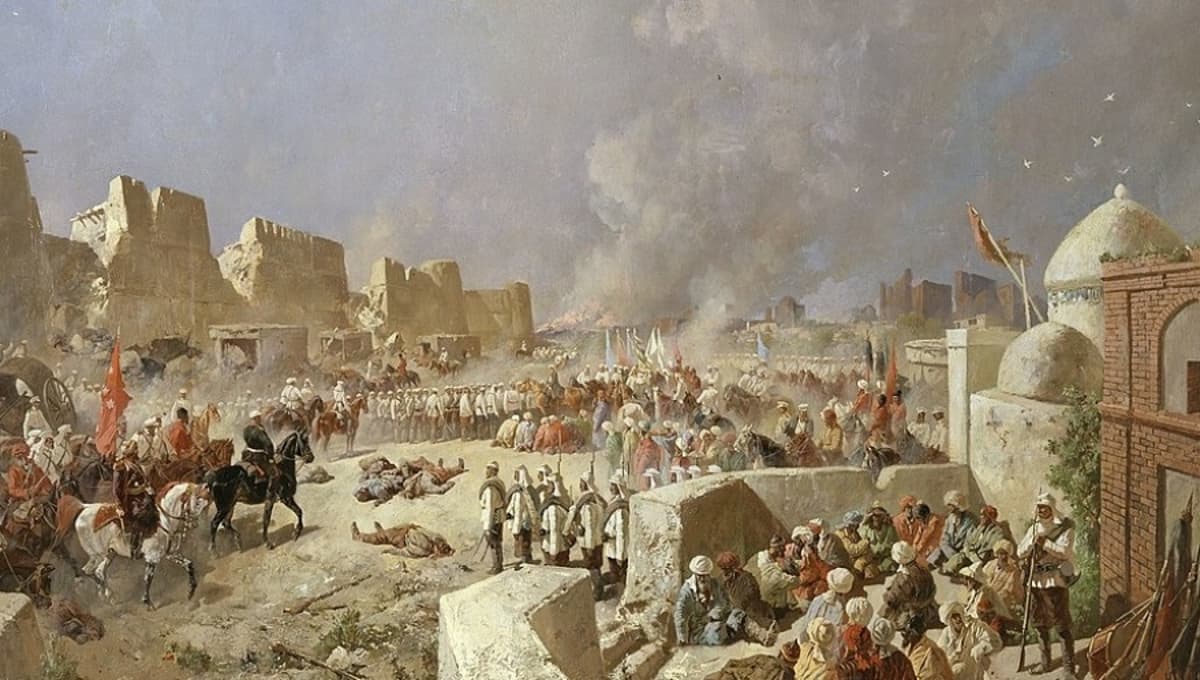
The Return of the Silk Road as the “C6”, A Key Geopolitical Link Between Europe and Asia
Why It Matters
The C6 offers a fast, resilient overland trade artery and a coordinated energy hub, giving investors and governments a new lever in the US‑China‑Russia strategic contest.
Key Takeaways
- •Middle Corridor cuts China‑Europe shipping to 13‑21 days
- •C6 unites Central Asia and Azerbaijan for transport, energy, trade
- •Turkic States push coordinated economic and security agenda
- •Kazakhstan leads, Uzbekistan drives liberalisation and investment
- •Kambarata HPP‑1 showcases regional water cooperation
Pulse Analysis
The resurgence of a Silk Road‑style network is reshaping Eurasian geopolitics. As Russia’s war in Ukraine forced Western carriers out of its airspace, the five former Soviet republics of Central Asia forged a neutral, collective stance, formalising the C5 bloc. By inviting Azerbaijan, they created the C6, anchoring the Middle Corridor that links Chinese factories to European markets in roughly two weeks—far quicker than the 35‑45 days required by sea or the sanctioned northern rail route. This overland artery is not just a logistics shortcut; it is a strategic counterweight to both Russian and Chinese dominance, offering Western firms a reliable pathway for high‑value goods.
Beyond freight, the C6 is knitting together the region’s energy and water systems. Kazakhstan’s oil wealth, Turkmenistan’s vast gas reserves, and Uzbekistan’s central grid are being linked through joint infrastructure projects, including a deep‑sea Caspian cable and coordinated power‑grid upgrades. The Kambarata HPP‑1 hydropower scheme, co‑developed by Kyrgyzstan, Kazakhstan and Uzbekistan, illustrates how shared water management can turn historic disputes into collaborative assets. These interconnections lay the groundwork for future renewable exports, such as green hydrogen, that could flow from Central Asia to European markets, diversifying energy supplies and reducing reliance on Russian pipelines.
Investors are taking note of the C6’s emerging market potential. Combined GDP now exceeds $650 billion, with a youthful population of about 94 million offering a growing consumer base. Uzbekistan’s rapid liberalisation and Kazakhstan’s sophisticated financial sector provide a foothold for foreign capital, while Azerbaijan’s access to European financial hubs eases cross‑border investment. The Organisation of Turkic States, revitalised under President Erdogan, adds a cultural‑political glue, promoting trade facilitation, security cooperation and even a shared digital currency to bypass the dollar. As the C6 matures, it could become a decisive factor in the broader US‑China‑Russia rivalry, offering a coordinated, multi‑modal platform that reshapes trade, energy and geopolitical calculations across the continent.
The return of the Silk Road as the “C6”, a key geopolitical link between Europe and Asia
Comments
Want to join the conversation?
Loading comments...