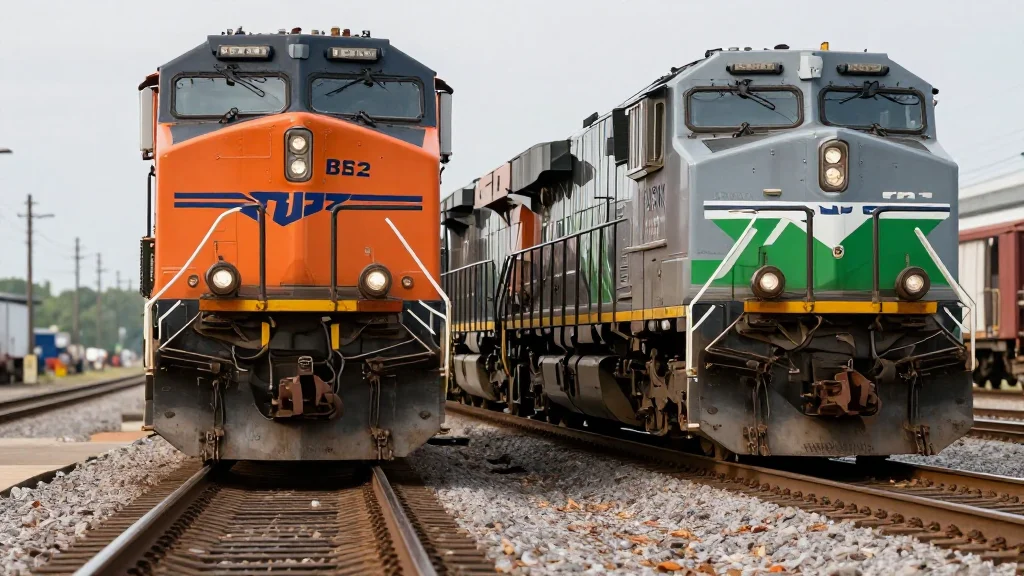
The U.S. Freight Network Is Broken by Design. One Merger Could Start Fixing It
Companies Mentioned
Why It Matters
A unified rail network could lower logistics costs and curb highway congestion, while the merger’s impact on competition could reshape the freight transportation landscape.
Key Takeaways
- •STB to rule on revised UP‑NS merger by end of May
- •Combined network would control roughly half of domestic rail freight
- •Rail moves one ton 500 miles per gallon, 3‑4× truck efficiency
- •Merger could reduce handoffs, improve schedule reliability and visibility
- •STB may impose service standards, pricing transparency, and penalties
Pulse Analysis
America’s freight system hinges on a patchwork of rail carriers that often require multiple handoffs before a shipment reaches its destination. Each interchange adds time, fuel consumption and administrative overhead, inflating costs that ultimately appear on store shelves. By contrast, rail can move a ton of cargo nearly 500 miles on a single gallon of fuel—three to four times the efficiency of trucking—making it a greener, cheaper option for long‑haul freight. The current network, however, was built around regional monopolies rather than a seamless coast‑to‑coast corridor, limiting its full potential.
The proposed Union Pacific‑Norfolk Southern combination would merge the dominant western and eastern rail operators into a single entity that handles roughly 50% of U.S. rail freight volume. Advocates say the merger would eliminate redundant routes, streamline scheduling, and give shippers end‑to‑end visibility, translating into lower shipping rates and more reliable delivery windows. Critics, including rival BNSF and short‑line operators, warn that such concentration could enable price‑setting power and restrict access for smaller carriers. The Surface Transportation Board is therefore poised to attach conditions—service‑quality guarantees, transparent pricing formulas, and enforceable penalties for failures—to safeguard competition while unlocking efficiency gains.
Beyond the immediate logistics calculus, the deal highlights a broader shift toward private investment in freight infrastructure. Federal highway funding has eroded in real terms since the 1990s, and proposals to suspend the gas tax underscore the fiscal strain on road maintenance. A stronger, integrated rail network can alleviate pressure on highways, reduce emissions, and attract capital without expanding the federal balance sheet. The STB’s ultimate ruling will set a precedent for how the nation balances market concentration against the public interest in a critical, yet often invisible, component of the supply chain.
The U.S. freight network is broken by design. One merger could start fixing it
Comments
Want to join the conversation?
Loading comments...