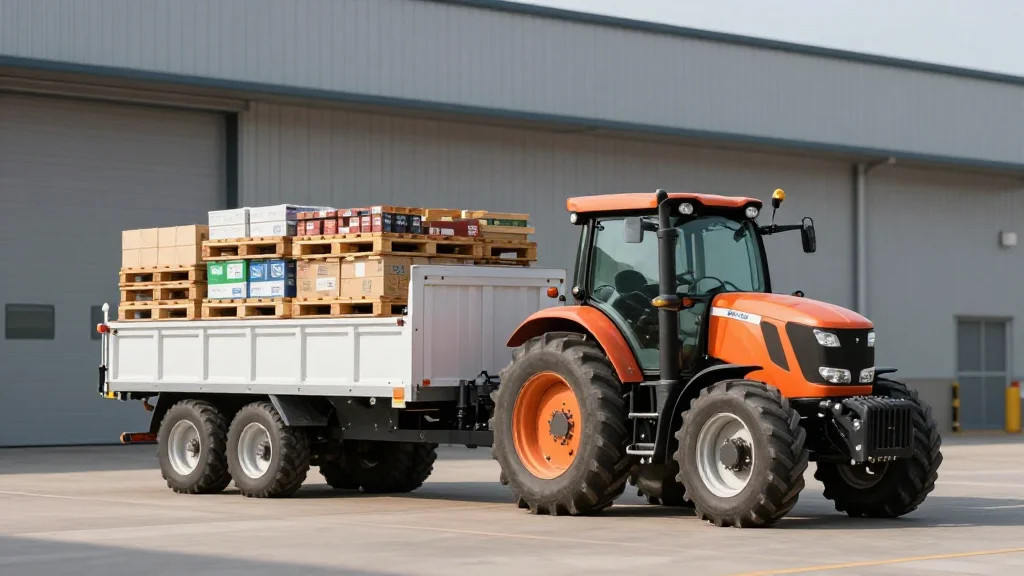
Tractor Supply’s Delivery Volume Jumps as Final-Mile Plan Advances
Companies Mentioned
Why It Matters
By internalizing bulky deliveries, Tractor Supply reduces carrier surcharges and improves cost‑to‑serve, bolstering its digital growth and profitability in a competitive retail landscape.
Key Takeaways
- •Delivery volume rose double‑digit YoY in Q1
- •200 hubs built last year; 176 more planned this year
- •Large‑item deliveries shifted to in‑house fleet, cutting carrier surcharges
- •Expected $10 M annual freight savings improve gross margin
Pulse Analysis
Final‑mile logistics have become a decisive factor for retailers seeking to capture online demand, especially in the home‑improvement and rural segments where bulky items dominate orders. Tractor Supply’s aggressive hub rollout—200 locations launched in 2025 and another 176 slated for 2026—creates micro‑distribution centers that co‑locate inventory and drivers near high‑density customer clusters. This network design shortens travel distances, enables same‑day or next‑day service, and gives the company granular control over delivery windows, a capability that larger e‑commerce players often struggle to replicate in sparsely populated markets.
The shift from third‑party carriers to an in‑house fleet for large‑item shipments directly attacks the cost leakages associated with FedEx and UPS surcharges on heavy parcels. By handling items such as 250‑bag shavings orders or 16‑foot fence panels internally, Tractor Supply anticipates $10 million of annual freight savings, a figure that helps offset higher tariffs and transportation expenses that kept gross margin flat at 36.2%. The internal model also improves data visibility, allowing the firm to fine‑tune routing, reduce empty‑truck miles, and negotiate better rates for ancillary services.
Beyond the balance sheet, the expanded final‑mile capability reinforces Tractor Supply’s digital momentum, contributing to a 3.6% year‑over‑year sales lift and a modest 0.5% comparable‑store sales gain. As consumers increasingly expect rapid, reliable delivery of bulky goods, the company’s hub‑centric approach positions it as a logistics leader among specialty retailers. Competitors that rely solely on external carriers may face higher cost‑to‑serve and slower delivery speeds, potentially ceding market share to Tractor Supply’s more integrated, customer‑centric model.
Tractor Supply’s delivery volume jumps as final-mile plan advances
Comments
Want to join the conversation?
Loading comments...