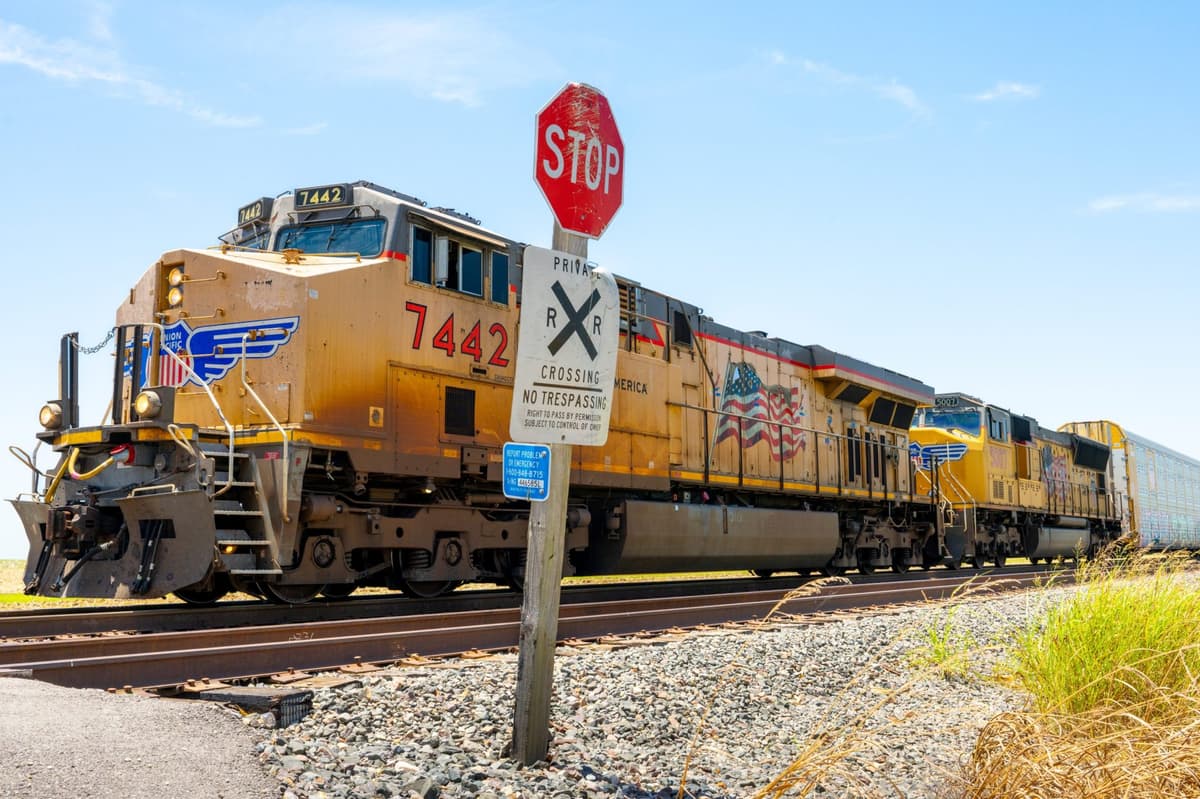
Trump Floated the Idea of a 15% Government Stake in a Massive Railroad Merger
Companies Mentioned
Why It Matters
A federal stake would reshape how critical infrastructure is financed and could set a precedent for government involvement in private mergers, while the merger itself threatens competition in a vital supply‑chain sector.
Key Takeaways
- •Trump proposes 15% federal stake in $71.5 bn UP‑NS merger.
- •STB placed merger on hold for additional public‑interest review.
- •Analysts say government equity in the deal is improbable.
- •Opposition warns merger could boost monopoly power and raise shipping costs.
- •No federal railroad ownership since 1920s; only Amtrak remains publicly held.
Pulse Analysis
Trump’s recent comments on taking a 15% equity position in the Union Pacific‑Norfolk Southern deal reflect a broader strategy of the administration to place federal capital in industries deemed essential for national security. Earlier this year the White House secured stakes in Intel and a $3 billion rare‑earth acquisition, signaling a willingness to use government ownership as a policy lever rather than relying solely on tax or regulatory tools. By proposing a direct share in a $71.5 billion merger, the president is testing the limits of that approach in a sector traditionally left to private capital.
The merger itself would combine roughly 50,000 miles of track, 250 billion dollars of enterprise value, and control nearly half of U.S. freight rail traffic. The Surface Transportation Board, which evaluates rail deals under a public‑interest standard, has paused the process to demand more data on congestion, commodity flows, and pricing impacts. Critics—including Senate Minority Leader Chuck Schumer, the Stop the Rail Merger Coalition, and rival carrier BNSF—argue the consolidation would diminish competition, raise rates for shippers, and jeopardize thousands of rail jobs. Union Pacific’s CEO remains confident the deal will close by mid‑2027, citing efficiency gains and a potential reduction of 2 million truckloads from highways.
If the government were to acquire a minority stake, it would mark the first federal ownership of a freight railroad since the 1920s, raising complex questions about oversight, profit distribution, and strategic control of a critical logistics network. While analysts deem such a partnership unlikely, the discussion highlights a growing tension between private consolidation and public policy goals. The outcome of the STB review and any future legislative action will signal how aggressively the U.S. will intervene in infrastructure markets to balance economic efficiency with competitive safeguards.
Trump floated the idea of a 15% government stake in a massive railroad merger
Comments
Want to join the conversation?
Loading comments...